Shetland councillors back plans to build tunnels to link some of largest islands
 ✓
✓Councillors on Shetland have backed plans to build up to four tunnels to link some of the largest and most populated islands, after years of isolation and decline.
The council voted on Tuesday to investigate financing options for the first two subsea tunnels, which would link Shetland’s Mainland with the two large northerly islands of Yell and Unst.
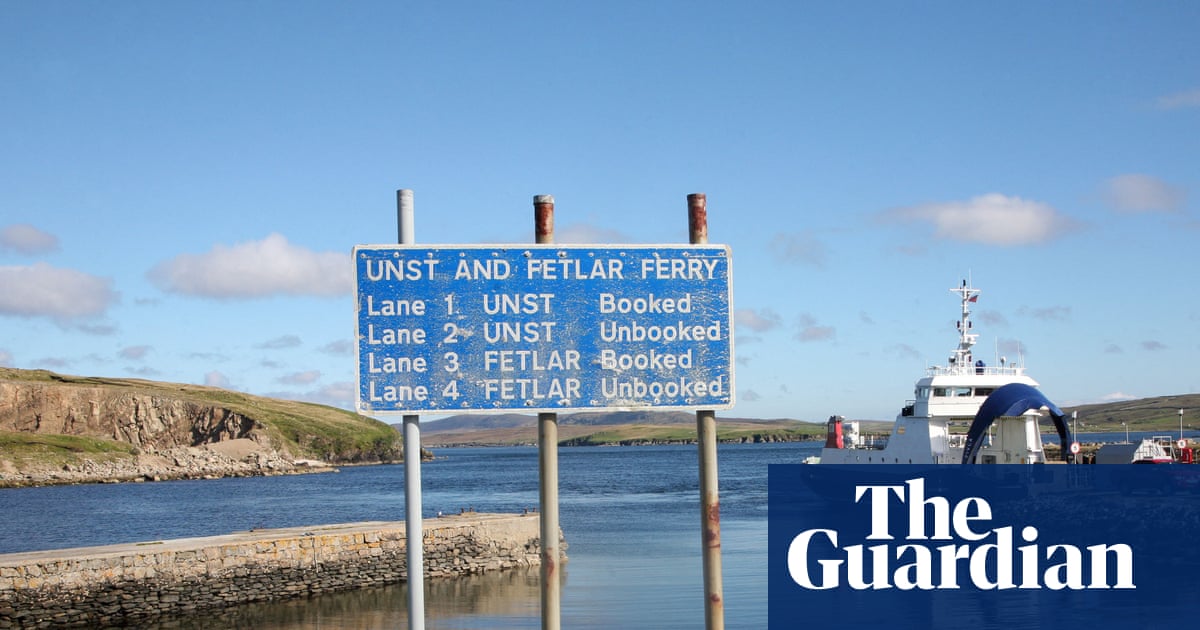
Islanders on Yell and Unst have campaigned for years for fixed links to replace their ageing and unreliable ferries, after witnessing families leaving, businesses closing and parents forced to live away from home for work.
The two projects, the first of their kind in Scotland, will cost about £655m to build and take at least eight years to complete.
Emma Macdonald, the leader of Shetland Islands council, said it would press the Scottish and UK governments for help with the construction costs, which were unaffordable for Shetland on its own.
“Islands with fixed links repopulate, enjoy economic growth and experience a reduction in their average age,” Macdonald said. “We have no ‘do nothing’ options here. Ferries and tunnels are both needed to unlock the potential of Shetland, and both the Scottish and UK governments have a vested interest in helping that happen.”
The archipelago’s roll-on, roll-off ferries are more than 32 years old on average. They have struggled to recruit and retain staff; 50% of their crew are aged 46 or over. They stop operating overnight, have limited capacity and are routinely unable to sail due to bad weather, while facing soaring repair and replacement costs.
For many islanders, that dependency increases the sense of insecurity and isolation, and drives depopulation. Relatively short journeys can last hours.
Shetlanders often look enviously at their near neighbours in the Danish-speaking Faroes, where its tunnels, including the world’s only undersea roundabout, offer seamless connections, and the Norwegian islands linked by tunnel to the mainland.
Councillors hope to persuade Scottish and UK ministers to provide some of the core funding, either through the Scottish National Investment Bank or the national wealth fund, by arguing that the islands are an essential part of the wider UK economy.
The UK’s only space port, at SaxaVord on the far northern tip of Unst, is due to host its first rocket launches later this year, and Shetland produces 22% of Scotland’s farmed salmon and 88% of its farmed mussels, while its trawlers land seafood valued at £147m.
Engineering consultants calculated the road tunnel between Mainland and Yell would cost about £352m to dig, with operating costs of £90m over the next 60 years.
The tunnel linking Yell with Unst would cost about £300m, with running costs of £72m. Those costs would partly be met by tolls and could also be part-financed by private investors who could then run the tunnels.
In turn, each would generate tens of millions of pounds in growth, and improve the islands’ social and economic resilience, the council said. Official data shows the population has fallen by 24% in the past 40 years.
Councillors also agreed on Tuesday that tunnels could be built later to link two smaller islands that sit east of Mainland – Bressay and Whalsay – with new ferries proposed for the outlying islands of Papa Stour and Skerries.
If Shetland’s tunnels are funded, their construction is expected to reinvigorate calls for subsea tunnels or bridges in the Western Isles, which are also heavily dependent on ferries.
Orkney Islands council argues that its geography makes tunnels and bridges less significant; some islands are already connected to mainland Orkney by fixed links known as the Churchill barriers.
Alice Mathewson, a spokesperson for Yell and Unst tunnel action groups, said the Shetland tunnels would be financially viable, and lower-carbon than the ferries. “These links will not only bridge geographical divides but also enhance the prosperity and wellbeing of our island communities,” she said.
The Scottish government said it had given Shetland Islands council £13m over the past two years to investigate upgrading its transport links and was committed to working with councils on new fixed links in its national islands plan.
Read the full story at BBC ↗ · The Guardian ↗
Shetland Islands Council has approved plans to investigate financing for undersea tunnels connecting its largest islands. The first phase would link Mainland Shetland to Yell and Unst via two tunnels, estimated at £655m and requiring at least eight years to construct. The council has asked the Scottish and UK governments for financial support, as the cost exceeds what Shetland can fund independently. The islands currently rely on ageing roll-on, roll-off ferries that average over 32 years old, operate limited hours, and frequently cannot sail due to weather. Islanders have experienced declining population and economic activity over the past 40 years. The council argues that fixed links would improve connectivity, support economic development, and reduce isolation. Additional tunnels to smaller islands and upgraded ferries to outlying areas are also planned. The Scottish government has provided £13m in recent support for transport infrastructure investigation.
Read the full story at BBC ↗ · The Guardian ↗
Councillors on Shetland have backed plans to build up to four tunnels to link some of the largest and most populated islands, after years of isolation and decline.
The council voted on Tuesday to investigate financing options for the first two subsea tunnels, which would link Shetland’s Mainland with the two large northerly islands of Yell and Unst.
Islanders on Yell and Unst have campaigned for years for fixed links to replace their ageing and unreliable ferries, after witnessing families leaving, businesses closing and parents forced to live away from home for work.
The two projects, the first of their kind in Scotland, will cost about £655m to build and take at least eight years to complete.
Emma Macdonald, the leader of Shetland Islands council, said it would press the Scottish and UK governments for help with the construction costs, which were unaffordable for Shetland on its own.
“Islands with fixed links repopulate, enjoy economic growth and experience a reduction in their average age,” Macdonald said. “We have no ‘do nothing’ options here. Ferries and tunnels are both needed to unlock the potential of Shetland, and both the Scottish and UK governments have a vested interest in helping that happen.”
The archipelago’s roll-on, roll-off ferries are more than 32 years old on average. They have struggled to recruit and retain staff; 50% of their crew are aged 46 or over. They stop operating overnight, have limited capacity and are routinely unable to sail due to bad weather, while facing soaring repair and replacement costs.
For many islanders, that dependency increases the sense of insecurity and isolation, and drives depopulation. Relatively short journeys can last hours.
Shetlanders often look enviously at their near neighbours in the Danish-speaking Faroes, where its tunnels, including the world’s only undersea roundabout, offer seamless connections, and the Norwegian islands linked by tunnel to the mainland.
Councillors hope to persuade Scottish and UK ministers to provide some of the core funding, either through the Scottish National Investment Bank or the national wealth fund, by arguing that the islands are an essential part of the wider UK economy.
The UK’s only space port, at SaxaVord on the far northern tip of Unst, is due to host its first rocket launches later this year, and Shetland produces 22% of Scotland’s farmed salmon and 88% of its farmed mussels, while its trawlers land seafood valued at £147m.
Engineering consultants calculated the road tunnel between Mainland and Yell would cost about £352m to dig, with operating costs of £90m over the next 60 years.
The tunnel linking Yell with Unst would cost about £300m, with running costs of £72m. Those costs would partly be met by tolls and could also be part-financed by private investors who could then run the tunnels.
In turn, each would generate tens of millions of pounds in growth, and improve the islands’ social and economic resilience, the council said. Official data shows the population has fallen by 24% in the past 40 years.
Councillors also agreed on Tuesday that tunnels could be built later to link two smaller islands that sit east of Mainland – Bressay and Whalsay – with new ferries proposed for the outlying islands of Papa Stour and Skerries.
If Shetland’s tunnels are funded, their construction is expected to reinvigorate calls for subsea tunnels or bridges in the Western Isles, which are also heavily dependent on ferries.
Orkney Islands council argues that its geography makes tunnels and bridges less significant; some islands are already connected to mainland Orkney by fixed links known as the Churchill barriers.
Alice Mathewson, a spokesperson for Yell and Unst tunnel action groups, said the Shetland tunnels would be financially viable, and lower-carbon than the ferries. “These links will not only bridge geographical divides but also enhance the prosperity and wellbeing of our island communities,” she said.
The Scottish government said it had given Shetland Islands council £13m over the past two years to investigate upgrading its transport links and was committed to working with councils on new fixed links in its national islands plan.
Read the full story at BBC ↗ · The Guardian ↗
Shetland councillors voted to investigate financing options for two subsea tunnels linking Mainland with Yell and Unst The two tunnel projects will cost approximately £655m and take at least eight years to complete The archipelago's ferries average over 32 years old, struggle to recruit staff, stop overnight, have limited capacity, and are frequently unable to operate due to bad weather Shetland's population has fallen by 24% in the past 40 years Islands with fixed links repopulate, enjoy economic growth and experience a reduction in their average age Shetland produces 22% of Scotland's farmed salmon, 88% of its farmed mussels, and hosts the UK's only spaceport The road tunnel between Mainland and Yell would cost about £352m to dig, with operating costs of £90m over 60 years The tunnel linking Yell with Unst would cost about £300m, with running costs of £72m over 60 years Each tunnel would generate tens of millions of pounds in growth and improve the islands' social and economic resilience The Scottish government provided £13m over the past two years to investigate upgrading transport links
Read the full story at BBC ↗ · The Guardian ↗
- Shetland councillors voted to explore financing for two subsea tunnels linking Mainland to the islands of Yell and Unst, costing approximately £655m and taking at least eight years to build
- The islands face depopulation and economic decline due to ageing ferries that are unreliable, stop overnight, and frequently cannot operate in bad weather; the council seeks UK and Scottish government funding support
- Island communities with fixed links have historically experienced population growth and economic expansion; Shetland produces significant UK resources including space launch capability and 22% of Scotland's farmed salmon