‘Short on substance’: Albanese urges climate action on world stage – but advocates say Australia failing on fossil fuels
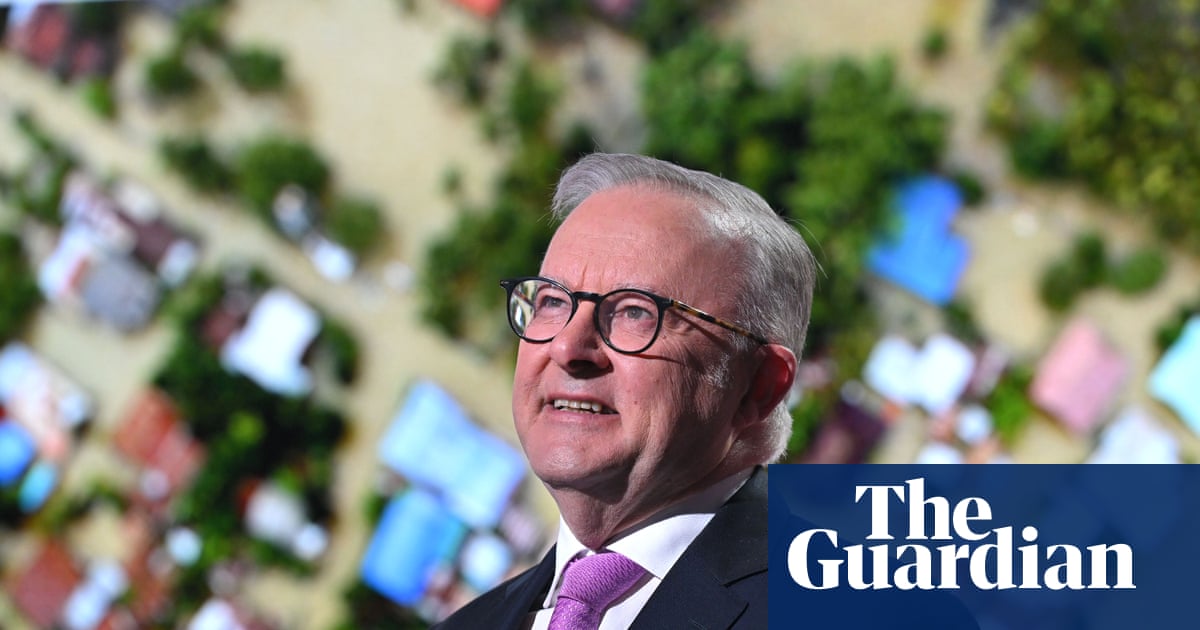
Australia understands the dangers of global heating and the urgency of climate action as much as any other country, Anthony Albanese has said in a keynote speech shortly before the United Nations general assembly.
Giving the opening address at a Climate Week event in New York on Monday, the prime minister said Australians had experienced the impact of climate breakdown up close with a series of disastrous bushfires and floods in the past decades.
He said people had faced up to the adversity and politicians had to match their “bravery” and take the strong action needed to try to tackle the problem.
“We need to come together, to meet the problem head on,” he told the assembly in an address titled “climate security is the new national security”. “There’s no avoiding the scale of our responsibility, or the cost of inaction.”
The speech comes just two months before Australia is due to chair negotiations at the Cop31 climate summit in Antalya, Turkey. Climate advocates pointed out Albanese had not addressed the need to cut fossil fuel use – the focus of a meeting of government representatives from more than 50 nations, including Australia, in Colombia five months ago.
Sign up to get climate and environment editor Adam Morton’s Clear Air column as a free newsletter
The Australian Security Leaders Climate Group, which includes former senior military and defence officials, said leadership on security would require the Albanese government to “act on the science … [and] end the contradiction of expanding fossil fuels while claiming climate leadership”.
While renewable energy use in Australia has expanded rapidly, the Albanese government has approved 37 new or expanded fossil fuel developments since its election in 2022, largely for export.
“Australia cannot credibly claim climate-security leadership overseas while failing to confront the scale of climate risk at home, including continuing to approve new and expanded fossil-fuel developments,” former Australian defence force chief Adm Chris Barrie said.
“If the prime minister is going to New York to say climate security is national security, Australians are entitled to ask a very simple question: where is the plan? The government has yet to set out a clear climate-security framework showing how escalating climate risks are being incorporated across defence strategy, foreign policy, regional security, intelligence and national security decision-making.”
Albanese said Australia understood the role it must play and the need to back “something positive” and “build a better future for the next generation”.
He said his government had set an “ambitious but achievable” target to reduce national emissions by between 62% and 70% below 2005 levels by 2035. It would get there with a mix of renewable power – which now provides about 50% of electricity in the country’s main power grid – backed by gas.
after newsletter promotion
“We are now a leader in home battery installation, with Australians installing 10,000 batteries each week – more than half a million in the past year,” Albanese said.
He said a record-breaking El Niño forecast meant Australia and Pacific nations were preparing for a southern summer of potential “extreme heat, bushfires and floods”.
Last year, a collection of Pacific nations came together to create the Pacific Resilience Facility, a regional climate-financing mechanism. Australia has contributed A$100m towards the fund and another A$350m to further support climate resilient infrastructure in the Pacific.
Albanese said it was “a promise to our Pacific family that they will not face the climate crisis alone”. He said Australian firefighters were part of “an international fraternity of bravery” that had stepped up to respond to fires and floods in countries including the US, Canada and France.
Catherine Abreu, the executive director of International Climate Politics Hub, said Albanese’s speech was “long on rhetoric and short on substance”.
“He was right to acknowledge escalating climate impacts and the cost of inaction, but acknowledgment is not a plan,” she said. “As president of negotiations at COP31, Australia holds a pivotal global leadership role, and with fewer than 50 days until the talks, we still haven’t seen how it intends to rally countries behind an outcome that meets the scale of the climate and energy crisis.”
Larissa Baldwin-Roberts, chief executive of the First Nations-led organisation Common Threads, said it was striking that Albanese had not mentioned the need to act on fossil fuels. “It is shameful for prime minister Albanese to green-wash Australia’s climate track record on the global stage, while continuing to green-light the very coal and gas projects fuelling this crisis,” she said.
Read the full story at The Guardian ↗
Prime minister says ‘climate security is the new national security’ in keynote speech in New York. Follow our Australia news live blog for latest updates. Sign up for climate and…
This lens runs the verified story through Cinnamon's AI — wired in the next step.
Australia understands the dangers of global heating and the urgency of climate action as much as any other country, Anthony Albanese has said in a keynote speech shortly before the United Nations general assembly.
Giving the opening address at a Climate Week event in New York on Monday, the prime minister said Australians had experienced the impact of climate breakdown up close with a series of disastrous bushfires and floods in the past decades.
He said people had faced up to the adversity and politicians had to match their “bravery” and take the strong action needed to try to tackle the problem.
“We need to come together, to meet the problem head on,” he told the assembly in an address titled “climate security is the new national security”. “There’s no avoiding the scale of our responsibility, or the cost of inaction.”
The speech comes just two months before Australia is due to chair negotiations at the Cop31 climate summit in Antalya, Turkey. Climate advocates pointed out Albanese had not addressed the need to cut fossil fuel use – the focus of a meeting of government representatives from more than 50 nations, including Australia, in Colombia five months ago.
Sign up to get climate and environment editor Adam Morton’s Clear Air column as a free newsletter
The Australian Security Leaders Climate Group, which includes former senior military and defence officials, said leadership on security would require the Albanese government to “act on the science … [and] end the contradiction of expanding fossil fuels while claiming climate leadership”.
While renewable energy use in Australia has expanded rapidly, the Albanese government has approved 37 new or expanded fossil fuel developments since its election in 2022, largely for export.
“Australia cannot credibly claim climate-security leadership overseas while failing to confront the scale of climate risk at home, including continuing to approve new and expanded fossil-fuel developments,” former Australian defence force chief Adm Chris Barrie said.
“If the prime minister is going to New York to say climate security is national security, Australians are entitled to ask a very simple question: where is the plan? The government has yet to set out a clear climate-security framework showing how escalating climate risks are being incorporated across defence strategy, foreign policy, regional security, intelligence and national security decision-making.”
Albanese said Australia understood the role it must play and the need to back “something positive” and “build a better future for the next generation”.
He said his government had set an “ambitious but achievable” target to reduce national emissions by between 62% and 70% below 2005 levels by 2035. It would get there with a mix of renewable power – which now provides about 50% of electricity in the country’s main power grid – backed by gas.
after newsletter promotion
“We are now a leader in home battery installation, with Australians installing 10,000 batteries each week – more than half a million in the past year,” Albanese said.
He said a record-breaking El Niño forecast meant Australia and Pacific nations were preparing for a southern summer of potential “extreme heat, bushfires and floods”.
Last year, a collection of Pacific nations came together to create the Pacific Resilience Facility, a regional climate-financing mechanism. Australia has contributed A$100m towards the fund and another A$350m to further support climate resilient infrastructure in the Pacific.
Albanese said it was “a promise to our Pacific family that they will not face the climate crisis alone”. He said Australian firefighters were part of “an international fraternity of bravery” that had stepped up to respond to fires and floods in countries including the US, Canada and France.
Catherine Abreu, the executive director of International Climate Politics Hub, said Albanese’s speech was “long on rhetoric and short on substance”.
“He was right to acknowledge escalating climate impacts and the cost of inaction, but acknowledgment is not a plan,” she said. “As president of negotiations at COP31, Australia holds a pivotal global leadership role, and with fewer than 50 days until the talks, we still haven’t seen how it intends to rally countries behind an outcome that meets the scale of the climate and energy crisis.”
Larissa Baldwin-Roberts, chief executive of the First Nations-led organisation Common Threads, said it was striking that Albanese had not mentioned the need to act on fossil fuels. “It is shameful for prime minister Albanese to green-wash Australia’s climate track record on the global stage, while continuing to green-light the very coal and gas projects fuelling this crisis,” she said.
Read the full story at The Guardian ↗
Australia understands the dangers of global heating and the urgency of climate action as much as any other country, Anthony Albanese has said in a keynote speech shortly before the United Nations general assembly.
Giving the opening address at a Climate Week event in New York on Monday, the prime minister said Australians had experienced the impact of climate breakdown up close with a series of disastrous bushfires and floods in the past decades.
He said people had faced up to the adversity and politicians had to match their “bravery” and take the strong action needed to try to tackle the problem.
“We need to come together, to meet the problem head on,” he told the assembly in an address titled “climate security is the new national security”. “There’s no avoiding the scale of our responsibility, or the cost of inaction.”
The speech comes just two months before Australia is due to chair negotiations at the Cop31 climate summit in Antalya, Turkey. Climate advocates pointed out Albanese had not addressed the need to cut fossil fuel use – the focus of a meeting of government representatives from more than 50 nations, including Australia, in Colombia five months ago.
Sign up to get climate and environment editor Adam Morton’s Clear Air column as a free newsletter
The Australian Security Leaders Climate Group, which includes former senior military and defence officials, said leadership on security would require the Albanese government to “act on the science … [and] end the contradiction of expanding fossil fuels while claiming climate leadership”.
While renewable energy use in Australia has expanded rapidly, the Albanese government has approved 37 new or expanded fossil fuel developments since its election in 2022, largely for export.
“Australia cannot credibly claim climate-security leadership overseas while failing to confront the scale of climate risk at home, including continuing to approve new and expanded fossil-fuel developments,” former Australian defence force chief Adm Chris Barrie said.
“If the prime minister is going to New York to say climate security is national security, Australians are entitled to ask a very simple question: where is the plan? The government has yet to set out a clear climate-security framework showing how escalating climate risks are being incorporated across defence strategy, foreign policy, regional security, intelligence and national security decision-making.”
Albanese said Australia understood the role it must play and the need to back “something positive” and “build a better future for the next generation”.
He said his government had set an “ambitious but achievable” target to reduce national emissions by between 62% and 70% below 2005 levels by 2035. It would get there with a mix of renewable power – which now provides about 50% of electricity in the country’s main power grid – backed by gas.
after newsletter promotion
“We are now a leader in home battery installation, with Australians installing 10,000 batteries each week – more than half a million in the past year,” Albanese said.
He said a record-breaking El Niño forecast meant Australia and Pacific nations were preparing for a southern summer of potential “extreme heat, bushfires and floods”.
Last year, a collection of Pacific nations came together to create the Pacific Resilience Facility, a regional climate-financing mechanism. Australia has contributed A$100m towards the fund and another A$350m to further support climate resilient infrastructure in the Pacific.
Albanese said it was “a promise to our Pacific family that they will not face the climate crisis alone”. He said Australian firefighters were part of “an international fraternity of bravery” that had stepped up to respond to fires and floods in countries including the US, Canada and France.
Catherine Abreu, the executive director of International Climate Politics Hub, said Albanese’s speech was “long on rhetoric and short on substance”.
“He was right to acknowledge escalating climate impacts and the cost of inaction, but acknowledgment is not a plan,” she said. “As president of negotiations at COP31, Australia holds a pivotal global leadership role, and with fewer than 50 days until the talks, we still haven’t seen how it intends to rally countries behind an outcome that meets the scale of the climate and energy crisis.”
Larissa Baldwin-Roberts, chief executive of the First Nations-led organisation Common Threads, said it was striking that Albanese had not mentioned the need to act on fossil fuels. “It is shameful for prime minister Albanese to green-wash Australia’s climate track record on the global stage, while continuing to green-light the very coal and gas projects fuelling this crisis,” she said.
Read the full story at The Guardian ↗
This lens runs the verified story through Cinnamon's AI — wired in the next step.
- Prime minister says ‘climate security is the new national security’ in keynote speech in New York.
- Follow our Australia news live blog for latest updates.
- Sign up for climate and…