Starbucks Korea raided by police after ‘Tank Day’ campaign sparks public outrage
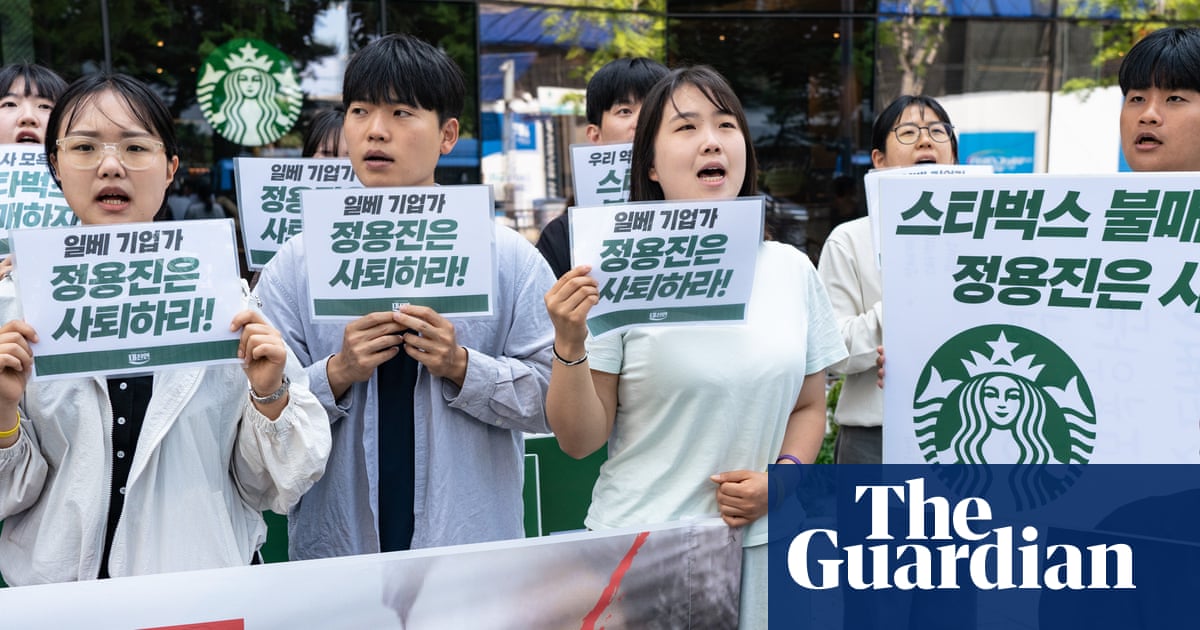 ✓
✓South Korean police have raided the headquarters of Starbucks Korea as part of an investigation into a marketing campaign accused of trivialising the country’s 1980s pro-democracy movement.
Investigators searched the building in southern Seoul on Tuesday, police said on Wednesday. No further details were released, although South Korean media reported that officers also searched the homes of the Starbucks Korea executives.
The coffee chain triggered a public outcry after launching a range of stainless-steel reusable tumblers it called “SS Tank” and declaring 18 May “Tank Day”. The date marks the anniversary of the 1980 Gwangju uprising, when pro-democracy demonstrators were brutally suppressed by South Korea’s then military-backed government.
The campaign also used the slogan “Thwack it on the table!”, which many interpreted as a reference to a notorious 1987 police claim that the student activist Park Jong-chul died after investigators “hit the desk with a thwack”. Authorities had falsely used the phrase to conceal the fact that Park had died by torture during an interrogation.
The backlash over the coffee chain’s marketing campaign prompted Shinsegae Group, which owns a 67.5% stake in Starbucks Korea, to cancel the promotion within hours and dismiss the company’s chief executive. The Shinsegae chair, Chung Yong-jin, later issued a televised apology.
Starbucks Korea closed all of its stores nationwide on 22 June for mandatory training in history and social awareness.
The police investigation was launched after complaints from relatives of victims of the Gwangju crackdown, in which, official records say, about 200 people were killed.
South Korea’s transition to democracy gained momentum in 1987, when the authoritarian president Chun Doo-hwan, whose government had overseen the Gwangju crackdown, accepted constitutional reforms introducing direct presidential elections after months of nationwide pro-democracy protests.
Read the full story at BBC ↗ · Al Jazeera ↗ · The Guardian ↗
Coffee chain has faced backlash over marketing promotion tied to anniversary of Gwangju massacre. South Korean police have raided the headquarters of Starbucks Korea as part of an…
This lens runs the verified story through Cinnamon's AI — wired in the next step.
South Korean police have raided the headquarters of Starbucks Korea as part of an investigation into a marketing campaign accused of trivialising the country’s 1980s pro-democracy movement.
Investigators searched the building in southern Seoul on Tuesday, police said on Wednesday. No further details were released, although South Korean media reported that officers also searched the homes of the Starbucks Korea executives.
The coffee chain triggered a public outcry after launching a range of stainless-steel reusable tumblers it called “SS Tank” and declaring 18 May “Tank Day”. The date marks the anniversary of the 1980 Gwangju uprising, when pro-democracy demonstrators were brutally suppressed by South Korea’s then military-backed government.
The campaign also used the slogan “Thwack it on the table!”, which many interpreted as a reference to a notorious 1987 police claim that the student activist Park Jong-chul died after investigators “hit the desk with a thwack”. Authorities had falsely used the phrase to conceal the fact that Park had died by torture during an interrogation.
The backlash over the coffee chain’s marketing campaign prompted Shinsegae Group, which owns a 67.5% stake in Starbucks Korea, to cancel the promotion within hours and dismiss the company’s chief executive. The Shinsegae chair, Chung Yong-jin, later issued a televised apology.
Starbucks Korea closed all of its stores nationwide on 22 June for mandatory training in history and social awareness.
The police investigation was launched after complaints from relatives of victims of the Gwangju crackdown, in which, official records say, about 200 people were killed.
South Korea’s transition to democracy gained momentum in 1987, when the authoritarian president Chun Doo-hwan, whose government had overseen the Gwangju crackdown, accepted constitutional reforms introducing direct presidential elections after months of nationwide pro-democracy protests.
Read the full story at BBC ↗ · Al Jazeera ↗ · The Guardian ↗
South Korean police have raided the headquarters of Starbucks Korea as part of an investigation into a marketing campaign accused of trivialising the country’s 1980s pro-democracy movement.
Investigators searched the building in southern Seoul on Tuesday, police said on Wednesday. No further details were released, although South Korean media reported that officers also searched the homes of the Starbucks Korea executives.
The coffee chain triggered a public outcry after launching a range of stainless-steel reusable tumblers it called “SS Tank” and declaring 18 May “Tank Day”. The date marks the anniversary of the 1980 Gwangju uprising, when pro-democracy demonstrators were brutally suppressed by South Korea’s then military-backed government.
The campaign also used the slogan “Thwack it on the table!”, which many interpreted as a reference to a notorious 1987 police claim that the student activist Park Jong-chul died after investigators “hit the desk with a thwack”. Authorities had falsely used the phrase to conceal the fact that Park had died by torture during an interrogation.
The backlash over the coffee chain’s marketing campaign prompted Shinsegae Group, which owns a 67.5% stake in Starbucks Korea, to cancel the promotion within hours and dismiss the company’s chief executive. The Shinsegae chair, Chung Yong-jin, later issued a televised apology.
Starbucks Korea closed all of its stores nationwide on 22 June for mandatory training in history and social awareness.
The police investigation was launched after complaints from relatives of victims of the Gwangju crackdown, in which, official records say, about 200 people were killed.
South Korea’s transition to democracy gained momentum in 1987, when the authoritarian president Chun Doo-hwan, whose government had overseen the Gwangju crackdown, accepted constitutional reforms introducing direct presidential elections after months of nationwide pro-democracy protests.
Read the full story at BBC ↗ · Al Jazeera ↗ · The Guardian ↗
This lens runs the verified story through Cinnamon's AI — wired in the next step.
- Coffee chain has faced backlash over marketing promotion tied to anniversary of Gwangju massacre.
- South Korean police have raided the headquarters of Starbucks Korea as part of an…