Sydney gardener fined almost $200,000 for removing 287 trees to improve harbourside mansion’s water views
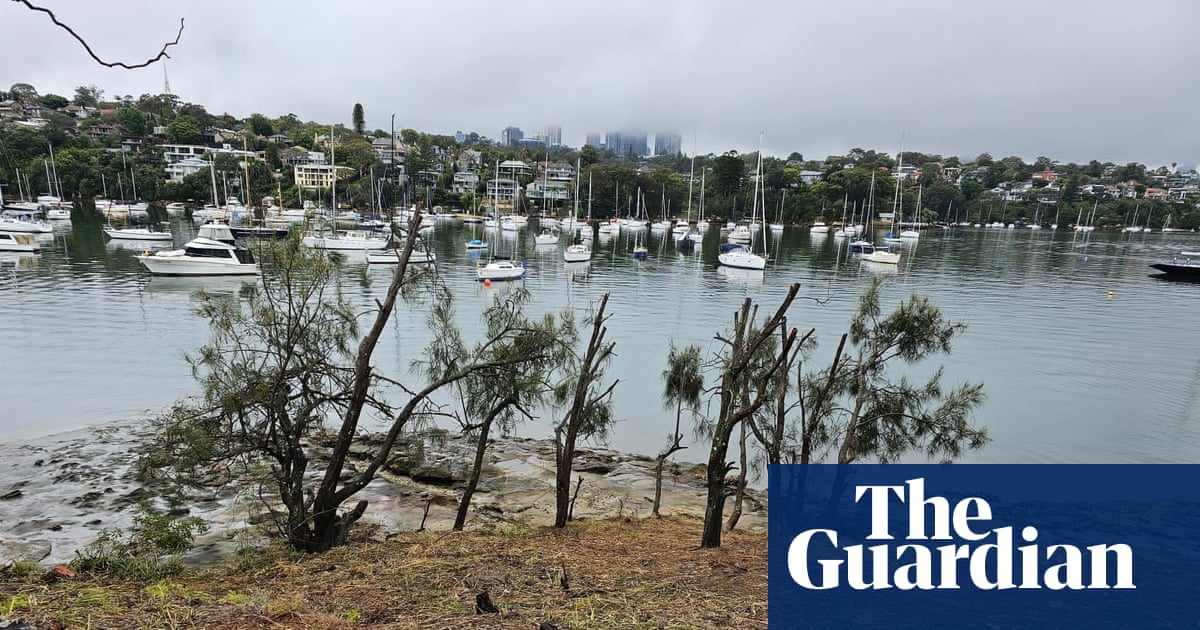
It began with a gardener being hired to trim grass at a harbourside mansion in Sydney – and escalated to payments being left in a shoe for the unlawful felling of hundreds of native trees in protected bushland.
Now a court has fined Yi Wang $187,500 for his role in organising and carrying out the destruction of 287 trees from a council-owned foreshore bushland at Woodford Bay in Longueville in late 2023.
The New South Wales land and environment court justice Rachel Pepper convicted Wang last week for helping to orchestrate the clearing of 1,210 sq metres of land beside a waterfront property on Lucretia Avenue.
Wang pleaded guilty to three offences in relation to the unlawful clearing, which Pepper heard destroyed potential habitat for a range of protected and threatened animals, including powerful owls and microbats. It could take three decades to recover.
The unlawful tree clearing also greatly reduced the natural protection previously afforded to an Aboriginal midden, the court heard.
When it sold in 2014 for $7.6m, real estate agents described the Lucretia Avenue property as an “exclusive waterfront” residence commanding “water views from every room”. It boasted a private beach and was “bordering lush reserves”.
The director of Sydney Garden Home, Wang was hired by the stepdaughter of the owner of the adjacent property to the bushland, Yao Wu, for grass trimming work in November 2023.
The following day, Wu asked Wang to clear trees as well, including on public land.
“This is my back yard,” Wang would later claim Wu repeatedly told him.
Wang then hired casual labourers, including a chainsaw operator, and chopped down and removed trees over a 12-day period. The gardener sent regular updates on the progress of the work to his employer via WeChat and was paid in cash, which was often left in a shoe at the front of the adjacent property for Wang to collect.
Lane Cove council would later call those dozen days “the worst act of environmental vandalism” in the area’s history. The mayor, Scott Bennison, said the “outrageous” act needed to be “prosecuted to the full extent possible”.
after newsletter promotion
In September 2024, the council installed a huge double-sided banner on the site of what it labelled “tree vandalism”, demonstrating its “commitment to obscure” harbour views gained by the destruction of the habitat and pledging it would remain in place until the trees grew back “to a suitable height”.
In addition to the fine and the publication of notices about the case in newspapers, Pepper ordered Wang to pay Lane Cove council’s legal costs.
In a statement, the council said it welcomed the judgment, describing it as “a win for native bushland”.
As it was awaiting the outcome of another matter before the court relating to the same location, the council declined to comment further.
The case first came to light through a tip-off from a member of the public. A council ranger then visited the site the day after the last day of clearing. Council officers discovered no approvals, permits, or consents had been issued for any tree removal and private investigators were engaged.
Recorded interviews from those investigators, as well as CCTV footage and invoices from a nearby dump, which showed Wang and the chainsaw operator disposing of ute loads of branches and vegetation, provided evidence for a timeline of events and facts that Wang did not dispute.
The council commissioned expert reports on the impact of the clearing, including by an arborist, a geologist and a senior archaeologist.
Wang argued his conduct was not reckless but rather negligent at its highest.
Pepper accepted references from his wife, mother and friend that Wang was otherwise a person of good character and was unlikely to reoffend.
The native forest canopy he helped clear had stood since at least 1943 and included an endangered ecological community.
Regeneration of the trees to a comparable ecological condition would probably take 20 to 30 years, a period during which regrowth would be susceptible to pathogens and weed invasion, the court heard.
Read the full story at The Guardian ↗
Local council described incident as ‘worst act of environmental vandalism in Lane Cove history’. Get our breaking news email , free app or daily news podcast. It began with a…
This lens runs the verified story through Cinnamon's AI — wired in the next step.
It began with a gardener being hired to trim grass at a harbourside mansion in Sydney – and escalated to payments being left in a shoe for the unlawful felling of hundreds of native trees in protected bushland.
Now a court has fined Yi Wang $187,500 for his role in organising and carrying out the destruction of 287 trees from a council-owned foreshore bushland at Woodford Bay in Longueville in late 2023.
The New South Wales land and environment court justice Rachel Pepper convicted Wang last week for helping to orchestrate the clearing of 1,210 sq metres of land beside a waterfront property on Lucretia Avenue.
Wang pleaded guilty to three offences in relation to the unlawful clearing, which Pepper heard destroyed potential habitat for a range of protected and threatened animals, including powerful owls and microbats. It could take three decades to recover.
The unlawful tree clearing also greatly reduced the natural protection previously afforded to an Aboriginal midden, the court heard.
When it sold in 2014 for $7.6m, real estate agents described the Lucretia Avenue property as an “exclusive waterfront” residence commanding “water views from every room”. It boasted a private beach and was “bordering lush reserves”.
The director of Sydney Garden Home, Wang was hired by the stepdaughter of the owner of the adjacent property to the bushland, Yao Wu, for grass trimming work in November 2023.
The following day, Wu asked Wang to clear trees as well, including on public land.
“This is my back yard,” Wang would later claim Wu repeatedly told him.
Wang then hired casual labourers, including a chainsaw operator, and chopped down and removed trees over a 12-day period. The gardener sent regular updates on the progress of the work to his employer via WeChat and was paid in cash, which was often left in a shoe at the front of the adjacent property for Wang to collect.
Lane Cove council would later call those dozen days “the worst act of environmental vandalism” in the area’s history. The mayor, Scott Bennison, said the “outrageous” act needed to be “prosecuted to the full extent possible”.
after newsletter promotion
In September 2024, the council installed a huge double-sided banner on the site of what it labelled “tree vandalism”, demonstrating its “commitment to obscure” harbour views gained by the destruction of the habitat and pledging it would remain in place until the trees grew back “to a suitable height”.
In addition to the fine and the publication of notices about the case in newspapers, Pepper ordered Wang to pay Lane Cove council’s legal costs.
In a statement, the council said it welcomed the judgment, describing it as “a win for native bushland”.
As it was awaiting the outcome of another matter before the court relating to the same location, the council declined to comment further.
The case first came to light through a tip-off from a member of the public. A council ranger then visited the site the day after the last day of clearing. Council officers discovered no approvals, permits, or consents had been issued for any tree removal and private investigators were engaged.
Recorded interviews from those investigators, as well as CCTV footage and invoices from a nearby dump, which showed Wang and the chainsaw operator disposing of ute loads of branches and vegetation, provided evidence for a timeline of events and facts that Wang did not dispute.
The council commissioned expert reports on the impact of the clearing, including by an arborist, a geologist and a senior archaeologist.
Wang argued his conduct was not reckless but rather negligent at its highest.
Pepper accepted references from his wife, mother and friend that Wang was otherwise a person of good character and was unlikely to reoffend.
The native forest canopy he helped clear had stood since at least 1943 and included an endangered ecological community.
Regeneration of the trees to a comparable ecological condition would probably take 20 to 30 years, a period during which regrowth would be susceptible to pathogens and weed invasion, the court heard.
Read the full story at The Guardian ↗
It began with a gardener being hired to trim grass at a harbourside mansion in Sydney – and escalated to payments being left in a shoe for the unlawful felling of hundreds of native trees in protected bushland.
Now a court has fined Yi Wang $187,500 for his role in organising and carrying out the destruction of 287 trees from a council-owned foreshore bushland at Woodford Bay in Longueville in late 2023.
The New South Wales land and environment court justice Rachel Pepper convicted Wang last week for helping to orchestrate the clearing of 1,210 sq metres of land beside a waterfront property on Lucretia Avenue.
Wang pleaded guilty to three offences in relation to the unlawful clearing, which Pepper heard destroyed potential habitat for a range of protected and threatened animals, including powerful owls and microbats. It could take three decades to recover.
The unlawful tree clearing also greatly reduced the natural protection previously afforded to an Aboriginal midden, the court heard.
When it sold in 2014 for $7.6m, real estate agents described the Lucretia Avenue property as an “exclusive waterfront” residence commanding “water views from every room”. It boasted a private beach and was “bordering lush reserves”.
The director of Sydney Garden Home, Wang was hired by the stepdaughter of the owner of the adjacent property to the bushland, Yao Wu, for grass trimming work in November 2023.
The following day, Wu asked Wang to clear trees as well, including on public land.
“This is my back yard,” Wang would later claim Wu repeatedly told him.
Wang then hired casual labourers, including a chainsaw operator, and chopped down and removed trees over a 12-day period. The gardener sent regular updates on the progress of the work to his employer via WeChat and was paid in cash, which was often left in a shoe at the front of the adjacent property for Wang to collect.
Lane Cove council would later call those dozen days “the worst act of environmental vandalism” in the area’s history. The mayor, Scott Bennison, said the “outrageous” act needed to be “prosecuted to the full extent possible”.
after newsletter promotion
In September 2024, the council installed a huge double-sided banner on the site of what it labelled “tree vandalism”, demonstrating its “commitment to obscure” harbour views gained by the destruction of the habitat and pledging it would remain in place until the trees grew back “to a suitable height”.
In addition to the fine and the publication of notices about the case in newspapers, Pepper ordered Wang to pay Lane Cove council’s legal costs.
In a statement, the council said it welcomed the judgment, describing it as “a win for native bushland”.
As it was awaiting the outcome of another matter before the court relating to the same location, the council declined to comment further.
The case first came to light through a tip-off from a member of the public. A council ranger then visited the site the day after the last day of clearing. Council officers discovered no approvals, permits, or consents had been issued for any tree removal and private investigators were engaged.
Recorded interviews from those investigators, as well as CCTV footage and invoices from a nearby dump, which showed Wang and the chainsaw operator disposing of ute loads of branches and vegetation, provided evidence for a timeline of events and facts that Wang did not dispute.
The council commissioned expert reports on the impact of the clearing, including by an arborist, a geologist and a senior archaeologist.
Wang argued his conduct was not reckless but rather negligent at its highest.
Pepper accepted references from his wife, mother and friend that Wang was otherwise a person of good character and was unlikely to reoffend.
The native forest canopy he helped clear had stood since at least 1943 and included an endangered ecological community.
Regeneration of the trees to a comparable ecological condition would probably take 20 to 30 years, a period during which regrowth would be susceptible to pathogens and weed invasion, the court heard.
Read the full story at The Guardian ↗
This lens runs the verified story through Cinnamon's AI — wired in the next step.
- Local council described incident as ‘worst act of environmental vandalism in Lane Cove history’.
- Get our breaking news email , free app or daily news podcast.
- It began with a…