Tensions with Iran add fresh uncertainty to an already shaky global economy
Audio will be available later today.
Tanker traffic in the Strait of Hormuz remains vulnerable after the U.S. and Iran ended their ceasefire. Oil prices, which had fallen to prewar levels, began climbing again, while stocks fell. Michael M. Santiago/Getty Images hide caption
toggle caption
Michael M. Santiago/Getty Images
Renewed fighting between the U.S. and Iran added yet another dose of uncertainty to the global economy.
Crude oil prices jumped and stock prices fell after President Trump declared an end to the fragile ceasefire in the Strait of Hormuz. The U.S. military attacked dozens of targets along the Iranian coastline overnight, in retaliation for what appeared to be Iranian attacks on vessels trying to transit the strait.
The hostile action threatens to prolong volatility in global markets just weeks after investors had reacted with relief after Trump and Iran had agreed on a ceasefire.
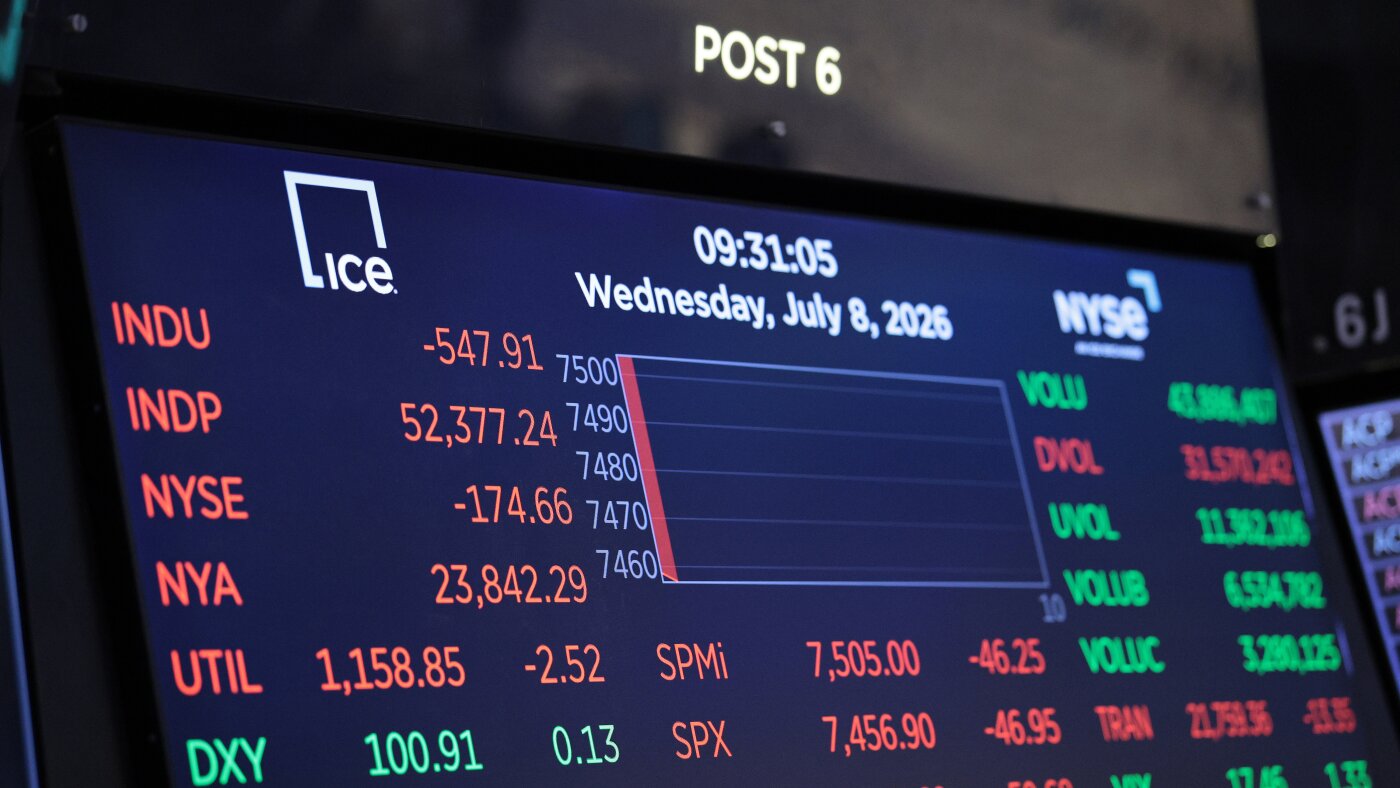
Both the U.S. and international benchmarks for crude oil jumped about 7% on Wednesday, although they still remain well below their springtime peaks. Meanwhile, the Dow Jones Industrial Average tumbled more than 800 points, or 1.5%, after hitting a record high just two days earlier.
The resumption of attacks renews the prospect of inflationary pressure after a month of falling gasoline prices. The initial price spike was muted, however, suggesting that markets don't expect a return to full-blown war. Retail gasoline prices in the U.S. rose less than a penny per gallon overnight, according to AAA, though they could climb higher in the coming days as higher crude oil costs are passed along.
Global markets have been volatile ever since the U.S. and Israel first attacked Iran in February — and the jump in bond yields seen overnight signals that investors expect renewed uncertainty.
The ongoing tensions with Iran will also continue to add pressure on the Federal Reserve under its new chairman, Kevin Warsh.
A market gauge — the CME FedWatch tracking tool — suggests investors now see a better than 1-in-3 chance that the Fed will raise interest rates this month. That's up from about a 1-in-4 chance on Tuesday, before the ceasefire broke down.
The central bank is closely monitoring higher energy prices, which have already pushed inflation well above its 2% target. The Trump administration is also preparing for a new round of global tariffs, which could put more upward pressure on import prices in the second half of the year.
Even before the latest attacks, the International Monetary Fund had downgraded its forecast for economic growth this year. The IMF expects the global economy to grow 3% in 2026, down from 3.5% last year.
"The possibility of renewed Middle East conflict looms large and could extend commodity price volatility, further threaten supply chains, raise prices, and weigh on financial conditions," the IMF warned in its latest outlook.
Read the full story at NPR ↗
The collapse of a ceasefire between the U.S. and Iran triggered market movements consistent with heightened geopolitical risk. Crude oil benchmarks rose about 7%, while U.S. stock indices declined sharply. Retail gasoline prices showed minimal immediate change, though further increases are possible as wholesale costs propagate downstream. The resumption of tensions follows months of volatility tied to earlier February attacks. Central bank rate-expectation markets shifted to reflect a higher probability of near-term interest rate action, driven partly by energy-price dynamics and existing inflation levels above target. International growth forecasts had already been lowered before these developments.
Read the full story at NPR ↗
Audio will be available later today.
Tanker traffic in the Strait of Hormuz remains vulnerable after the U.S. and Iran ended their ceasefire. Oil prices, which had fallen to prewar levels, began climbing again, while stocks fell. Michael M. Santiago/Getty Images hide caption
toggle caption
Michael M. Santiago/Getty Images
Renewed fighting between the U.S. and Iran added yet another dose of uncertainty to the global economy.
Crude oil prices jumped and stock prices fell after President Trump declared an end to the fragile ceasefire in the Strait of Hormuz. The U.S. military attacked dozens of targets along the Iranian coastline overnight, in retaliation for what appeared to be Iranian attacks on vessels trying to transit the strait.
The hostile action threatens to prolong volatility in global markets just weeks after investors had reacted with relief after Trump and Iran had agreed on a ceasefire.
Both the U.S. and international benchmarks for crude oil jumped about 7% on Wednesday, although they still remain well below their springtime peaks. Meanwhile, the Dow Jones Industrial Average tumbled more than 800 points, or 1.5%, after hitting a record high just two days earlier.
The resumption of attacks renews the prospect of inflationary pressure after a month of falling gasoline prices. The initial price spike was muted, however, suggesting that markets don't expect a return to full-blown war. Retail gasoline prices in the U.S. rose less than a penny per gallon overnight, according to AAA, though they could climb higher in the coming days as higher crude oil costs are passed along.
Global markets have been volatile ever since the U.S. and Israel first attacked Iran in February — and the jump in bond yields seen overnight signals that investors expect renewed uncertainty.
The ongoing tensions with Iran will also continue to add pressure on the Federal Reserve under its new chairman, Kevin Warsh.
A market gauge — the CME FedWatch tracking tool — suggests investors now see a better than 1-in-3 chance that the Fed will raise interest rates this month. That's up from about a 1-in-4 chance on Tuesday, before the ceasefire broke down.
The central bank is closely monitoring higher energy prices, which have already pushed inflation well above its 2% target. The Trump administration is also preparing for a new round of global tariffs, which could put more upward pressure on import prices in the second half of the year.
Even before the latest attacks, the International Monetary Fund had downgraded its forecast for economic growth this year. The IMF expects the global economy to grow 3% in 2026, down from 3.5% last year.
"The possibility of renewed Middle East conflict looms large and could extend commodity price volatility, further threaten supply chains, raise prices, and weigh on financial conditions," the IMF warned in its latest outlook.
Read the full story at NPR ↗
The U.S. military attacked Iranian targets in overnight operations; President Trump declared an end to a ceasefire in the Strait of Hormuz Crude oil prices rose approximately 7% on the day of the attacks The Dow Jones Industrial Average fell more than 800 points, or 1.5% Retail gasoline prices in the U.S. rose less than a penny per gallon overnight, though they could climb higher in coming days The CME FedWatch tool showed investors pricing in a better than 1-in-3 probability of a Fed rate increase that month, up from 1-in-4 the day before The International Monetary Fund downgraded global economic growth forecasts to 3% for 2026, down from 3.5% the previous year The renewed conflict threatens to prolong volatility and add inflationary pressure after a period of falling gasoline prices Market reactions suggest investors do not expect a return to full-blown war Middle East tensions pose a looming risk to supply chains and commodity prices
Read the full story at NPR ↗
- U.S. military action against Iran ended a ceasefire agreement, renewing Middle East tensions
- Crude oil prices rose approximately 7% and stock markets fell in response to resumed hostilities
- Gasoline prices and broader inflation pressures may increase, complicating Federal Reserve policy decisions
- Market volatility reflects investor concern about supply chain disruption and geopolitical risk