Texas environmentalists lose bid to block Musk’s SpaceX from closing beach
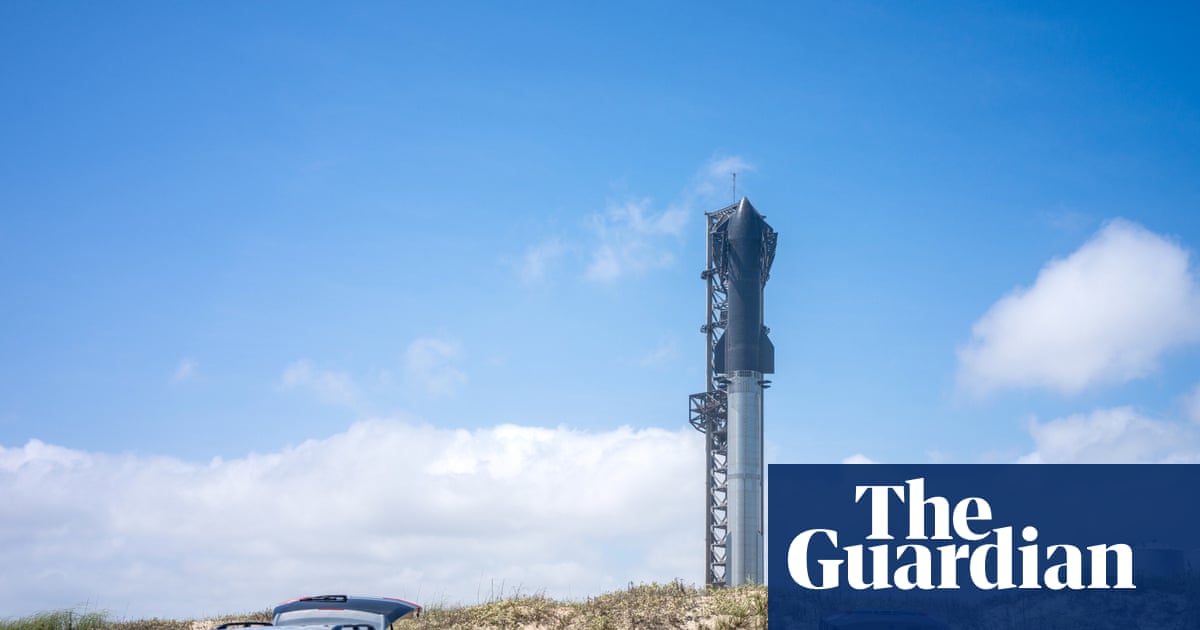
A Texas beach can be closed during rocket launches by Elon Musk’s SpaceX after the state’s supreme court ruled unanimously against a bid by environmental organizations to sue over preserving public access.
The court’s decision that the organizations did not have legal standing upheld a trial court’s dismissal of the lawsuit with prejudice, preventing the groups from filing the case again with revisions.
It means Boca Chica Beach, located near the sprawling Starbase site where SpaceX holds rocket launches, is likely to close during future operations. The rockets, satellites and artificial intelligence giant went public earlier this month, in the biggest stock market debut in history, which made Musk – its CEO – the world’s first trillionaire.
The legal challenge began in 2021 when the environmental organization Save RGV filed suit against the Texas general land office, commissioner Dawn Buckingham and Cameron county. The group contended that officials had improperly closed Boca Chica Beach and State Highway 4, the only roadway providing access to the beach, during SpaceX launch operations.
According to Save RGV, those closures violated the Texas constitution, which was amended in 2009 to protect the public’s right to access and use state beaches. The constitutional amendment passed with the support of 77% of Texas voters, according to the Texas Tribune.
The Sierra Club and the Carrizo/Comecrudo Tribe of Texas later joined the lawsuit, which sought to invalidate a 2013 state law allowing SpaceX to temporarily close Boca Chica Beach for safety reasons during spaceflight activities. The Texas attorney general’s office intervened in the case to defend that law.
The Federal Aviation Administration approved the SpaceX launch site, whose blast radius includes Boca Chica Beach, after Musk’s company demonstrated it had authority to limit public access to the launch area under House Bill 2623, the 2013 legislation that amended the state’s Open Beaches Act.
Save RGV argued that the beach closures authorized under the 2013 law infringe on the “beach-access rights” of members who use the beach for conservation efforts or recreational activities.
“This is a premeditated scheme by a private company, with the State’s help, to take control of public land for its own profit, impairing the public’s constitutional right in the process,” the group wrote in its initial lawsuit.
The court’s opinion, authored by the judge Rebeca Huddle, concluded that the 2009 constitutional amendment explicitly states that private parties do not have the right to bring lawsuits to enforce beach-access protections.
“The plaintiffs are private parties – organizations whose beachgoing members claim the temporary closures of Boca Chica Beach conflict with their constitutional right to access and use the beach,” Huddle wrote. “Because the claims are not viable, it follows that the defendants, all of whom are governmental actors, retain their immunity from suit.”
Marisa Perales, a lawyer representing the environmental groups and the tribe, told the Texas Tribune that the ruling “elevates SpaceX’s interests over Texans’ rights”, adding: “The government has essentially given Boca Chica Beach to SpaceX to use as its blast zone for its rocket launches and other related activities, and the supreme court appears to have endorsed that decision, by saying that the affected public has no remedy to enforce their constitutional right to access their own beach.”
Read the full story at The Guardian ↗
Texas's highest court has determined that environmental organizations cannot proceed with a lawsuit challenging SpaceX's authority to close Boca Chica Beach during rocket launches. The ruling hinges on a legal standing question: the court found that while Texas's 2009 constitutional amendment protects public beach access, private parties lack the right to enforce it in court. The 2013 state law permits SpaceX to close the beach temporarily for safety during spaceflight operations, a power the FAA recognized when approving the Starbase launch facility. The dismissal is final, preventing the groups from refiling revised claims. Environmental organizations argue this decision allows a private company to control public land; state officials maintain the law appropriately balances launch operations with public safety.
Read the full story at The Guardian ↗
A Texas beach can be closed during rocket launches by Elon Musk’s SpaceX after the state’s supreme court ruled unanimously against a bid by environmental organizations to sue over preserving public access.
The court’s decision that the organizations did not have legal standing upheld a trial court’s dismissal of the lawsuit with prejudice, preventing the groups from filing the case again with revisions.
It means Boca Chica Beach, located near the sprawling Starbase site where SpaceX holds rocket launches, is likely to close during future operations. The rockets, satellites and artificial intelligence giant went public earlier this month, in the biggest stock market debut in history, which made Musk – its CEO – the world’s first trillionaire.
The legal challenge began in 2021 when the environmental organization Save RGV filed suit against the Texas general land office, commissioner Dawn Buckingham and Cameron county. The group contended that officials had improperly closed Boca Chica Beach and State Highway 4, the only roadway providing access to the beach, during SpaceX launch operations.
According to Save RGV, those closures violated the Texas constitution, which was amended in 2009 to protect the public’s right to access and use state beaches. The constitutional amendment passed with the support of 77% of Texas voters, according to the Texas Tribune.
The Sierra Club and the Carrizo/Comecrudo Tribe of Texas later joined the lawsuit, which sought to invalidate a 2013 state law allowing SpaceX to temporarily close Boca Chica Beach for safety reasons during spaceflight activities. The Texas attorney general’s office intervened in the case to defend that law.
The Federal Aviation Administration approved the SpaceX launch site, whose blast radius includes Boca Chica Beach, after Musk’s company demonstrated it had authority to limit public access to the launch area under House Bill 2623, the 2013 legislation that amended the state’s Open Beaches Act.
Save RGV argued that the beach closures authorized under the 2013 law infringe on the “beach-access rights” of members who use the beach for conservation efforts or recreational activities.
“This is a premeditated scheme by a private company, with the State’s help, to take control of public land for its own profit, impairing the public’s constitutional right in the process,” the group wrote in its initial lawsuit.
The court’s opinion, authored by the judge Rebeca Huddle, concluded that the 2009 constitutional amendment explicitly states that private parties do not have the right to bring lawsuits to enforce beach-access protections.
“The plaintiffs are private parties – organizations whose beachgoing members claim the temporary closures of Boca Chica Beach conflict with their constitutional right to access and use the beach,” Huddle wrote. “Because the claims are not viable, it follows that the defendants, all of whom are governmental actors, retain their immunity from suit.”
Marisa Perales, a lawyer representing the environmental groups and the tribe, told the Texas Tribune that the ruling “elevates SpaceX’s interests over Texans’ rights”, adding: “The government has essentially given Boca Chica Beach to SpaceX to use as its blast zone for its rocket launches and other related activities, and the supreme court appears to have endorsed that decision, by saying that the affected public has no remedy to enforce their constitutional right to access their own beach.”
Read the full story at The Guardian ↗
Texas Supreme Court ruled unanimously that environmental organizations lack legal standing to sue over SpaceX's Boca Chica Beach closures The 2009 Texas constitutional amendment protecting beach access cannot be enforced by private parties according to the court A 2013 state law authorizes SpaceX to temporarily close Boca Chica Beach for safety during spaceflight operations The FAA approved the launch site after SpaceX demonstrated authority to restrict public access under the 2013 legislation The dismissal includes prejudice, preventing environmental groups from refiling their challenge Environmental groups characterize this as elevating SpaceX's interests over Texans' constitutional beach-access rights Environmental organizations describe the arrangement as a 'premeditated scheme' by a private company with state help to control public land for profit
Read the full story at The Guardian ↗
- Texas Supreme Court ruled unanimously that environmental groups lack legal standing to challenge beach closures at SpaceX's Boca Chica launch site
- The 2013 state law allows SpaceX to temporarily close Boca Chica Beach for safety during launches, with the FAA approving the site under this authority
- Environmental organizations and a Native American tribe cannot refile their challenge after the dismissal with prejudice, ending their legal options on this claim
- A 2009 constitutional amendment protecting beach access cannot be enforced by private parties according to the court's interpretation