Thames Water, I refuse to pay the sewage charge in my bill while you pollute Britain’s rivers and coastlines | Jenny Jones
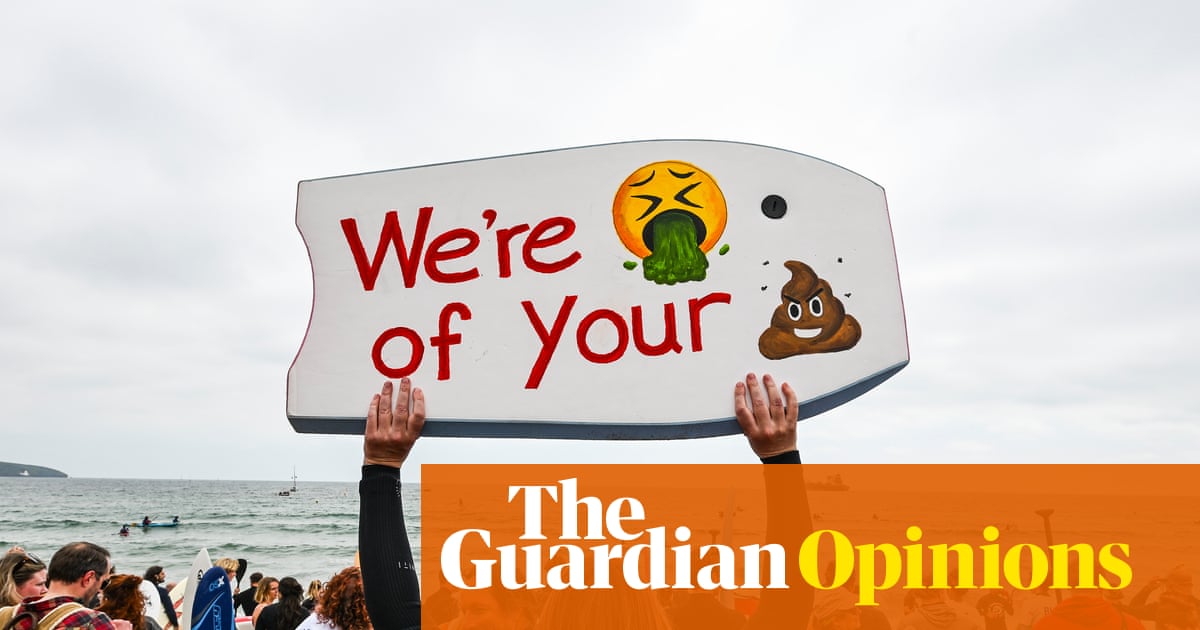
I can’t even remember when I decided to stop paying the sewage element of my Thames Water bill. It might have been after reading this headline from the Guardian in July 2025: “Serious pollution incidents by English water companies rose 60% last year,” with the subheading: “Environment Agency records 75 serious incidents among total of 2,800, with Thames Water being worst offender.”
Living in London means that my supplier is Thames Water, which makes a profit out of pollution. I decided that if the government wouldn’t act, I could at least do my part and not pay for this travesty.
The case for not paying these outrageous charges is clear. The water companies are not fulfilling their duties and instead they are discharging raw sewage into our waterways and lives. Beyond that, they have brought in hosepipe bans, despite last winter being one of the wettest on record, because they haven’t built enough reservoirs to store water for use in the summer.
They ask us to use water wisely, and send us advice on how to cut our usage, and to consider dynamic pricing, while at the same time failing to fix the leaks that lose about a fifth of all public supply in England and Wales. My final gripe is that a huge chunk of my bill doesn’t even get spent on fixing these problems; instead it is spent on interest payments for debts that enable Thames Water to pay shareholders billions of pounds.
Nothing will change until these companies go officially bankrupt and the quickest way of ensuring that happens is if people stop paying their bills. A few decades ago millions of people did exactly that with the poll tax and the government backed down. (I was taken to court over that.) So why not use the same nonpayment tactic to end water privatisation? Even a few million of us delaying the payment of our bills by several months would threaten the viability of these water companies.
As a Thames Water bill-payer, I felt that it was hypocritical of me to be constantly campaigning on the issue and then meekly paying up. As a Green party member since 1988, and green-minded since my teens, it just seemed wrong not to take a stand.
When I decided I had to do more than just speak out, I wrote to Thames Water and explained that I was very happy to pay the proportion of the bill related to their supplying me with water, but not to the proportion for their dealing with sewage. They wrote back saying that they don’t work out the proportions like that between water and sewage. And followed it up with a threatening letter and a vastly increased bill with penalty charges.
Of course the real solution to this problem would be nationalising these companies. Public opinion is firmly in favour of renationalisation, yet the government keeps trotting out a fictitious number of £100bn as the cost of taking companies over. That figure is bogus because it includes the companies’ debt as part of its value. Many argue that the nationalisation cost is actually far lower, possibly even zero.
The government has also talked about “public control”, which is of course not public ownership, but would allow oversight of how companies are run and the ability to impose penalty charges. But if laws and oversight worked, we wouldn’t be in this mess.
We aren’t holding the bosses to account for their failures. We aren’t prosecuting them, finding them guilty of illegal dumping of effluent. No need to send them to our overcrowded prisons. They can be sentenced to community service of 20 hours a week cleaning up the filth they’ve allowed into in our streams and rivers and on our seashore.
None of this is new. We’ve had a Labour government for more than two years, but nothing has really changed and the bills are getting bigger while our precious chalk streams are dying, river ecosystems are collapsing and swimmers are being made ill by sewage floating near beaches.
after newsletter promotion
I will continue my own protest. The letters are unpleasant, and there has been mention of bailiffs, so I don’t recommend anyone else going into this lightly. I will calmly read all the threatening letters and await the court case against me. Despite having a seat in the House of Lords, I don’t have a lot of assets but, win or lose in court, by taking on Thames Water I know I can only win in terms of my own self-respect.
I have drawn a line in the sand. And I hope to win this particular battle.
Jenny Jones is a Green party peer
Read the full story at The Guardian ↗
I will calmly read all the threatening letters and await the court case against me. But I will take a stand even if our government won’t. I can’t even remember when I decided to…
This lens runs the verified story through Cinnamon's AI — wired in the next step.
I can’t even remember when I decided to stop paying the sewage element of my Thames Water bill. It might have been after reading this headline from the Guardian in July 2025: “Serious pollution incidents by English water companies rose 60% last year,” with the subheading: “Environment Agency records 75 serious incidents among total of 2,800, with Thames Water being worst offender.”
Living in London means that my supplier is Thames Water, which makes a profit out of pollution. I decided that if the government wouldn’t act, I could at least do my part and not pay for this travesty.
The case for not paying these outrageous charges is clear. The water companies are not fulfilling their duties and instead they are discharging raw sewage into our waterways and lives. Beyond that, they have brought in hosepipe bans, despite last winter being one of the wettest on record, because they haven’t built enough reservoirs to store water for use in the summer.
They ask us to use water wisely, and send us advice on how to cut our usage, and to consider dynamic pricing, while at the same time failing to fix the leaks that lose about a fifth of all public supply in England and Wales. My final gripe is that a huge chunk of my bill doesn’t even get spent on fixing these problems; instead it is spent on interest payments for debts that enable Thames Water to pay shareholders billions of pounds.
Nothing will change until these companies go officially bankrupt and the quickest way of ensuring that happens is if people stop paying their bills. A few decades ago millions of people did exactly that with the poll tax and the government backed down. (I was taken to court over that.) So why not use the same nonpayment tactic to end water privatisation? Even a few million of us delaying the payment of our bills by several months would threaten the viability of these water companies.
As a Thames Water bill-payer, I felt that it was hypocritical of me to be constantly campaigning on the issue and then meekly paying up. As a Green party member since 1988, and green-minded since my teens, it just seemed wrong not to take a stand.
When I decided I had to do more than just speak out, I wrote to Thames Water and explained that I was very happy to pay the proportion of the bill related to their supplying me with water, but not to the proportion for their dealing with sewage. They wrote back saying that they don’t work out the proportions like that between water and sewage. And followed it up with a threatening letter and a vastly increased bill with penalty charges.
Of course the real solution to this problem would be nationalising these companies. Public opinion is firmly in favour of renationalisation, yet the government keeps trotting out a fictitious number of £100bn as the cost of taking companies over. That figure is bogus because it includes the companies’ debt as part of its value. Many argue that the nationalisation cost is actually far lower, possibly even zero.
The government has also talked about “public control”, which is of course not public ownership, but would allow oversight of how companies are run and the ability to impose penalty charges. But if laws and oversight worked, we wouldn’t be in this mess.
We aren’t holding the bosses to account for their failures. We aren’t prosecuting them, finding them guilty of illegal dumping of effluent. No need to send them to our overcrowded prisons. They can be sentenced to community service of 20 hours a week cleaning up the filth they’ve allowed into in our streams and rivers and on our seashore.
None of this is new. We’ve had a Labour government for more than two years, but nothing has really changed and the bills are getting bigger while our precious chalk streams are dying, river ecosystems are collapsing and swimmers are being made ill by sewage floating near beaches.
after newsletter promotion
I will continue my own protest. The letters are unpleasant, and there has been mention of bailiffs, so I don’t recommend anyone else going into this lightly. I will calmly read all the threatening letters and await the court case against me. Despite having a seat in the House of Lords, I don’t have a lot of assets but, win or lose in court, by taking on Thames Water I know I can only win in terms of my own self-respect.
I have drawn a line in the sand. And I hope to win this particular battle.
Jenny Jones is a Green party peer
Read the full story at The Guardian ↗
I can’t even remember when I decided to stop paying the sewage element of my Thames Water bill. It might have been after reading this headline from the Guardian in July 2025: “Serious pollution incidents by English water companies rose 60% last year,” with the subheading: “Environment Agency records 75 serious incidents among total of 2,800, with Thames Water being worst offender.”
Living in London means that my supplier is Thames Water, which makes a profit out of pollution. I decided that if the government wouldn’t act, I could at least do my part and not pay for this travesty.
The case for not paying these outrageous charges is clear. The water companies are not fulfilling their duties and instead they are discharging raw sewage into our waterways and lives. Beyond that, they have brought in hosepipe bans, despite last winter being one of the wettest on record, because they haven’t built enough reservoirs to store water for use in the summer.
They ask us to use water wisely, and send us advice on how to cut our usage, and to consider dynamic pricing, while at the same time failing to fix the leaks that lose about a fifth of all public supply in England and Wales. My final gripe is that a huge chunk of my bill doesn’t even get spent on fixing these problems; instead it is spent on interest payments for debts that enable Thames Water to pay shareholders billions of pounds.
Nothing will change until these companies go officially bankrupt and the quickest way of ensuring that happens is if people stop paying their bills. A few decades ago millions of people did exactly that with the poll tax and the government backed down. (I was taken to court over that.) So why not use the same nonpayment tactic to end water privatisation? Even a few million of us delaying the payment of our bills by several months would threaten the viability of these water companies.
As a Thames Water bill-payer, I felt that it was hypocritical of me to be constantly campaigning on the issue and then meekly paying up. As a Green party member since 1988, and green-minded since my teens, it just seemed wrong not to take a stand.
When I decided I had to do more than just speak out, I wrote to Thames Water and explained that I was very happy to pay the proportion of the bill related to their supplying me with water, but not to the proportion for their dealing with sewage. They wrote back saying that they don’t work out the proportions like that between water and sewage. And followed it up with a threatening letter and a vastly increased bill with penalty charges.
Of course the real solution to this problem would be nationalising these companies. Public opinion is firmly in favour of renationalisation, yet the government keeps trotting out a fictitious number of £100bn as the cost of taking companies over. That figure is bogus because it includes the companies’ debt as part of its value. Many argue that the nationalisation cost is actually far lower, possibly even zero.
The government has also talked about “public control”, which is of course not public ownership, but would allow oversight of how companies are run and the ability to impose penalty charges. But if laws and oversight worked, we wouldn’t be in this mess.
We aren’t holding the bosses to account for their failures. We aren’t prosecuting them, finding them guilty of illegal dumping of effluent. No need to send them to our overcrowded prisons. They can be sentenced to community service of 20 hours a week cleaning up the filth they’ve allowed into in our streams and rivers and on our seashore.
None of this is new. We’ve had a Labour government for more than two years, but nothing has really changed and the bills are getting bigger while our precious chalk streams are dying, river ecosystems are collapsing and swimmers are being made ill by sewage floating near beaches.
after newsletter promotion
I will continue my own protest. The letters are unpleasant, and there has been mention of bailiffs, so I don’t recommend anyone else going into this lightly. I will calmly read all the threatening letters and await the court case against me. Despite having a seat in the House of Lords, I don’t have a lot of assets but, win or lose in court, by taking on Thames Water I know I can only win in terms of my own self-respect.
I have drawn a line in the sand. And I hope to win this particular battle.
Jenny Jones is a Green party peer
Read the full story at The Guardian ↗
This lens runs the verified story through Cinnamon's AI — wired in the next step.
- I will calmly read all the threatening letters and await the court case against me.
- But I will take a stand even if our government won’t.
- I can’t even remember when I decided to…