The Fed raises interest rates. And, EU proposes Canada become an 'associate member'
 ✓
✓Good morning. You're reading the Up First newsletter. Subscribe here to get it delivered to your inbox, and listen to the Up First podcast for all the news you need to start your day.
The Federal Reserve unanimously voted to raise interest rates yesterday for the first time in more than three years, increasing the benchmark rate by a quarter percentage point to a range of 3.75% to 4%. The hike makes it more expensive to borrow money, grow a business or carry a credit card balance. Inflation has risen amid the war in Iran, driving up the price of gasoline and diesel fuel. While higher interest rates won't immediately lower prices, they demonstrate the Fed's commitment to restoring price stability, despite repeated pressure from President Trump to lower interest rates.
Federal Reserve Chair Kevin Warsh speaks during a news conference at Federal Reserve Headquarters on July 29, 2026 in Washington, D.C. Win McNamee/Getty Images hide caption
toggle caption
Win McNamee/Getty Images
Rising gas prices have sparked protests around the world, including in Syria, the Philippines and Indonesia. The price surge comes as Saudi Arabia, the world's largest oil exporter, faces a renewed war in Yemen against the Iranian-backed Houthis.
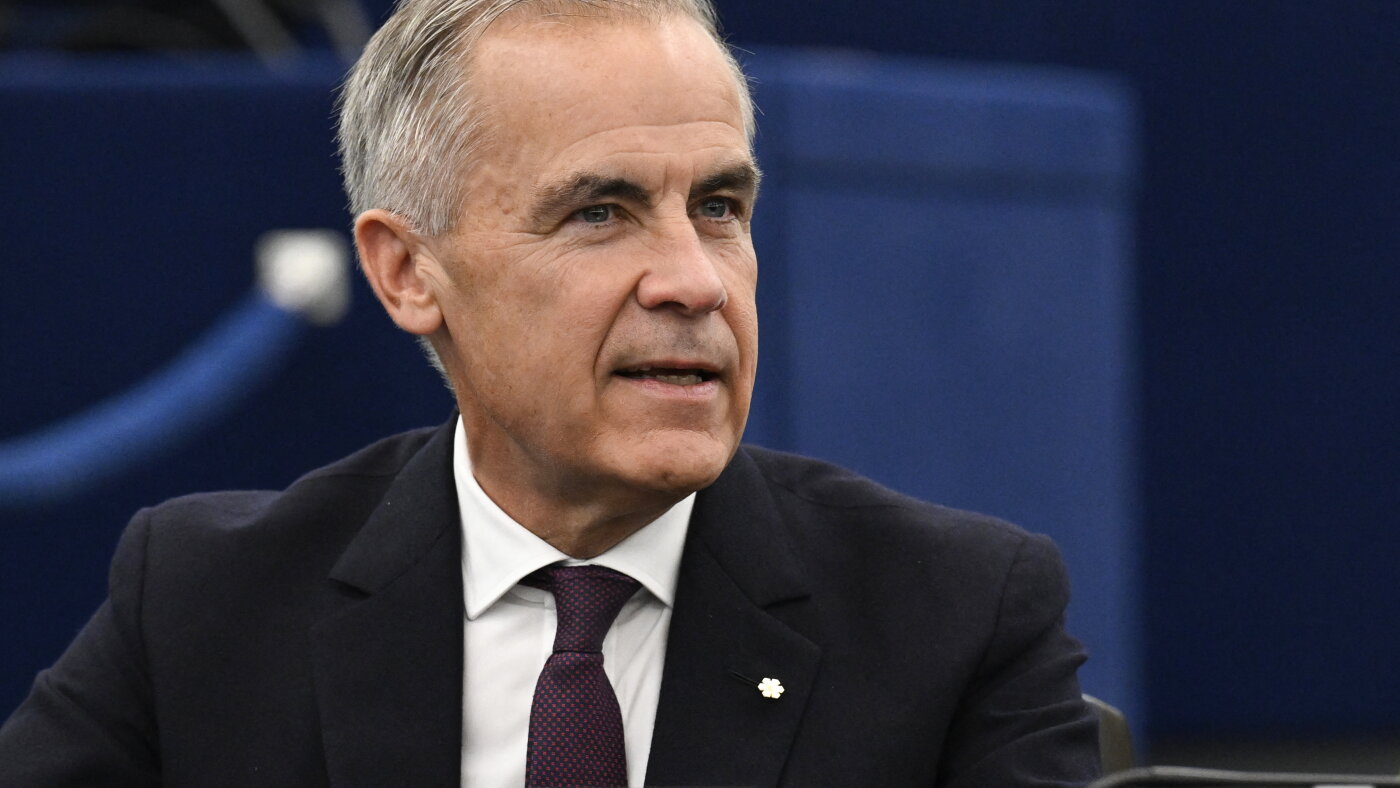
The European Union has proposed making Canada its first-ever "associate member." European Commission President Ursula von der Leyen announced the proposal for the new model of membership during her annual speech to the EU Parliament in Strasbourg, France. In his own address to the EU Parliament this morning, Canadian Prime Minister Mark Carney emphasized how much the EU and Canada have in common and said that "Europe and Canada are stronger together."
The CLARITY Act would set a regulatory framework for the crypto sector for the first time in the U.S. But whether it can clear a key procedural hurdle in the Senate remains uncertain. Karen Bleier/AFP via Getty Images hide caption
toggle caption
Karen Bleier/AFP via Getty Images
A bill championed by crypto executives and President Trump failed to pass a Senate vote this week. The Clarity Act would have established the first regulations for the crypto sector in U.S. history. A version of the bill passed the House last year. Now, the bill's future is uncertain as the crypto industry and its backers must weigh their options for another attempt. Here are some key things to know about the Clarity Act:
by Chiara Eisner, Investigative Correspondent
Technicians connect the inner and outer segments of NASA's Nancy Grace Roman Space Telescope in 2025 at NASA's Goddard Space Flight Center in Greenbelt, Md. Jolearra Tshiteya/NASA via AP hide caption
toggle caption
Jolearra Tshiteya/NASA via AP
For decades, NASA's Goddard facility in Maryland has been famous for one thing: engineering spacecraft that try to answer big questions. Questions like: Are we alone? How many other planets might be able to support life? Why is the universe expanding?
It takes billions of dollars, custom-built rooms and teams of experienced engineers to make the telescopes and satellites that can shed some light on those questions. But last year, NASA's management started forcing engineers out of those specialized labs. In some cases, NASA leaders gave them less than a week to pack up their devices and designate what equipment they would have to lose in order to fit into the smaller spaces they were told to move to. Other times, sources told me, the teams' equipment was moved — and even donated to other institutions — without the scientists' knowledge.
After lawmakers asked the government's independent watchdog office overseeing NASA to investigate the impact of those moves, the agency in June found that those relocations hadn't hurt ongoing projects and would "not impact NASA's anticipated missions."
But I spoke with seven current and former NASA scientists and engineers at Goddard who said that wasn't true. Some of NASA's most ambitious projects, like the Nancy Grace Roman Space Telescope, launched in August, were affected, NPR found.
Experts told me that it signals danger for NASA's future.
"That only adds a whole lot of risk to an already risky endeavor," said Jack Kiraly, chief of advocacy at The Planetary Society, a nonprofit that champions space science and exploration. "These are potentially billions of dollars worth of taxpayer investment. We don't do ourselves any favors by putting the people that make this happen in precarious situations."
This side view of a lab mouse brain shows nerve fibers extending from the human graft (colored with green and red fluorescent proteins) through the mouse brain (colored with blue). Scale bar = 1 mm. S. Pașca lab/Stanford University hide caption
toggle caption
S. Pașca lab/Stanford University
This newsletter was edited by Suzanne Nuyen.
The Federal Reserve has raised interest rates for the first time in years. And, the European Union has proposed that Canada become its first-ever "associate member."
This lens runs the verified story through Cinnamon's AI — wired in the next step.
Good morning. You're reading the Up First newsletter. Subscribe here to get it delivered to your inbox, and listen to the Up First podcast for all the news you need to start your day.
The Federal Reserve unanimously voted to raise interest rates yesterday for the first time in more than three years, increasing the benchmark rate by a quarter percentage point to a range of 3.75% to 4%. The hike makes it more expensive to borrow money, grow a business or carry a credit card balance. Inflation has risen amid the war in Iran, driving up the price of gasoline and diesel fuel. While higher interest rates won't immediately lower prices, they demonstrate the Fed's commitment to restoring price stability, despite repeated pressure from President Trump to lower interest rates.
Federal Reserve Chair Kevin Warsh speaks during a news conference at Federal Reserve Headquarters on July 29, 2026 in Washington, D.C. Win McNamee/Getty Images hide caption
toggle caption
Win McNamee/Getty Images
Rising gas prices have sparked protests around the world, including in Syria, the Philippines and Indonesia. The price surge comes as Saudi Arabia, the world's largest oil exporter, faces a renewed war in Yemen against the Iranian-backed Houthis.
The European Union has proposed making Canada its first-ever "associate member." European Commission President Ursula von der Leyen announced the proposal for the new model of membership during her annual speech to the EU Parliament in Strasbourg, France. In his own address to the EU Parliament this morning, Canadian Prime Minister Mark Carney emphasized how much the EU and Canada have in common and said that "Europe and Canada are stronger together."
The CLARITY Act would set a regulatory framework for the crypto sector for the first time in the U.S. But whether it can clear a key procedural hurdle in the Senate remains uncertain. Karen Bleier/AFP via Getty Images hide caption
toggle caption
Karen Bleier/AFP via Getty Images
A bill championed by crypto executives and President Trump failed to pass a Senate vote this week. The Clarity Act would have established the first regulations for the crypto sector in U.S. history. A version of the bill passed the House last year. Now, the bill's future is uncertain as the crypto industry and its backers must weigh their options for another attempt. Here are some key things to know about the Clarity Act:
by Chiara Eisner, Investigative Correspondent
Technicians connect the inner and outer segments of NASA's Nancy Grace Roman Space Telescope in 2025 at NASA's Goddard Space Flight Center in Greenbelt, Md. Jolearra Tshiteya/NASA via AP hide caption
toggle caption
Jolearra Tshiteya/NASA via AP
For decades, NASA's Goddard facility in Maryland has been famous for one thing: engineering spacecraft that try to answer big questions. Questions like: Are we alone? How many other planets might be able to support life? Why is the universe expanding?
It takes billions of dollars, custom-built rooms and teams of experienced engineers to make the telescopes and satellites that can shed some light on those questions. But last year, NASA's management started forcing engineers out of those specialized labs. In some cases, NASA leaders gave them less than a week to pack up their devices and designate what equipment they would have to lose in order to fit into the smaller spaces they were told to move to. Other times, sources told me, the teams' equipment was moved — and even donated to other institutions — without the scientists' knowledge.
After lawmakers asked the government's independent watchdog office overseeing NASA to investigate the impact of those moves, the agency in June found that those relocations hadn't hurt ongoing projects and would "not impact NASA's anticipated missions."
But I spoke with seven current and former NASA scientists and engineers at Goddard who said that wasn't true. Some of NASA's most ambitious projects, like the Nancy Grace Roman Space Telescope, launched in August, were affected, NPR found.
Experts told me that it signals danger for NASA's future.
"That only adds a whole lot of risk to an already risky endeavor," said Jack Kiraly, chief of advocacy at The Planetary Society, a nonprofit that champions space science and exploration. "These are potentially billions of dollars worth of taxpayer investment. We don't do ourselves any favors by putting the people that make this happen in precarious situations."
This side view of a lab mouse brain shows nerve fibers extending from the human graft (colored with green and red fluorescent proteins) through the mouse brain (colored with blue). Scale bar = 1 mm. S. Pașca lab/Stanford University hide caption
toggle caption
S. Pașca lab/Stanford University
This newsletter was edited by Suzanne Nuyen.
Good morning. You're reading the Up First newsletter. Subscribe here to get it delivered to your inbox, and listen to the Up First podcast for all the news you need to start your day.
The Federal Reserve unanimously voted to raise interest rates yesterday for the first time in more than three years, increasing the benchmark rate by a quarter percentage point to a range of 3.75% to 4%. The hike makes it more expensive to borrow money, grow a business or carry a credit card balance. Inflation has risen amid the war in Iran, driving up the price of gasoline and diesel fuel. While higher interest rates won't immediately lower prices, they demonstrate the Fed's commitment to restoring price stability, despite repeated pressure from President Trump to lower interest rates.
Federal Reserve Chair Kevin Warsh speaks during a news conference at Federal Reserve Headquarters on July 29, 2026 in Washington, D.C. Win McNamee/Getty Images hide caption
toggle caption
Win McNamee/Getty Images
Rising gas prices have sparked protests around the world, including in Syria, the Philippines and Indonesia. The price surge comes as Saudi Arabia, the world's largest oil exporter, faces a renewed war in Yemen against the Iranian-backed Houthis.
The European Union has proposed making Canada its first-ever "associate member." European Commission President Ursula von der Leyen announced the proposal for the new model of membership during her annual speech to the EU Parliament in Strasbourg, France. In his own address to the EU Parliament this morning, Canadian Prime Minister Mark Carney emphasized how much the EU and Canada have in common and said that "Europe and Canada are stronger together."
The CLARITY Act would set a regulatory framework for the crypto sector for the first time in the U.S. But whether it can clear a key procedural hurdle in the Senate remains uncertain. Karen Bleier/AFP via Getty Images hide caption
toggle caption
Karen Bleier/AFP via Getty Images
A bill championed by crypto executives and President Trump failed to pass a Senate vote this week. The Clarity Act would have established the first regulations for the crypto sector in U.S. history. A version of the bill passed the House last year. Now, the bill's future is uncertain as the crypto industry and its backers must weigh their options for another attempt. Here are some key things to know about the Clarity Act:
by Chiara Eisner, Investigative Correspondent
Technicians connect the inner and outer segments of NASA's Nancy Grace Roman Space Telescope in 2025 at NASA's Goddard Space Flight Center in Greenbelt, Md. Jolearra Tshiteya/NASA via AP hide caption
toggle caption
Jolearra Tshiteya/NASA via AP
For decades, NASA's Goddard facility in Maryland has been famous for one thing: engineering spacecraft that try to answer big questions. Questions like: Are we alone? How many other planets might be able to support life? Why is the universe expanding?
It takes billions of dollars, custom-built rooms and teams of experienced engineers to make the telescopes and satellites that can shed some light on those questions. But last year, NASA's management started forcing engineers out of those specialized labs. In some cases, NASA leaders gave them less than a week to pack up their devices and designate what equipment they would have to lose in order to fit into the smaller spaces they were told to move to. Other times, sources told me, the teams' equipment was moved — and even donated to other institutions — without the scientists' knowledge.
After lawmakers asked the government's independent watchdog office overseeing NASA to investigate the impact of those moves, the agency in June found that those relocations hadn't hurt ongoing projects and would "not impact NASA's anticipated missions."
But I spoke with seven current and former NASA scientists and engineers at Goddard who said that wasn't true. Some of NASA's most ambitious projects, like the Nancy Grace Roman Space Telescope, launched in August, were affected, NPR found.
Experts told me that it signals danger for NASA's future.
"That only adds a whole lot of risk to an already risky endeavor," said Jack Kiraly, chief of advocacy at The Planetary Society, a nonprofit that champions space science and exploration. "These are potentially billions of dollars worth of taxpayer investment. We don't do ourselves any favors by putting the people that make this happen in precarious situations."
This side view of a lab mouse brain shows nerve fibers extending from the human graft (colored with green and red fluorescent proteins) through the mouse brain (colored with blue). Scale bar = 1 mm. S. Pașca lab/Stanford University hide caption
toggle caption
S. Pașca lab/Stanford University
This newsletter was edited by Suzanne Nuyen.
Read the full story at NPR ↗ · NPR ↗ · Axios ↗ · BBC ↗
This lens runs the verified story through Cinnamon's AI — wired in the next step.
- The Federal Reserve has raised interest rates for the first time in years.
- And, the European Union has proposed that Canada become its first-ever "associate member."