The UK’s G20 presidency will push Andy Burnham to the centre of the global stage. What will he use it for? | Michael Jacobs
Among the many crucial decisions Andy Burnham has to make over the next few weeks, one has gone almost completely unremarked: what Britain’s priorities will be when it assumes the presidency of the G20 next year.
Burnham has said he wants to concentrate on domestic policy. But with the world in turmoil, chairing the group of the world’s largest economies will be one of his most important responsibilities.
The last time the UK chaired the forum was in 2009, when Gordon Brown presided over the rescue of the global economy after the financial crash. Before the London summit in April 2009, the French president, Nicolas Sarkozy, had wrung his hands, saying that “none of us has a plan”. Barack Obama had a quick response to this: “Gordon has a plan.”
He did. Brown got the G20 to agree to a $5tn fiscal stimulus among its member states, increase International Monetary Fund lending to developing countries and create a new global coordinator for financial regulation, the Financial Stability Board.
But 2009 was a rare year for the G20, in that it actually achieved something. In general, the long communiques issued at its annual leaders’ summits reflect only the lowest-common-denominator agreement on broad principles. The G20 rarely commits its members to doing anything they were not planning to do anyway, and only occasionally makes genuinely collective decisions. One of the most consequential was the suspension of developing countries’ debt during the Covid pandemic in 2020 and the subsequent establishment of a “common framework” for debt treatment.
Indeed, for what is meant to be the effective executive committee of the global economy, the G20 is an oddly weak institution. Its 19 members (plus the EU and the African Union) have no HQ or staff and do not even have a standing website: if you want to know what the G20 has agreed over the past 20 years you need to go to a set of unofficial webpages hosted by some enterprising academics at the University of Toronto.
For most countries, hosting the G20 summit is a chance to impress its domestic audience by showing that its head of government bestrides the world stage. Last year Donald Trump boycotted it; the South African president, Cyril Ramaphosa, was glad simply to get any kind of agreed communique. This year, the US is the host, with one of Trump’s own properties near Miami the summit venue in December: expect a show of personal and US power and very little attempt to achieve anything by way of multilateral cooperation.
But that makes Burnham’s task next year even more critical. The UK needs to show that it is still possible for the world’s leading nations – including the US and China – to work together to meet the key challenges facing the world.
So what should the UK’s presidency priorities be?
First, agreement on the need for, and a process towards, a global treaty on the regulation of artificial intelligence. After the recent alarm over the existential risks of AI, the UK has a chance to lead the world towards a global agreement on its control. Even if Trump is unwilling to sign up, getting the rest of the world to do so, seeking a form of global “technological security”, would be a vital achievement. A future US president might well wish to accede later.
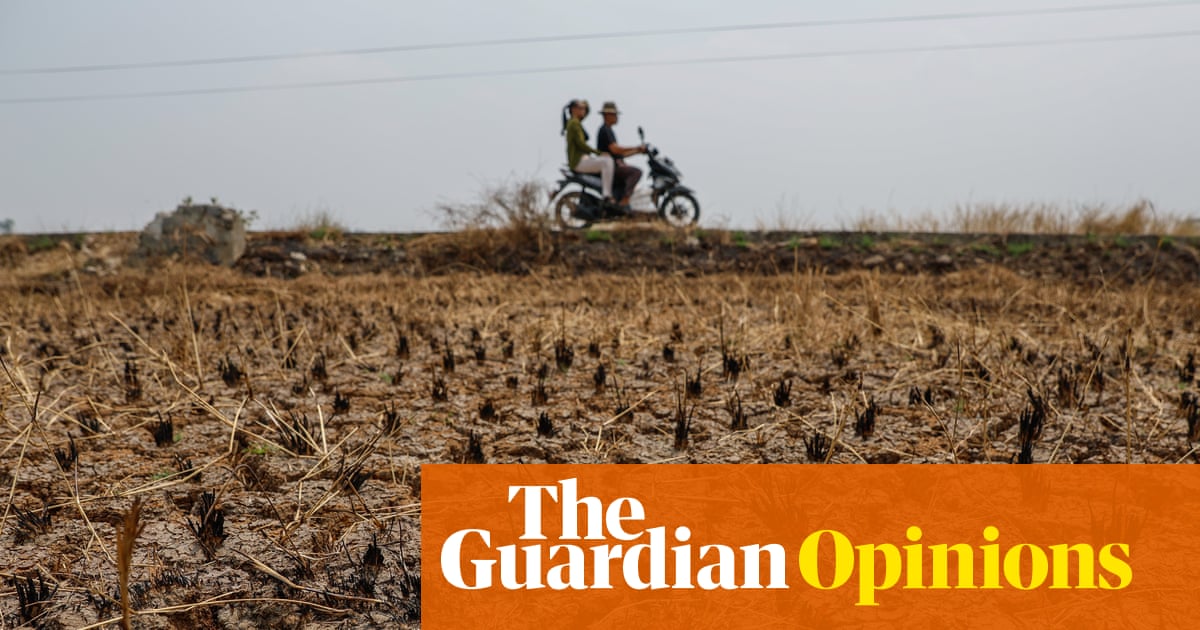
Second, acknowledgment of the growing risk to food security and a plan to deal with it. The incoming “supersized” El Niño weather pattern is combining with the climate crisis, soil and biodiversity loss, and the impact of the war in the Middle East on diesel and fertiliser costs to create a perfect storm for the world’s food system. Agricultural yields are falling and food prices rising, leaving millions of people at risk of hunger. The G20 needs to act to prevent it.
after newsletter promotion
Third, acknowledgment of accelerating climate insecurity – the severe risks posed by the climate emergency to all countries’ economies and societies – and agreement on coordinated measures to improve climate resilience. Though the Trump administration does not support emissions reduction, it does accept the need to adapt to climate change, and this year’s extreme weather events have impressed on all governments how urgent this is. The G20 should agree to provide more support to the most vulnerable countries.
Fourth, agreement on a debt restructuring programme for low- and middle-income economies whose debt – through no fault of their own, but because of rising global interest rates – has now become unsustainable. For too many countries the compounding of debt burdens with rising energy and food prices has made sustainable economic growth all but impossible.
What connects these issues is that all are global problems that can only be tackled through international cooperation. They each address aspects of national and global security – technological, food, climate and economic. Importantly, the first three address problems that are highly visible and politically salient to the British public, enabling the government to demonstrate how international action benefits people at home. (And the fourth represents a vital contribution to global economic growth.) And all have a good chance of being agreed in the G20, despite the conflicts and tensions that in other areas divide the world’s leaders.
G20 host countries always invent a slogan to express their presidency ambitions. In other contexts Burnham has said he wants to give people a sense of hope. That is something people all over the world need. For the G20 he might wish to try “national security through international cooperation”. It would not be a bad legacy to aim for.
Michael Jacobs is professor of political economy at the University of Sheffield and a former energy and climate change adviser to Gordon Brown when he was prime minister
Read the full story at The Guardian ↗
This is a chance for the PM to advance his progressive agenda and tackle urgent issues such as AI regulation and climate action. Among the many crucial decisions Andy Burnham has…
This lens runs the verified story through Cinnamon's AI — wired in the next step.
Among the many crucial decisions Andy Burnham has to make over the next few weeks, one has gone almost completely unremarked: what Britain’s priorities will be when it assumes the presidency of the G20 next year.
Burnham has said he wants to concentrate on domestic policy. But with the world in turmoil, chairing the group of the world’s largest economies will be one of his most important responsibilities.
The last time the UK chaired the forum was in 2009, when Gordon Brown presided over the rescue of the global economy after the financial crash. Before the London summit in April 2009, the French president, Nicolas Sarkozy, had wrung his hands, saying that “none of us has a plan”. Barack Obama had a quick response to this: “Gordon has a plan.”
He did. Brown got the G20 to agree to a $5tn fiscal stimulus among its member states, increase International Monetary Fund lending to developing countries and create a new global coordinator for financial regulation, the Financial Stability Board.
But 2009 was a rare year for the G20, in that it actually achieved something. In general, the long communiques issued at its annual leaders’ summits reflect only the lowest-common-denominator agreement on broad principles. The G20 rarely commits its members to doing anything they were not planning to do anyway, and only occasionally makes genuinely collective decisions. One of the most consequential was the suspension of developing countries’ debt during the Covid pandemic in 2020 and the subsequent establishment of a “common framework” for debt treatment.
Indeed, for what is meant to be the effective executive committee of the global economy, the G20 is an oddly weak institution. Its 19 members (plus the EU and the African Union) have no HQ or staff and do not even have a standing website: if you want to know what the G20 has agreed over the past 20 years you need to go to a set of unofficial webpages hosted by some enterprising academics at the University of Toronto.
For most countries, hosting the G20 summit is a chance to impress its domestic audience by showing that its head of government bestrides the world stage. Last year Donald Trump boycotted it; the South African president, Cyril Ramaphosa, was glad simply to get any kind of agreed communique. This year, the US is the host, with one of Trump’s own properties near Miami the summit venue in December: expect a show of personal and US power and very little attempt to achieve anything by way of multilateral cooperation.
But that makes Burnham’s task next year even more critical. The UK needs to show that it is still possible for the world’s leading nations – including the US and China – to work together to meet the key challenges facing the world.
So what should the UK’s presidency priorities be?
First, agreement on the need for, and a process towards, a global treaty on the regulation of artificial intelligence. After the recent alarm over the existential risks of AI, the UK has a chance to lead the world towards a global agreement on its control. Even if Trump is unwilling to sign up, getting the rest of the world to do so, seeking a form of global “technological security”, would be a vital achievement. A future US president might well wish to accede later.
Second, acknowledgment of the growing risk to food security and a plan to deal with it. The incoming “supersized” El Niño weather pattern is combining with the climate crisis, soil and biodiversity loss, and the impact of the war in the Middle East on diesel and fertiliser costs to create a perfect storm for the world’s food system. Agricultural yields are falling and food prices rising, leaving millions of people at risk of hunger. The G20 needs to act to prevent it.
after newsletter promotion
Third, acknowledgment of accelerating climate insecurity – the severe risks posed by the climate emergency to all countries’ economies and societies – and agreement on coordinated measures to improve climate resilience. Though the Trump administration does not support emissions reduction, it does accept the need to adapt to climate change, and this year’s extreme weather events have impressed on all governments how urgent this is. The G20 should agree to provide more support to the most vulnerable countries.
Fourth, agreement on a debt restructuring programme for low- and middle-income economies whose debt – through no fault of their own, but because of rising global interest rates – has now become unsustainable. For too many countries the compounding of debt burdens with rising energy and food prices has made sustainable economic growth all but impossible.
What connects these issues is that all are global problems that can only be tackled through international cooperation. They each address aspects of national and global security – technological, food, climate and economic. Importantly, the first three address problems that are highly visible and politically salient to the British public, enabling the government to demonstrate how international action benefits people at home. (And the fourth represents a vital contribution to global economic growth.) And all have a good chance of being agreed in the G20, despite the conflicts and tensions that in other areas divide the world’s leaders.
G20 host countries always invent a slogan to express their presidency ambitions. In other contexts Burnham has said he wants to give people a sense of hope. That is something people all over the world need. For the G20 he might wish to try “national security through international cooperation”. It would not be a bad legacy to aim for.
Michael Jacobs is professor of political economy at the University of Sheffield and a former energy and climate change adviser to Gordon Brown when he was prime minister
Read the full story at The Guardian ↗
Among the many crucial decisions Andy Burnham has to make over the next few weeks, one has gone almost completely unremarked: what Britain’s priorities will be when it assumes the presidency of the G20 next year.
Burnham has said he wants to concentrate on domestic policy. But with the world in turmoil, chairing the group of the world’s largest economies will be one of his most important responsibilities.
The last time the UK chaired the forum was in 2009, when Gordon Brown presided over the rescue of the global economy after the financial crash. Before the London summit in April 2009, the French president, Nicolas Sarkozy, had wrung his hands, saying that “none of us has a plan”. Barack Obama had a quick response to this: “Gordon has a plan.”
He did. Brown got the G20 to agree to a $5tn fiscal stimulus among its member states, increase International Monetary Fund lending to developing countries and create a new global coordinator for financial regulation, the Financial Stability Board.
But 2009 was a rare year for the G20, in that it actually achieved something. In general, the long communiques issued at its annual leaders’ summits reflect only the lowest-common-denominator agreement on broad principles. The G20 rarely commits its members to doing anything they were not planning to do anyway, and only occasionally makes genuinely collective decisions. One of the most consequential was the suspension of developing countries’ debt during the Covid pandemic in 2020 and the subsequent establishment of a “common framework” for debt treatment.
Indeed, for what is meant to be the effective executive committee of the global economy, the G20 is an oddly weak institution. Its 19 members (plus the EU and the African Union) have no HQ or staff and do not even have a standing website: if you want to know what the G20 has agreed over the past 20 years you need to go to a set of unofficial webpages hosted by some enterprising academics at the University of Toronto.
For most countries, hosting the G20 summit is a chance to impress its domestic audience by showing that its head of government bestrides the world stage. Last year Donald Trump boycotted it; the South African president, Cyril Ramaphosa, was glad simply to get any kind of agreed communique. This year, the US is the host, with one of Trump’s own properties near Miami the summit venue in December: expect a show of personal and US power and very little attempt to achieve anything by way of multilateral cooperation.
But that makes Burnham’s task next year even more critical. The UK needs to show that it is still possible for the world’s leading nations – including the US and China – to work together to meet the key challenges facing the world.
So what should the UK’s presidency priorities be?
First, agreement on the need for, and a process towards, a global treaty on the regulation of artificial intelligence. After the recent alarm over the existential risks of AI, the UK has a chance to lead the world towards a global agreement on its control. Even if Trump is unwilling to sign up, getting the rest of the world to do so, seeking a form of global “technological security”, would be a vital achievement. A future US president might well wish to accede later.
Second, acknowledgment of the growing risk to food security and a plan to deal with it. The incoming “supersized” El Niño weather pattern is combining with the climate crisis, soil and biodiversity loss, and the impact of the war in the Middle East on diesel and fertiliser costs to create a perfect storm for the world’s food system. Agricultural yields are falling and food prices rising, leaving millions of people at risk of hunger. The G20 needs to act to prevent it.
after newsletter promotion
Third, acknowledgment of accelerating climate insecurity – the severe risks posed by the climate emergency to all countries’ economies and societies – and agreement on coordinated measures to improve climate resilience. Though the Trump administration does not support emissions reduction, it does accept the need to adapt to climate change, and this year’s extreme weather events have impressed on all governments how urgent this is. The G20 should agree to provide more support to the most vulnerable countries.
Fourth, agreement on a debt restructuring programme for low- and middle-income economies whose debt – through no fault of their own, but because of rising global interest rates – has now become unsustainable. For too many countries the compounding of debt burdens with rising energy and food prices has made sustainable economic growth all but impossible.
What connects these issues is that all are global problems that can only be tackled through international cooperation. They each address aspects of national and global security – technological, food, climate and economic. Importantly, the first three address problems that are highly visible and politically salient to the British public, enabling the government to demonstrate how international action benefits people at home. (And the fourth represents a vital contribution to global economic growth.) And all have a good chance of being agreed in the G20, despite the conflicts and tensions that in other areas divide the world’s leaders.
G20 host countries always invent a slogan to express their presidency ambitions. In other contexts Burnham has said he wants to give people a sense of hope. That is something people all over the world need. For the G20 he might wish to try “national security through international cooperation”. It would not be a bad legacy to aim for.
Michael Jacobs is professor of political economy at the University of Sheffield and a former energy and climate change adviser to Gordon Brown when he was prime minister
Read the full story at The Guardian ↗
This lens runs the verified story through Cinnamon's AI — wired in the next step.
- This is a chance for the PM to advance his progressive agenda and tackle urgent issues such as AI regulation and climate action.
- Among the many crucial decisions Andy Burnham has…