The UK's summers are getting hotter - but how prepared are we?
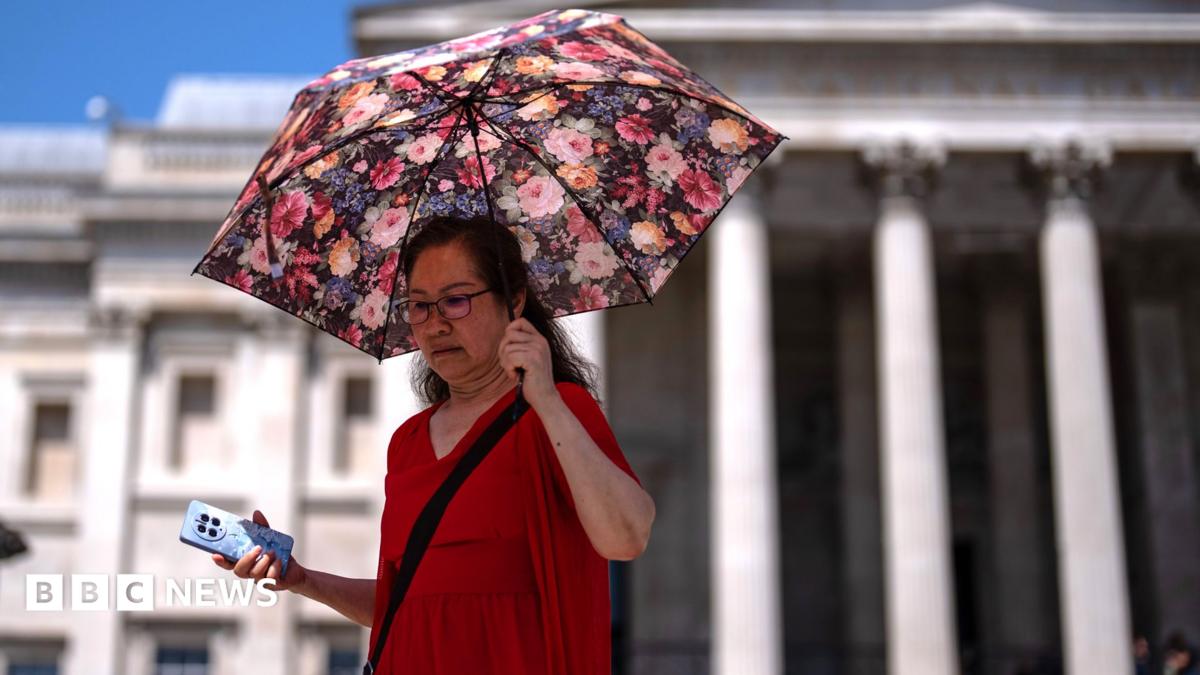
The UK's hottest recorded temperature now stands at 40.3C, set in July 2022. Before 1990, the UK had not seen 37C.
But these records are almost certainly going to keep getting broken.
If global warming continues at its current pace, temperatures in the mid-forties could be a serious possibility for the UK by 2050, according to Met Office projections.
And while not every year will be hotter than the last, the UK could face even higher temperatures in the second half of this century.
Higher temperatures driven by climate change dry out the soil too. With less moisture available, less heat energy is used for evaporation - leaving more energy to warm the air and amplifying the hot conditions.
Some scientists have also argued that climate change could be making high-pressure systems more likely to get "stuck" - although this is not yet certain.
This can create a "heat dome" that traps hot air underneath, which is what Europe has been experiencing this week.
"Climate change [is] loading the atmosphere with extra heat and making extreme temperatures far more intense than they would have been in the past," said Dr Akshay Deoras, senior research scientist at the University of Reading.
Scientists stress that the only way to limit rising summer temperatures is to rapidly cut global emissions of planet-warming gases, such as carbon dioxide.
Read the full story at BBC ↗
The UK has experienced a measurable shift in summer temperatures. The highest recorded temperature is 40.3°C (July 2022), compared to pre-1990 conditions where 37°C was uncommon. Climate models suggest continued warming could bring mid-40s temperatures by 2050. Heat intensity is amplified by reduced soil moisture—less evaporation means more energy warms the air—and possibly by changes in atmospheric pressure systems. These changes are attributable to increased atmospheric heat from greenhouse gas emissions. Scientists emphasize that slowing this trend depends on substantial reductions in global carbon dioxide and other warming gases.
Read the full story at BBC ↗
The UK's hottest recorded temperature now stands at 40.3C, set in July 2022. Before 1990, the UK had not seen 37C.
But these records are almost certainly going to keep getting broken.
If global warming continues at its current pace, temperatures in the mid-forties could be a serious possibility for the UK by 2050, according to Met Office projections.
And while not every year will be hotter than the last, the UK could face even higher temperatures in the second half of this century.
Higher temperatures driven by climate change dry out the soil too. With less moisture available, less heat energy is used for evaporation - leaving more energy to warm the air and amplifying the hot conditions.
Some scientists have also argued that climate change could be making high-pressure systems more likely to get "stuck" - although this is not yet certain.
This can create a "heat dome" that traps hot air underneath, which is what Europe has been experiencing this week.
"Climate change [is] loading the atmosphere with extra heat and making extreme temperatures far more intense than they would have been in the past," said Dr Akshay Deoras, senior research scientist at the University of Reading.
Scientists stress that the only way to limit rising summer temperatures is to rapidly cut global emissions of planet-warming gases, such as carbon dioxide.
Read the full story at BBC ↗
The UK's hottest recorded temperature is 40.3°C, set in July 2022 Before 1990, the UK had not seen 37°C Met Office projections suggest temperatures in the mid-forties could be a serious possibility for the UK by 2050 Climate change dries out soil, reducing evaporation and amplifying heat Climate change may make high-pressure systems more likely to get stuck, creating heat domes Rapid cuts to global emissions are the only way to limit rising summer temperatures
Read the full story at BBC ↗
- The UK's record temperature reached 40.3°C in July 2022; temperatures above 37°C were rare before 1990
- Met Office projections suggest mid-40s temperatures are possible by 2050 if current warming continues
- Climate change intensifies heat by reducing soil moisture and may stabilize high-pressure systems, creating heat domes
- Limiting temperature rise requires rapid cuts to global emissions