The women saving Borneo: battling fire, patriarchy and super El Niño on Indonesia’s peatland frontlines
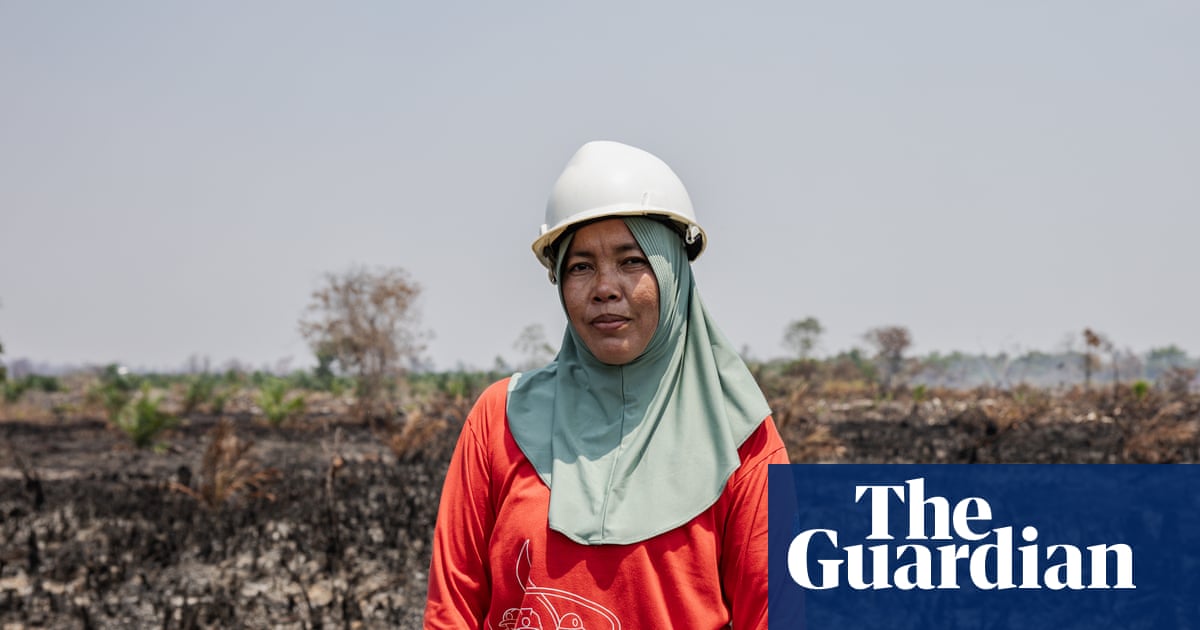
Irma puts on her heavy rubber boots as she prepares for a volunteer firefighting shift in her village of Sungai Putri, on the Indonesian side of Borneo island.
Dressed in full safety gear she heads into fire zones on her motorbike, the air thick with toxic smoke.
The 39-year-old is a member of the Power of Mama, Indonesia’s first-ever all female firefighting team, formed to protect one of the most biodiverse regions on the planet.
“Because we are housewives, we are the ones that feel its effects most,” Irma says of what motivated her to join, “I thought I had to do something about it.”
The group is made up of 146 women, aged between 20 and 58, from 10 villages in her area of West Kalimantan, in Indonesian Borneo. Formed in 2022 by an NGO called YIARI, the group’s members receive rigorous training, from firefighting to operating surveillance drones, and conducting essential community outreach.
From 10am until 4pm the group’s volunteers patrol high-risk areas, recording locations and alerting the Manggala Agni forestry brigade, a specialised brigade under the forestry ministry, when they identify hotspots.
They scour plantation and forest boundaries areas, record coordinates, take photographs, and enter the information into the special monitoring app.
It’s sometimes gruelling work in tough conditions.
But members say the hardest part has been convincing people in their community not to “slash and burn,” or illegally clear the land by burning it, a common practice in Indonesia, and a cheap and effective way to clear land for crops such as oil palm.
That, and breaking down the village patriarchy.
Irma says the group faced criticism from men at first, but now they work hand-in-hand with the community.
“The men of the village would tease us: ‘Are women really patrolling?” Irma recalls, “‘Why do women have to patrol? Don’t you have any other duties to perform?’”
“The biggest challenge we face is how the public reacts,” agrees Suriati another Power of Mama member.
“Sometimes they think we are showing off. They say, ‘What do mother folk know?’ When we ask them not to burn land carelessly, they can be stubborn. With older people especially, we have to be gentle.”
When the team identifies someone clearing land for palm oil, they explain the harmful effects, says Ratinah, who joined the group in 2023.
“We say, ‘We’re not stopping you from clearing the land, but could you please control the fire, so it doesn’t spread?’ We help them understand how the smoke can harm their children and families.”
This year, the Power of Mama has its work cut out for it.
Thousands of hotspots in Kalimantan have so far burned 57,081.33 hectares, according to news outlet Harian Kompas.
The worst blazes have occurred on peatland, which are notoriously difficult to extinguish and can burn underground for weeks.
“It is very difficult to put out peatland fires since the fire is below the surface,” says YIARI director Karmele Llano Sanchez. “You can’t see the flames, but the burning goes on, and often a light breeze is sufficient to rekindle the fire.”
This year also coincides with a “super” El Niño, which could exacerbate the fires.
Mark Parrington, a senior scientist at Copernicus, the European Union’s Earth observation programme, says the trends this year already points to a bad fire year.
“For Indonesia, seasonal fire emissions and regional haze are already higher than normal and we will be keeping a close watch on the situation to understand how the fires and their impact on air quality are changing,” he noted in a recent report.
Irma says it hasn’t rained in Sungai Putri since late June, which is adding pressure to an existing water shortage.
“The small ditches and even the rivers have dried up,” she says, “Which makes it extremely hard for us to put out the fires.”
“Our only option is to gather with the locals at the edges of the plantation or the forest to keep a constant watch on the fire’s progress. I am terrified the flames will reach residential areas. It is extremely dangerous.”
Erly Marlina, a 46-year-old schoolteacher, says she was inspired to join the Power of Mama after seeing the terrible fires in 2019.
“I joined so that I might have a platform through which to express my love for environmental conservation and could take direct action in the field,” she says.
Recalling a night operation from that year, Ely says their team played a crucial role.
“Houses were about 100 metres away. We began putting out the fire after Isha evening prayer and brought it under control by 11pm,” she says. “The operation took four to five hours. As volunteers, we stay on guard continuously during the dry season; residents really depend on this team.”
Power of Mama is also making an impact outside Borneo, in 2023 winning the Indonesian Clean Air Championship.
“Protecting the forest is one of our main objectives,” says YIARI’s Sanchez. “This isn’t just about putting out fires. It’s about seeing these women become more confident, and taking their rightful, powerful role in society.”
Read the full story at The Guardian ↗
Fire threatens Kalimantan’s rainforests. On the peatland frontlines, a group of local mothers is defending their community. Words and Photography: Garry Lotulung. Irma puts on her…
This lens runs the verified story through Cinnamon's AI — wired in the next step.
Irma puts on her heavy rubber boots as she prepares for a volunteer firefighting shift in her village of Sungai Putri, on the Indonesian side of Borneo island.
Dressed in full safety gear she heads into fire zones on her motorbike, the air thick with toxic smoke.
The 39-year-old is a member of the Power of Mama, Indonesia’s first-ever all female firefighting team, formed to protect one of the most biodiverse regions on the planet.
“Because we are housewives, we are the ones that feel its effects most,” Irma says of what motivated her to join, “I thought I had to do something about it.”
The group is made up of 146 women, aged between 20 and 58, from 10 villages in her area of West Kalimantan, in Indonesian Borneo. Formed in 2022 by an NGO called YIARI, the group’s members receive rigorous training, from firefighting to operating surveillance drones, and conducting essential community outreach.
From 10am until 4pm the group’s volunteers patrol high-risk areas, recording locations and alerting the Manggala Agni forestry brigade, a specialised brigade under the forestry ministry, when they identify hotspots.
They scour plantation and forest boundaries areas, record coordinates, take photographs, and enter the information into the special monitoring app.
It’s sometimes gruelling work in tough conditions.
But members say the hardest part has been convincing people in their community not to “slash and burn,” or illegally clear the land by burning it, a common practice in Indonesia, and a cheap and effective way to clear land for crops such as oil palm.
That, and breaking down the village patriarchy.
Irma says the group faced criticism from men at first, but now they work hand-in-hand with the community.
“The men of the village would tease us: ‘Are women really patrolling?” Irma recalls, “‘Why do women have to patrol? Don’t you have any other duties to perform?’”
“The biggest challenge we face is how the public reacts,” agrees Suriati another Power of Mama member.
“Sometimes they think we are showing off. They say, ‘What do mother folk know?’ When we ask them not to burn land carelessly, they can be stubborn. With older people especially, we have to be gentle.”
When the team identifies someone clearing land for palm oil, they explain the harmful effects, says Ratinah, who joined the group in 2023.
“We say, ‘We’re not stopping you from clearing the land, but could you please control the fire, so it doesn’t spread?’ We help them understand how the smoke can harm their children and families.”
This year, the Power of Mama has its work cut out for it.
Thousands of hotspots in Kalimantan have so far burned 57,081.33 hectares, according to news outlet Harian Kompas.
The worst blazes have occurred on peatland, which are notoriously difficult to extinguish and can burn underground for weeks.
“It is very difficult to put out peatland fires since the fire is below the surface,” says YIARI director Karmele Llano Sanchez. “You can’t see the flames, but the burning goes on, and often a light breeze is sufficient to rekindle the fire.”
This year also coincides with a “super” El Niño, which could exacerbate the fires.
Mark Parrington, a senior scientist at Copernicus, the European Union’s Earth observation programme, says the trends this year already points to a bad fire year.
“For Indonesia, seasonal fire emissions and regional haze are already higher than normal and we will be keeping a close watch on the situation to understand how the fires and their impact on air quality are changing,” he noted in a recent report.
Irma says it hasn’t rained in Sungai Putri since late June, which is adding pressure to an existing water shortage.
“The small ditches and even the rivers have dried up,” she says, “Which makes it extremely hard for us to put out the fires.”
“Our only option is to gather with the locals at the edges of the plantation or the forest to keep a constant watch on the fire’s progress. I am terrified the flames will reach residential areas. It is extremely dangerous.”
Erly Marlina, a 46-year-old schoolteacher, says she was inspired to join the Power of Mama after seeing the terrible fires in 2019.
“I joined so that I might have a platform through which to express my love for environmental conservation and could take direct action in the field,” she says.
Recalling a night operation from that year, Ely says their team played a crucial role.
“Houses were about 100 metres away. We began putting out the fire after Isha evening prayer and brought it under control by 11pm,” she says. “The operation took four to five hours. As volunteers, we stay on guard continuously during the dry season; residents really depend on this team.”
Power of Mama is also making an impact outside Borneo, in 2023 winning the Indonesian Clean Air Championship.
“Protecting the forest is one of our main objectives,” says YIARI’s Sanchez. “This isn’t just about putting out fires. It’s about seeing these women become more confident, and taking their rightful, powerful role in society.”
Read the full story at The Guardian ↗
Irma puts on her heavy rubber boots as she prepares for a volunteer firefighting shift in her village of Sungai Putri, on the Indonesian side of Borneo island.
Dressed in full safety gear she heads into fire zones on her motorbike, the air thick with toxic smoke.
The 39-year-old is a member of the Power of Mama, Indonesia’s first-ever all female firefighting team, formed to protect one of the most biodiverse regions on the planet.
“Because we are housewives, we are the ones that feel its effects most,” Irma says of what motivated her to join, “I thought I had to do something about it.”
The group is made up of 146 women, aged between 20 and 58, from 10 villages in her area of West Kalimantan, in Indonesian Borneo. Formed in 2022 by an NGO called YIARI, the group’s members receive rigorous training, from firefighting to operating surveillance drones, and conducting essential community outreach.
From 10am until 4pm the group’s volunteers patrol high-risk areas, recording locations and alerting the Manggala Agni forestry brigade, a specialised brigade under the forestry ministry, when they identify hotspots.
They scour plantation and forest boundaries areas, record coordinates, take photographs, and enter the information into the special monitoring app.
It’s sometimes gruelling work in tough conditions.
But members say the hardest part has been convincing people in their community not to “slash and burn,” or illegally clear the land by burning it, a common practice in Indonesia, and a cheap and effective way to clear land for crops such as oil palm.
That, and breaking down the village patriarchy.
Irma says the group faced criticism from men at first, but now they work hand-in-hand with the community.
“The men of the village would tease us: ‘Are women really patrolling?” Irma recalls, “‘Why do women have to patrol? Don’t you have any other duties to perform?’”
“The biggest challenge we face is how the public reacts,” agrees Suriati another Power of Mama member.
“Sometimes they think we are showing off. They say, ‘What do mother folk know?’ When we ask them not to burn land carelessly, they can be stubborn. With older people especially, we have to be gentle.”
When the team identifies someone clearing land for palm oil, they explain the harmful effects, says Ratinah, who joined the group in 2023.
“We say, ‘We’re not stopping you from clearing the land, but could you please control the fire, so it doesn’t spread?’ We help them understand how the smoke can harm their children and families.”
This year, the Power of Mama has its work cut out for it.
Thousands of hotspots in Kalimantan have so far burned 57,081.33 hectares, according to news outlet Harian Kompas.
The worst blazes have occurred on peatland, which are notoriously difficult to extinguish and can burn underground for weeks.
“It is very difficult to put out peatland fires since the fire is below the surface,” says YIARI director Karmele Llano Sanchez. “You can’t see the flames, but the burning goes on, and often a light breeze is sufficient to rekindle the fire.”
This year also coincides with a “super” El Niño, which could exacerbate the fires.
Mark Parrington, a senior scientist at Copernicus, the European Union’s Earth observation programme, says the trends this year already points to a bad fire year.
“For Indonesia, seasonal fire emissions and regional haze are already higher than normal and we will be keeping a close watch on the situation to understand how the fires and their impact on air quality are changing,” he noted in a recent report.
Irma says it hasn’t rained in Sungai Putri since late June, which is adding pressure to an existing water shortage.
“The small ditches and even the rivers have dried up,” she says, “Which makes it extremely hard for us to put out the fires.”
“Our only option is to gather with the locals at the edges of the plantation or the forest to keep a constant watch on the fire’s progress. I am terrified the flames will reach residential areas. It is extremely dangerous.”
Erly Marlina, a 46-year-old schoolteacher, says she was inspired to join the Power of Mama after seeing the terrible fires in 2019.
“I joined so that I might have a platform through which to express my love for environmental conservation and could take direct action in the field,” she says.
Recalling a night operation from that year, Ely says their team played a crucial role.
“Houses were about 100 metres away. We began putting out the fire after Isha evening prayer and brought it under control by 11pm,” she says. “The operation took four to five hours. As volunteers, we stay on guard continuously during the dry season; residents really depend on this team.”
Power of Mama is also making an impact outside Borneo, in 2023 winning the Indonesian Clean Air Championship.
“Protecting the forest is one of our main objectives,” says YIARI’s Sanchez. “This isn’t just about putting out fires. It’s about seeing these women become more confident, and taking their rightful, powerful role in society.”
Read the full story at The Guardian ↗
This lens runs the verified story through Cinnamon's AI — wired in the next step.
- Fire threatens Kalimantan’s rainforests.
- On the peatland frontlines, a group of local mothers is defending their community.
- Words and Photography: Garry Lotulung.