There is a way to look after people, the planet – and Britain’s growth. It’s what we call the ‘wellbeing economy’ | Jamie Driscoll
You’ve just left school. What’s your future?
I know a physics graduate making flat whites; a 30-year-old living in his childhood bedroom who feels like a failure; a lad in Blyth who turned down a job 15 miles away because there’s no bus, and for young people his age car insurance is almost £2,000 a year. Britain’s young people are our greatest resource, and we are failing them because capital markets won’t allocate investment where it is needed. Saying “hope” in a conference speech sounds warm. But people need a plan.
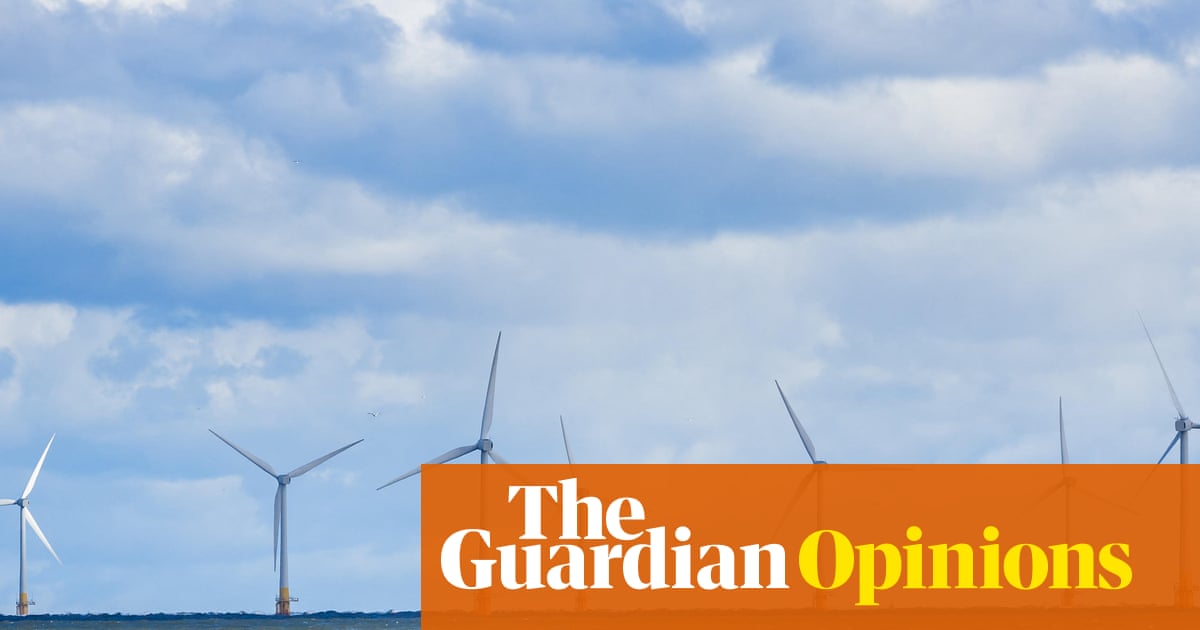
The first priority of any government is the security of its people. Financial markets are sending price signals that AI booms and share buybacks are more important than clean energy or warm homes. We fund aircraft carriers and artillery shells. But wind turbines and council houses are part of our national security, too. Imagine a country with a 20-year investment plan, with retrofitted homes and fast transport connections that leave nowhere behind. That’s a future filled with the potential of proud work for young people.
But four words run Britain: “We can’t afford it.” Governments call this mindset “prudence”. My response to it is Hostage Nation, my plan to fix Britain. This is a report that lays out how to source the finance, shows what we need to build – and tracks why it would make us more prosperous and resilient. I joined the Green party to achieve this vision. As we approach the party conference, I hope this will become official Green policy that we’ll fight the next election on.
Nine sets of fiscal rules have been broken and abandoned since the financial crash. Andy Haldane, a former chief economist of the Bank of England, said current fiscal rules were “far from optimal; in fact I’d go as far as to say silly”. The Institute for Fiscal Studies said in 2024 that changing policy based on fiscal headroom projections was “almost literally mad”. What if we’re not really hostages to the bond market? What if politicians have got Stockholm syndrome instead?
Bond markets are just complex betting shops. That’s their business model: guess the future, and price accordingly. That price changes when the US Federal Reserve raises interest rates or the strait of Hormuz closes. Why do we let bookies decide whether we build railway lines? Give a country nothing to build and struggling people will find someone to blame.
Businesses want customers more than they want tax cuts or light-touch regulation. I once asked the chief executive of a global engineering firm if he would invest in green hydrogen. “I’m not investing half a billion in a plant and staff unless I can sell it for 20 years,” he said. No government gave that signal.
Provide demand, and supply chains will organise themselves. When I was mayor of the North of Tyne combined authority, I moved our adult training providers from one-year to rolling three-year contracts. Employment training places rose from 22,000 to 35,000 a year on the same real-terms budget. That’s what certainty brings.
Markets are great at providing barber shops and burger vans, but markets don’t build reservoirs. The only organisation that can guarantee orders for infrastructure 20 years from now is the state. Public ownership is a must for public planning. We’re not short of need: 100,000 council homes a year; fully renewable energy with a storage grid; clean transport; insulating every home; buses and trains that run as one network and are cheaper and more convenient than cars; regenerated high streets with sports centres and warm youth clubs. What George Monbiot calls public luxury.
We can fund it with off-market finance. The government savings bank National Savings and Investments (originally the Post Office Savings Bank) has been going for more than 160 years, and 24 million of us use it. The government could offer savers national infrastructure Isas – a fair, safe return for investment in public works. The gilt market carries on; this is a separate channel insulated from tariff antics and international conflicts. No hedge fund has ever shorted a premium bond.
We invest £70bn a year in cash Isas. Our pension pools hold more than £2tn, yet less than 5% is invested in British firms. There is tax relief on both. If you want to speculate on Silicon Valley, that’s your right. But tax subsidies should be reserved for savings that build Britain.
As for infrastructure, the state can outcompete private capital. For a business, wages are an expense. For a country, wages lower the welfare bill. The state collects 40p in every pound back in tax. Money flows through high streets and pays business rates. A 2014 pilot in Sunderland showed that a £5,000 investment in insulation and energy-efficient boilers for people with COPD lowered bills and reduced hospital admissions by 25% and GP appointments by 60%. Combine retrofit and clean energy at cost and energy bills fall by 67%. It turns out the cheapest way to heat a home is also the quickest way to decarbonise a country.
This is what a wellbeing economy looks like. In the North of Tyne we judged projects on mental health, environmental impact and community wealth before a penny was released.
What about inflation? Train the workers, build the supply chains, then release the money. This creates real capacity and builds assets on the public balance sheet. We have the powers. We don’t need new treaties or quangos. We need to wake up the state machinery we already have.
In 1946 Britain was so poor we started rationing bread. The national debt was two-and-a-half times the size of the economy. That generation built the NHS. Then an average of 126,000 council homes every year for 35 years. Eight prime ministers and two parties kept building. Today our relative debt is under half that. We have machines they could only dream of. They weren’t richer than us. They were braver.
I don’t have a crystal ball, but I’ll wager the upcoming budget will tinker around the edges of these issues. Voters already know the Greens care, and with a plan to really fix Britain – and fund it – support will keep growing. Hostage Nation is backed by 134 endnotes that are there to be checked. We can start this plan tomorrow. Values win sympathy, but answers win seats.
Jamie Driscoll is a Green party councillor on Newcastle city council and former North of Tyne mayor
Read the full story at The Guardian ↗
Imagine the UK with a 20-year investment plan, with green homes and fast transport. We already have the tools to make it happen. You’ve just left school. What’s your future?. I…
This lens runs the verified story through Cinnamon's AI — wired in the next step.
You’ve just left school. What’s your future?
I know a physics graduate making flat whites; a 30-year-old living in his childhood bedroom who feels like a failure; a lad in Blyth who turned down a job 15 miles away because there’s no bus, and for young people his age car insurance is almost £2,000 a year. Britain’s young people are our greatest resource, and we are failing them because capital markets won’t allocate investment where it is needed. Saying “hope” in a conference speech sounds warm. But people need a plan.
The first priority of any government is the security of its people. Financial markets are sending price signals that AI booms and share buybacks are more important than clean energy or warm homes. We fund aircraft carriers and artillery shells. But wind turbines and council houses are part of our national security, too. Imagine a country with a 20-year investment plan, with retrofitted homes and fast transport connections that leave nowhere behind. That’s a future filled with the potential of proud work for young people.
But four words run Britain: “We can’t afford it.” Governments call this mindset “prudence”. My response to it is Hostage Nation, my plan to fix Britain. This is a report that lays out how to source the finance, shows what we need to build – and tracks why it would make us more prosperous and resilient. I joined the Green party to achieve this vision. As we approach the party conference, I hope this will become official Green policy that we’ll fight the next election on.
Nine sets of fiscal rules have been broken and abandoned since the financial crash. Andy Haldane, a former chief economist of the Bank of England, said current fiscal rules were “far from optimal; in fact I’d go as far as to say silly”. The Institute for Fiscal Studies said in 2024 that changing policy based on fiscal headroom projections was “almost literally mad”. What if we’re not really hostages to the bond market? What if politicians have got Stockholm syndrome instead?
Bond markets are just complex betting shops. That’s their business model: guess the future, and price accordingly. That price changes when the US Federal Reserve raises interest rates or the strait of Hormuz closes. Why do we let bookies decide whether we build railway lines? Give a country nothing to build and struggling people will find someone to blame.
Businesses want customers more than they want tax cuts or light-touch regulation. I once asked the chief executive of a global engineering firm if he would invest in green hydrogen. “I’m not investing half a billion in a plant and staff unless I can sell it for 20 years,” he said. No government gave that signal.
Provide demand, and supply chains will organise themselves. When I was mayor of the North of Tyne combined authority, I moved our adult training providers from one-year to rolling three-year contracts. Employment training places rose from 22,000 to 35,000 a year on the same real-terms budget. That’s what certainty brings.
Markets are great at providing barber shops and burger vans, but markets don’t build reservoirs. The only organisation that can guarantee orders for infrastructure 20 years from now is the state. Public ownership is a must for public planning. We’re not short of need: 100,000 council homes a year; fully renewable energy with a storage grid; clean transport; insulating every home; buses and trains that run as one network and are cheaper and more convenient than cars; regenerated high streets with sports centres and warm youth clubs. What George Monbiot calls public luxury.
We can fund it with off-market finance. The government savings bank National Savings and Investments (originally the Post Office Savings Bank) has been going for more than 160 years, and 24 million of us use it. The government could offer savers national infrastructure Isas – a fair, safe return for investment in public works. The gilt market carries on; this is a separate channel insulated from tariff antics and international conflicts. No hedge fund has ever shorted a premium bond.
We invest £70bn a year in cash Isas. Our pension pools hold more than £2tn, yet less than 5% is invested in British firms. There is tax relief on both. If you want to speculate on Silicon Valley, that’s your right. But tax subsidies should be reserved for savings that build Britain.
As for infrastructure, the state can outcompete private capital. For a business, wages are an expense. For a country, wages lower the welfare bill. The state collects 40p in every pound back in tax. Money flows through high streets and pays business rates. A 2014 pilot in Sunderland showed that a £5,000 investment in insulation and energy-efficient boilers for people with COPD lowered bills and reduced hospital admissions by 25% and GP appointments by 60%. Combine retrofit and clean energy at cost and energy bills fall by 67%. It turns out the cheapest way to heat a home is also the quickest way to decarbonise a country.
This is what a wellbeing economy looks like. In the North of Tyne we judged projects on mental health, environmental impact and community wealth before a penny was released.
What about inflation? Train the workers, build the supply chains, then release the money. This creates real capacity and builds assets on the public balance sheet. We have the powers. We don’t need new treaties or quangos. We need to wake up the state machinery we already have.
In 1946 Britain was so poor we started rationing bread. The national debt was two-and-a-half times the size of the economy. That generation built the NHS. Then an average of 126,000 council homes every year for 35 years. Eight prime ministers and two parties kept building. Today our relative debt is under half that. We have machines they could only dream of. They weren’t richer than us. They were braver.
I don’t have a crystal ball, but I’ll wager the upcoming budget will tinker around the edges of these issues. Voters already know the Greens care, and with a plan to really fix Britain – and fund it – support will keep growing. Hostage Nation is backed by 134 endnotes that are there to be checked. We can start this plan tomorrow. Values win sympathy, but answers win seats.
Jamie Driscoll is a Green party councillor on Newcastle city council and former North of Tyne mayor
Read the full story at The Guardian ↗
You’ve just left school. What’s your future?
I know a physics graduate making flat whites; a 30-year-old living in his childhood bedroom who feels like a failure; a lad in Blyth who turned down a job 15 miles away because there’s no bus, and for young people his age car insurance is almost £2,000 a year. Britain’s young people are our greatest resource, and we are failing them because capital markets won’t allocate investment where it is needed. Saying “hope” in a conference speech sounds warm. But people need a plan.
The first priority of any government is the security of its people. Financial markets are sending price signals that AI booms and share buybacks are more important than clean energy or warm homes. We fund aircraft carriers and artillery shells. But wind turbines and council houses are part of our national security, too. Imagine a country with a 20-year investment plan, with retrofitted homes and fast transport connections that leave nowhere behind. That’s a future filled with the potential of proud work for young people.
But four words run Britain: “We can’t afford it.” Governments call this mindset “prudence”. My response to it is Hostage Nation, my plan to fix Britain. This is a report that lays out how to source the finance, shows what we need to build – and tracks why it would make us more prosperous and resilient. I joined the Green party to achieve this vision. As we approach the party conference, I hope this will become official Green policy that we’ll fight the next election on.
Nine sets of fiscal rules have been broken and abandoned since the financial crash. Andy Haldane, a former chief economist of the Bank of England, said current fiscal rules were “far from optimal; in fact I’d go as far as to say silly”. The Institute for Fiscal Studies said in 2024 that changing policy based on fiscal headroom projections was “almost literally mad”. What if we’re not really hostages to the bond market? What if politicians have got Stockholm syndrome instead?
Bond markets are just complex betting shops. That’s their business model: guess the future, and price accordingly. That price changes when the US Federal Reserve raises interest rates or the strait of Hormuz closes. Why do we let bookies decide whether we build railway lines? Give a country nothing to build and struggling people will find someone to blame.
Businesses want customers more than they want tax cuts or light-touch regulation. I once asked the chief executive of a global engineering firm if he would invest in green hydrogen. “I’m not investing half a billion in a plant and staff unless I can sell it for 20 years,” he said. No government gave that signal.
Provide demand, and supply chains will organise themselves. When I was mayor of the North of Tyne combined authority, I moved our adult training providers from one-year to rolling three-year contracts. Employment training places rose from 22,000 to 35,000 a year on the same real-terms budget. That’s what certainty brings.
Markets are great at providing barber shops and burger vans, but markets don’t build reservoirs. The only organisation that can guarantee orders for infrastructure 20 years from now is the state. Public ownership is a must for public planning. We’re not short of need: 100,000 council homes a year; fully renewable energy with a storage grid; clean transport; insulating every home; buses and trains that run as one network and are cheaper and more convenient than cars; regenerated high streets with sports centres and warm youth clubs. What George Monbiot calls public luxury.
We can fund it with off-market finance. The government savings bank National Savings and Investments (originally the Post Office Savings Bank) has been going for more than 160 years, and 24 million of us use it. The government could offer savers national infrastructure Isas – a fair, safe return for investment in public works. The gilt market carries on; this is a separate channel insulated from tariff antics and international conflicts. No hedge fund has ever shorted a premium bond.
We invest £70bn a year in cash Isas. Our pension pools hold more than £2tn, yet less than 5% is invested in British firms. There is tax relief on both. If you want to speculate on Silicon Valley, that’s your right. But tax subsidies should be reserved for savings that build Britain.
As for infrastructure, the state can outcompete private capital. For a business, wages are an expense. For a country, wages lower the welfare bill. The state collects 40p in every pound back in tax. Money flows through high streets and pays business rates. A 2014 pilot in Sunderland showed that a £5,000 investment in insulation and energy-efficient boilers for people with COPD lowered bills and reduced hospital admissions by 25% and GP appointments by 60%. Combine retrofit and clean energy at cost and energy bills fall by 67%. It turns out the cheapest way to heat a home is also the quickest way to decarbonise a country.
This is what a wellbeing economy looks like. In the North of Tyne we judged projects on mental health, environmental impact and community wealth before a penny was released.
What about inflation? Train the workers, build the supply chains, then release the money. This creates real capacity and builds assets on the public balance sheet. We have the powers. We don’t need new treaties or quangos. We need to wake up the state machinery we already have.
In 1946 Britain was so poor we started rationing bread. The national debt was two-and-a-half times the size of the economy. That generation built the NHS. Then an average of 126,000 council homes every year for 35 years. Eight prime ministers and two parties kept building. Today our relative debt is under half that. We have machines they could only dream of. They weren’t richer than us. They were braver.
I don’t have a crystal ball, but I’ll wager the upcoming budget will tinker around the edges of these issues. Voters already know the Greens care, and with a plan to really fix Britain – and fund it – support will keep growing. Hostage Nation is backed by 134 endnotes that are there to be checked. We can start this plan tomorrow. Values win sympathy, but answers win seats.
Jamie Driscoll is a Green party councillor on Newcastle city council and former North of Tyne mayor
Read the full story at The Guardian ↗
This lens runs the verified story through Cinnamon's AI — wired in the next step.
- Imagine the UK with a 20-year investment plan, with green homes and fast transport.
- We already have the tools to make it happen.
- You’ve just left school.