‘They’re selling the safety of the traveling public’: TSA workers decry Trump privatization push
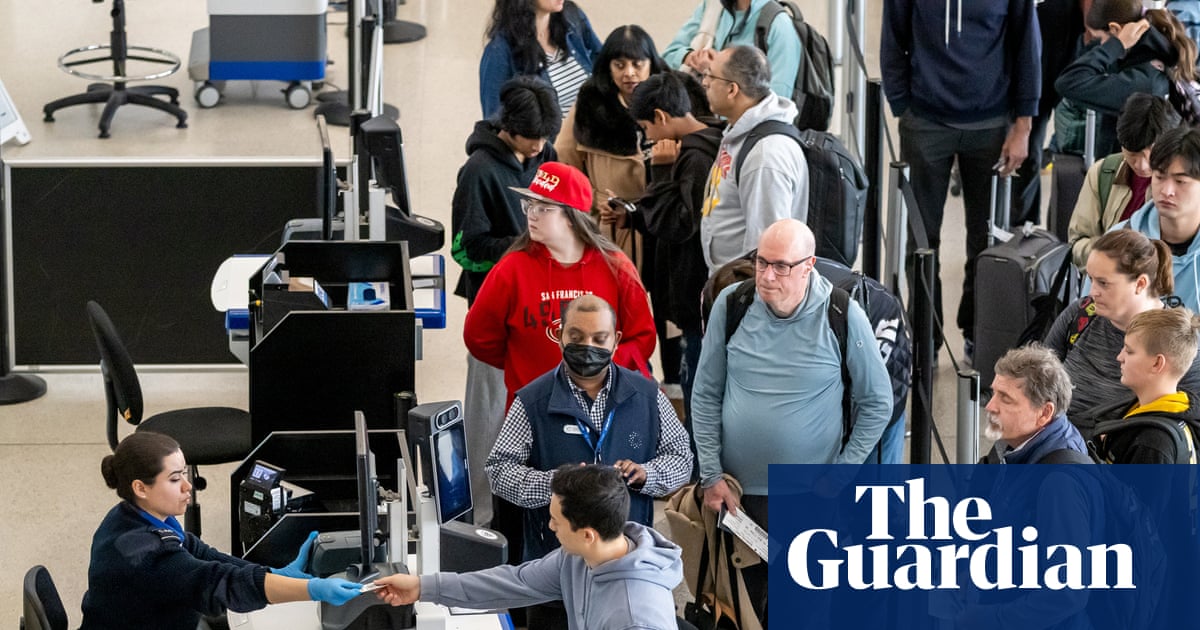
The labor union representing workers at the Transportation Security Administration (TSA) is raising alarms over a new program that will expand privatizing security checkpoints at three airports.
The agency informed the union last month of plans to enact the TSA Gold+ program, which would shift security and control of the screening technology into the hands of private contractors at airports in Tampa, Charleston and Des Moines. Union workers are expected to lose their union contract and benefits once a contractor takes over.
“This is a major departure and step backwards from the aviation screening security system that Congress created in the wake of the September 11 terrorist attacks in 2001 and the deadly bombing of Pan Am flight 103 over Scotland in 1988,” Everett Kelley, national president of the American Federation of Government Employees (AFGE) said in statement.
“Changes of this magnitude should not be made behind closed doors without the input of Congress, the flying public, the local airport authorities and TSA employees themselves.”
The AFGE is currently reviewing legal options to fight back against the privatization push from the Trump administration.
Before the TSA was created in November 2001 by the Bush administration after the 9/11 attacks, airport security was operated by private contractors with less stringent standards.
Chris Finlay, a TSA worker in Tampa and president of AFGE local 556, recounted his experience working at another Florida airport where, 12 years ago, a private contractor took over screening. At the time, TSA agents were told their salary would remain the same – only for the contractor to cut pay a few weeks into employment.
“For a private contract company, they’re not doing it out of duty for the traveling public or the constitution or anything. They’re doing it because it’s a business decision,” Finlay said.
“As a business, their primary goal is to be profitable, and staffing is the most expensive part of that contract, so if they can reduce how much they have to pay staff, they’re going to.”
He also noted concerns over security quality. In 2015, an employee working for the private contractor at the Florida airport outside Orlando was fired after they reported a steak knife made it through security to the contractor.
“A private company is going to be concerned with being profitable,” Finlay said. “They’re selling the safety of the traveling public for corporate greed. That’s what is happening.”
Gold+ is the latest TSA privatization effort, adding on to other initiatives, including an expansion of the screening partnership program that uses private contractors, overseen by the TSA, to handle security screenings at small and non-hub airports. The TSA plans to eliminate roughly 4,500 positions as the program expands to 220 US airports.
While the program has private contractors managing screening, unlike Gold+, it does not allow the contractors to own and operate security equipment.
In May, the TSA deputy administrator, Adam Stahl, said that the Gold+ privatization push could eventually include artificial intelligence replacing some security officers.
The changes come in the wake of the Trump administration’s proposed TSA budget cuts for fiscal year 2027, which would entail eliminating 8,400 transportation security officer positions, about 14% of the TSA screening workforce.
Last year, the Trump administration tried to eliminate collective bargaining agreements for 47,000 TSA employees – first in March and again in December, though the efforts were blocked by federal judges.
“The Trump administration’s clear objective is to ultimately privatize all aviation security screening functions, and we don’t have to theorize about what that may look like because we have been through this before and witnessed the devastating and deadly consequences,” Kelley said.
TSA officers will have first right of refusal to move their employment, and affected employees will either receive severance or retirement based on their years of service with agency.
“TSA Gold+ presents a new way for TPA [Tampa international airport] to deliver exceptional service to every traveler, while advancing security, efficiency, and the overall airport experience. Throughout this transition, we remain committed to operational stability and supporting our employees,” said a TSA spokesperson in an email.
“We look forward to working closely with TPA to implement enhancements that will benefit everyone who travels through this airport.”
Read the full story at The Guardian ↗
Union exploring options to oppose program that would put US airport screening into hands of private contractors. The labor union representing workers at the Transportation…
This lens runs the verified story through Cinnamon's AI — wired in the next step.
The labor union representing workers at the Transportation Security Administration (TSA) is raising alarms over a new program that will expand privatizing security checkpoints at three airports.
The agency informed the union last month of plans to enact the TSA Gold+ program, which would shift security and control of the screening technology into the hands of private contractors at airports in Tampa, Charleston and Des Moines. Union workers are expected to lose their union contract and benefits once a contractor takes over.
“This is a major departure and step backwards from the aviation screening security system that Congress created in the wake of the September 11 terrorist attacks in 2001 and the deadly bombing of Pan Am flight 103 over Scotland in 1988,” Everett Kelley, national president of the American Federation of Government Employees (AFGE) said in statement.
“Changes of this magnitude should not be made behind closed doors without the input of Congress, the flying public, the local airport authorities and TSA employees themselves.”
The AFGE is currently reviewing legal options to fight back against the privatization push from the Trump administration.
Before the TSA was created in November 2001 by the Bush administration after the 9/11 attacks, airport security was operated by private contractors with less stringent standards.
Chris Finlay, a TSA worker in Tampa and president of AFGE local 556, recounted his experience working at another Florida airport where, 12 years ago, a private contractor took over screening. At the time, TSA agents were told their salary would remain the same – only for the contractor to cut pay a few weeks into employment.
“For a private contract company, they’re not doing it out of duty for the traveling public or the constitution or anything. They’re doing it because it’s a business decision,” Finlay said.
“As a business, their primary goal is to be profitable, and staffing is the most expensive part of that contract, so if they can reduce how much they have to pay staff, they’re going to.”
He also noted concerns over security quality. In 2015, an employee working for the private contractor at the Florida airport outside Orlando was fired after they reported a steak knife made it through security to the contractor.
“A private company is going to be concerned with being profitable,” Finlay said. “They’re selling the safety of the traveling public for corporate greed. That’s what is happening.”
Gold+ is the latest TSA privatization effort, adding on to other initiatives, including an expansion of the screening partnership program that uses private contractors, overseen by the TSA, to handle security screenings at small and non-hub airports. The TSA plans to eliminate roughly 4,500 positions as the program expands to 220 US airports.
While the program has private contractors managing screening, unlike Gold+, it does not allow the contractors to own and operate security equipment.
In May, the TSA deputy administrator, Adam Stahl, said that the Gold+ privatization push could eventually include artificial intelligence replacing some security officers.
The changes come in the wake of the Trump administration’s proposed TSA budget cuts for fiscal year 2027, which would entail eliminating 8,400 transportation security officer positions, about 14% of the TSA screening workforce.
Last year, the Trump administration tried to eliminate collective bargaining agreements for 47,000 TSA employees – first in March and again in December, though the efforts were blocked by federal judges.
“The Trump administration’s clear objective is to ultimately privatize all aviation security screening functions, and we don’t have to theorize about what that may look like because we have been through this before and witnessed the devastating and deadly consequences,” Kelley said.
TSA officers will have first right of refusal to move their employment, and affected employees will either receive severance or retirement based on their years of service with agency.
“TSA Gold+ presents a new way for TPA [Tampa international airport] to deliver exceptional service to every traveler, while advancing security, efficiency, and the overall airport experience. Throughout this transition, we remain committed to operational stability and supporting our employees,” said a TSA spokesperson in an email.
“We look forward to working closely with TPA to implement enhancements that will benefit everyone who travels through this airport.”
Read the full story at The Guardian ↗
The labor union representing workers at the Transportation Security Administration (TSA) is raising alarms over a new program that will expand privatizing security checkpoints at three airports.
The agency informed the union last month of plans to enact the TSA Gold+ program, which would shift security and control of the screening technology into the hands of private contractors at airports in Tampa, Charleston and Des Moines. Union workers are expected to lose their union contract and benefits once a contractor takes over.
“This is a major departure and step backwards from the aviation screening security system that Congress created in the wake of the September 11 terrorist attacks in 2001 and the deadly bombing of Pan Am flight 103 over Scotland in 1988,” Everett Kelley, national president of the American Federation of Government Employees (AFGE) said in statement.
“Changes of this magnitude should not be made behind closed doors without the input of Congress, the flying public, the local airport authorities and TSA employees themselves.”
The AFGE is currently reviewing legal options to fight back against the privatization push from the Trump administration.
Before the TSA was created in November 2001 by the Bush administration after the 9/11 attacks, airport security was operated by private contractors with less stringent standards.
Chris Finlay, a TSA worker in Tampa and president of AFGE local 556, recounted his experience working at another Florida airport where, 12 years ago, a private contractor took over screening. At the time, TSA agents were told their salary would remain the same – only for the contractor to cut pay a few weeks into employment.
“For a private contract company, they’re not doing it out of duty for the traveling public or the constitution or anything. They’re doing it because it’s a business decision,” Finlay said.
“As a business, their primary goal is to be profitable, and staffing is the most expensive part of that contract, so if they can reduce how much they have to pay staff, they’re going to.”
He also noted concerns over security quality. In 2015, an employee working for the private contractor at the Florida airport outside Orlando was fired after they reported a steak knife made it through security to the contractor.
“A private company is going to be concerned with being profitable,” Finlay said. “They’re selling the safety of the traveling public for corporate greed. That’s what is happening.”
Gold+ is the latest TSA privatization effort, adding on to other initiatives, including an expansion of the screening partnership program that uses private contractors, overseen by the TSA, to handle security screenings at small and non-hub airports. The TSA plans to eliminate roughly 4,500 positions as the program expands to 220 US airports.
While the program has private contractors managing screening, unlike Gold+, it does not allow the contractors to own and operate security equipment.
In May, the TSA deputy administrator, Adam Stahl, said that the Gold+ privatization push could eventually include artificial intelligence replacing some security officers.
The changes come in the wake of the Trump administration’s proposed TSA budget cuts for fiscal year 2027, which would entail eliminating 8,400 transportation security officer positions, about 14% of the TSA screening workforce.
Last year, the Trump administration tried to eliminate collective bargaining agreements for 47,000 TSA employees – first in March and again in December, though the efforts were blocked by federal judges.
“The Trump administration’s clear objective is to ultimately privatize all aviation security screening functions, and we don’t have to theorize about what that may look like because we have been through this before and witnessed the devastating and deadly consequences,” Kelley said.
TSA officers will have first right of refusal to move their employment, and affected employees will either receive severance or retirement based on their years of service with agency.
“TSA Gold+ presents a new way for TPA [Tampa international airport] to deliver exceptional service to every traveler, while advancing security, efficiency, and the overall airport experience. Throughout this transition, we remain committed to operational stability and supporting our employees,” said a TSA spokesperson in an email.
“We look forward to working closely with TPA to implement enhancements that will benefit everyone who travels through this airport.”
Read the full story at The Guardian ↗
This lens runs the verified story through Cinnamon's AI — wired in the next step.
- Union exploring options to oppose program that would put US airport screening into hands of private contractors.
- The labor union representing workers at the Transportation…