Trump asks Congress for billions for Iran war, after tension with Republicans
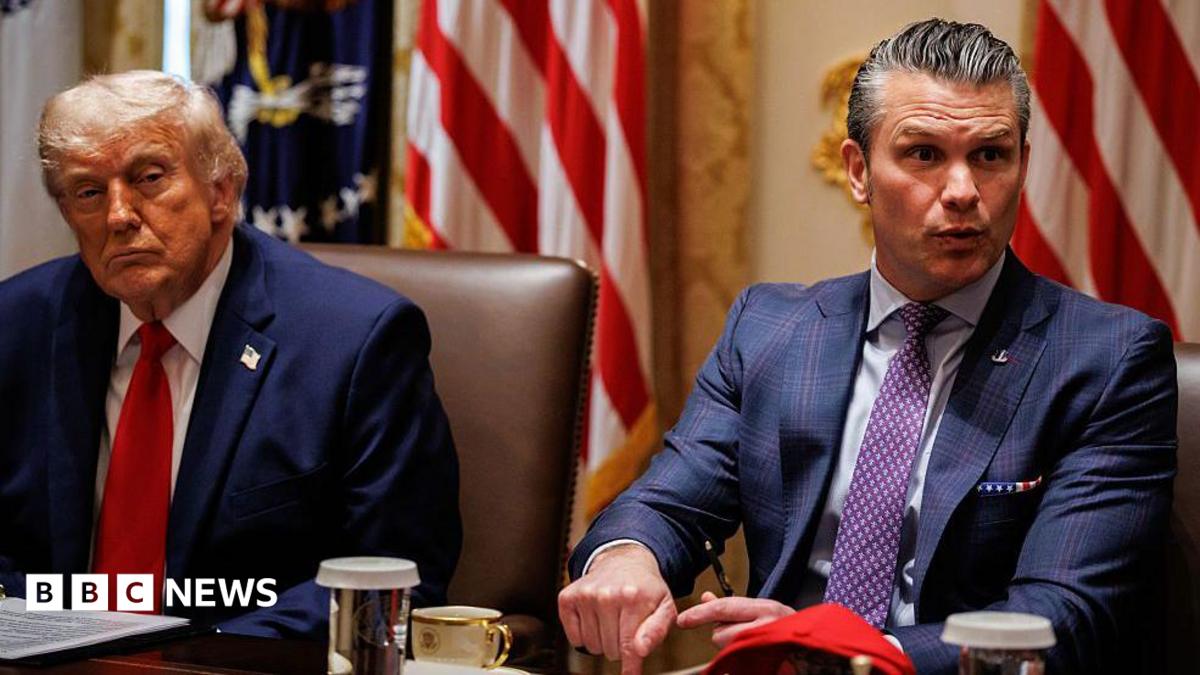
The White House has asked lawmakers to approve $87.6bn (£66.5bn), mostly for "urgent needs" connected with the US war on Iran, a day after Congress passed a resolution rebuking the military action.
The bulk of the funding - $67bn - is for the US Department of Defence, the White House said.
But the proposal faces an uphill battle in Congress. The Iran conflict is unpopular with voters ahead of the US midterm elections in November, though a ceasefire is currently in effect.
US President Donald Trump has also found himself at odds with some members of his Republican Party over the issue of Iran, and is alleged to have ended up in an angry exchange with one senator on Wednesday.
That senator, Bill Cassidy of Louisiana, was one of a handful of Republicans who defied the president on Tuesday by voting to pass a measure demanding that he halt the war or seek congressional approval before continuing military action.
Cassidy fell back in line after his alleged sparring with the president, and after receiving assurances from members of Trump's administration. He and others went on to vote down another similar measure in the Senate late on Wednesday.
The White House Office of Management and Budget sent the formal request for the funds on Wednesday in a letter to House of Representatives Speaker Mike Johnson.
"Most of this request will address urgent needs related to Operation Epic Fury (OEF)," says the letter, referring to the Iran war.
The request includes $21bn for munitions, $17.3bn for operational costs and $12.1bn for classified programmes. It also asks for about $300m to bolster security at US embassies and diplomatic outposts in the Middle East and South Asia after some of them came under attack earlier in the war.
The other requested money would be for unrelated measures, including $11bn for US farmers and $1.4bn to tackle the Ebola outbreak in Central Africa.
Washington and Tehran are currently observing a ceasefire in the war, but the White House budget office letter notes that the Pentagon needs to "rebuild stocks" after its military strikes.
A peace plan was last week agreed between Trump and Iran, but dissident voices within the Republican Party have voiced scepticism about it.
The meeting between the president and senators on Wednesday was said to have been tense after Trump abruptly called off a signing ceremony for a housing bill that had bipartisan support.
At the lunch on Capitol Hill, Trump went on to complain about the measure that was passed the previous evening, when the Republican-controlled Senate narrowly voted to call for a restriction on his war powers.
Despite being largely symbolic, the measure was the first resolution of its kind to clear Congress that demanded a president to end a military action.
Early on Wednesday, Trump described it as "poorly timed and meaningless". On social media, he branded the four Republican senators who sided with opposition Democrats as "losers". And in a meeting with Nato chief Mark Rutte, Trump said the group "want to lose the war because they're stupid."
Later, after the closed-door lunch, Cassidy gave journalists an account of what he alleged had been a shouting match with the president: "I stood and said, 'You have not told the American people what's going on.'"
Cassidy went on to say: "This was supposed to last four weeks, it's lasted four months. Our original objectives have not been achieved."
For his part, Trump told reporters: "I think we had a really great meeting."
But by the end of Wednesday, Cassidy's concerns appeared to have been assuaged, writing on X that he had received a "thorough briefing" from Vice-President JD Vance and Steve Witkoff, Trump's special envoy.
Later that day, the senator changed his vote to help defeat another war powers resolution in the Senate - a move that was welcomed by Trump.
Last month, the Pentagon's chief financial officer Jules Hurst told a congressional panel the war had cost about $29bn so far.
But defence analysts and lawmakers say this estimate does not reflect the full scale of the conflict's financial damage.
Read the full story at BBC ↗
The Trump administration has formally requested $87.6 billion in congressional funding for ongoing operations related to the Iran war, with the bulk—$67 billion—designated for the Department of Defence. The request comes amid visible friction within Republican ranks. Congress passed a resolution Tuesday calling for the president to either end the military action or obtain congressional approval before continuing. Senator Bill Cassidy of Louisiana initially supported the measure but changed his position after Wednesday's closed-door meeting with Trump and subsequent briefings from Vice-President Vance and special envoy Witkoff, ultimately voting to defeat a similar resolution later that day. A ceasefire is currently in place between Washington and Tehran, though Pentagon leadership has indicated a need to replenish military supplies. The funding proposal faces headwinds in Congress, with the conflict registering as unpopular among voters before the November midterms. The Pentagon estimates the war has cost approximately $29 billion to date, though defence analysts suggest the full financial impact is larger.
Read the full story at BBC ↗
The White House has asked lawmakers to approve $87.6bn (£66.5bn), mostly for "urgent needs" connected with the US war on Iran, a day after Congress passed a resolution rebuking the military action.
The bulk of the funding - $67bn - is for the US Department of Defence, the White House said.
But the proposal faces an uphill battle in Congress. The Iran conflict is unpopular with voters ahead of the US midterm elections in November, though a ceasefire is currently in effect.
US President Donald Trump has also found himself at odds with some members of his Republican Party over the issue of Iran, and is alleged to have ended up in an angry exchange with one senator on Wednesday.
That senator, Bill Cassidy of Louisiana, was one of a handful of Republicans who defied the president on Tuesday by voting to pass a measure demanding that he halt the war or seek congressional approval before continuing military action.
Cassidy fell back in line after his alleged sparring with the president, and after receiving assurances from members of Trump's administration. He and others went on to vote down another similar measure in the Senate late on Wednesday.
The White House Office of Management and Budget sent the formal request for the funds on Wednesday in a letter to House of Representatives Speaker Mike Johnson.
"Most of this request will address urgent needs related to Operation Epic Fury (OEF)," says the letter, referring to the Iran war.
The request includes $21bn for munitions, $17.3bn for operational costs and $12.1bn for classified programmes. It also asks for about $300m to bolster security at US embassies and diplomatic outposts in the Middle East and South Asia after some of them came under attack earlier in the war.
The other requested money would be for unrelated measures, including $11bn for US farmers and $1.4bn to tackle the Ebola outbreak in Central Africa.
Washington and Tehran are currently observing a ceasefire in the war, but the White House budget office letter notes that the Pentagon needs to "rebuild stocks" after its military strikes.
A peace plan was last week agreed between Trump and Iran, but dissident voices within the Republican Party have voiced scepticism about it.
The meeting between the president and senators on Wednesday was said to have been tense after Trump abruptly called off a signing ceremony for a housing bill that had bipartisan support.
At the lunch on Capitol Hill, Trump went on to complain about the measure that was passed the previous evening, when the Republican-controlled Senate narrowly voted to call for a restriction on his war powers.
Despite being largely symbolic, the measure was the first resolution of its kind to clear Congress that demanded a president to end a military action.
Early on Wednesday, Trump described it as "poorly timed and meaningless". On social media, he branded the four Republican senators who sided with opposition Democrats as "losers". And in a meeting with Nato chief Mark Rutte, Trump said the group "want to lose the war because they're stupid."
Later, after the closed-door lunch, Cassidy gave journalists an account of what he alleged had been a shouting match with the president: "I stood and said, 'You have not told the American people what's going on.'"
Cassidy went on to say: "This was supposed to last four weeks, it's lasted four months. Our original objectives have not been achieved."
For his part, Trump told reporters: "I think we had a really great meeting."
But by the end of Wednesday, Cassidy's concerns appeared to have been assuaged, writing on X that he had received a "thorough briefing" from Vice-President JD Vance and Steve Witkoff, Trump's special envoy.
Later that day, the senator changed his vote to help defeat another war powers resolution in the Senate - a move that was welcomed by Trump.
Last month, the Pentagon's chief financial officer Jules Hurst told a congressional panel the war had cost about $29bn so far.
But defence analysts and lawmakers say this estimate does not reflect the full scale of the conflict's financial damage.
Read the full story at BBC ↗
The White House requested $87.6bn from Congress, with $67bn designated for the Department of Defence. The bulk of the funding request—$21bn—is for munitions, $17.3bn for operational costs, and $12.1bn for classified programmes. Congress passed a resolution Tuesday demanding the president halt the Iran war or seek congressional approval. The resolution was the first of its kind to clear Congress demanding a president end a military action. Republican Senator Bill Cassidy voted for the Tuesday resolution but voted against a similar measure Wednesday after meeting with Trump. A ceasefire is currently in effect between the US and Iran. The Pentagon's chief financial officer stated the war has cost approximately $29bn to date. The Iran conflict is unpopular with voters ahead of the November midterm elections. Trump branded four Republican senators who sided with opposition Democrats as 'losers' on social media. The funding proposal faces an uphill battle in Congress.
Read the full story at BBC ↗
- Trump requested $87.6bn from Congress for the Iran war, primarily $67bn for the Department of Defence.
- Congress passed a resolution on Tuesday demanding Trump halt the Iran war or seek approval before continuing military action.
- Republican Senator Bill Cassidy initially voted for the resolution but reversed his position after a meeting with Trump, helping defeat a similar measure Wednesday.
- A ceasefire is currently in effect between the US and Iran, though the Pentagon is requesting funds to rebuild military stocks.
- The funding request faces challenges in Congress as the Iran conflict is unpopular with voters ahead of November midterm elections.