U.S. forces exit Iraq amid Iran war. And, SCOTUS revives Trump deportation policy
 ✓
✓Good morning. You're reading the Up First newsletter. Subscribe here to get it delivered to your inbox, and listen to the Up First podcast for all the news you need to start your day.
The last U.S. forces have left Iraq, more than two decades after the U.S.-led invasion that overthrew Saddam Hussein. Iraq has declared today "Sovereignty Day." The withdrawal comes as attacks linked to the U.S.-Iran war raise new questions about Iraq's ability to defend itself without U.S. air defenses.
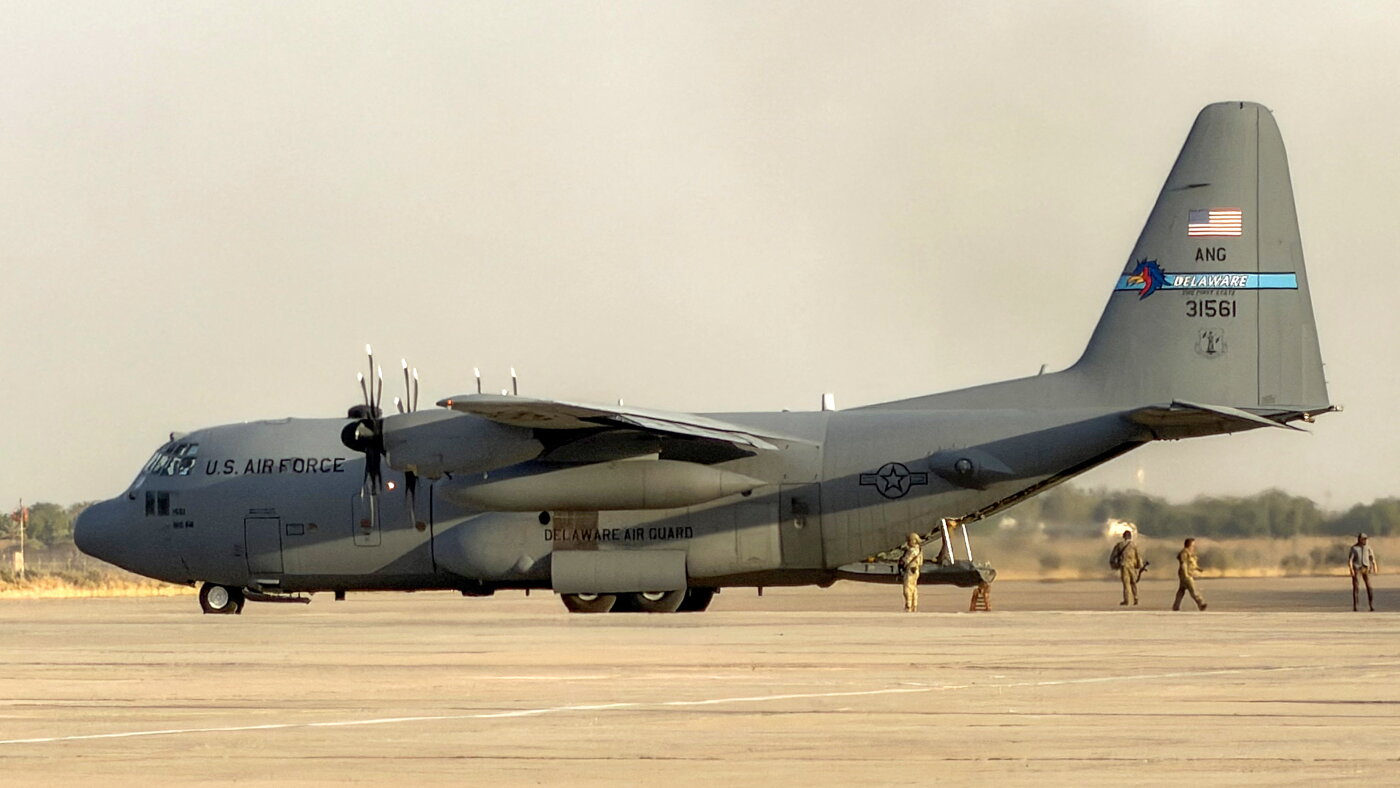
A US Air Force C-130 Hercules military transport aircraft prepares for takeoff from Camp Victory on the outskirts of Baghdad International Airport on Sept. 29, 2026. Ammar Karim/AFP via Getty Images hide caption
toggle caption
Ammar Karim/AFP via Getty Images
The U.S. Supreme Court on Tuesday allowed the Trump administration to resume, for now, deporting migrants to countries not listed in their removal orders. The court will hear full arguments in December. The court didn't explain why it paused a lower-court ruling blocking the policy but it asked both sides whether lower courts had authority to intervene and whether the policy violates due process or protections against torture.
President Trump says that tech companies can largely self-regulate when it comes to artificial intelligence. After meeting with top AI executives Tuesday, he signed an executive order referring to the technology as "superintelligence" for government agencies and launched an AI-powered website, America.gov.
Shepherds attend a part time night school near Mokhotlong, Lesotho. For many, these classes, which occur roughly twice a month, are the only form of education they can access. Tommy Trenchard for NPR hide caption
toggle caption
Tommy Trenchard for NPR
In Lesotho, a small mountainous country surrounded by South Africa, young shepherds can spend months tending livestock in remote areas, often missing school. The Good Shepherd School offers flexible evening classes in reading, writing and counting. Check out these photos to see how these shepherds are balancing work and education.
by Meg Anderson, National Desk correspondent
Durham, N.C. - September 14th, 2026: Rob Crisp, a peer support specialist with the HEART program, responds to a call for a wellness check at a parking lot. Cornell Watson for NPR hide caption
toggle caption
Cornell Watson for NPR
Since the 2020 police killing of George Floyd, programs that send unarmed responders to some 911 calls instead of police have quietly grown — from just six in 2020 to nearly 100 today.
I wanted to understand what it takes to do that work well, so I spent a few days with the community response program in Durham, N.C.
From the back of their minivan, I watched responders handle 911 calls about things like trespassing and panhandling. They doled out bottled water, snacks and fresh socks, and defused some tough situations: An agitated man refusing to leave a parking lot, a paranoid man asking to go to the hospital, a woman needing a safer place to live.
But they often had few long-term solutions to offer.
Researchers told me this tension is common. The goal after 2020 was to avoid more police killings, not solve problems like homelessness. Now, Durham and dozens of other cities are wrestling with this bigger question: Is success resolving the crisis? Or is it to offer a path to stability, so that eventually fewer 911 calls are made in the first place?
Read my full reporting here. And if you have a story or tip about policing and public safety in your city or elsewhere, you can reach me on the encrypted messaging app Signal at mma.05.
This newsletter was edited by Majd Al-Waheidi.
Read the full story at Sky News ↗ · BBC ↗ · NPR ↗
The U.S. has withdrawn its final troops from Iraq, leaving its defense future uncertain. And, the Supreme Court has sided for now with the Trump administration on third-country…
This lens runs the verified story through Cinnamon's AI — wired in the next step.
Good morning. You're reading the Up First newsletter. Subscribe here to get it delivered to your inbox, and listen to the Up First podcast for all the news you need to start your day.
The last U.S. forces have left Iraq, more than two decades after the U.S.-led invasion that overthrew Saddam Hussein. Iraq has declared today "Sovereignty Day." The withdrawal comes as attacks linked to the U.S.-Iran war raise new questions about Iraq's ability to defend itself without U.S. air defenses.
A US Air Force C-130 Hercules military transport aircraft prepares for takeoff from Camp Victory on the outskirts of Baghdad International Airport on Sept. 29, 2026. Ammar Karim/AFP via Getty Images hide caption
toggle caption
Ammar Karim/AFP via Getty Images
The U.S. Supreme Court on Tuesday allowed the Trump administration to resume, for now, deporting migrants to countries not listed in their removal orders. The court will hear full arguments in December. The court didn't explain why it paused a lower-court ruling blocking the policy but it asked both sides whether lower courts had authority to intervene and whether the policy violates due process or protections against torture.
President Trump says that tech companies can largely self-regulate when it comes to artificial intelligence. After meeting with top AI executives Tuesday, he signed an executive order referring to the technology as "superintelligence" for government agencies and launched an AI-powered website, America.gov.
Shepherds attend a part time night school near Mokhotlong, Lesotho. For many, these classes, which occur roughly twice a month, are the only form of education they can access. Tommy Trenchard for NPR hide caption
toggle caption
Tommy Trenchard for NPR
In Lesotho, a small mountainous country surrounded by South Africa, young shepherds can spend months tending livestock in remote areas, often missing school. The Good Shepherd School offers flexible evening classes in reading, writing and counting. Check out these photos to see how these shepherds are balancing work and education.
by Meg Anderson, National Desk correspondent
Durham, N.C. - September 14th, 2026: Rob Crisp, a peer support specialist with the HEART program, responds to a call for a wellness check at a parking lot. Cornell Watson for NPR hide caption
toggle caption
Cornell Watson for NPR
Since the 2020 police killing of George Floyd, programs that send unarmed responders to some 911 calls instead of police have quietly grown — from just six in 2020 to nearly 100 today.
I wanted to understand what it takes to do that work well, so I spent a few days with the community response program in Durham, N.C.
From the back of their minivan, I watched responders handle 911 calls about things like trespassing and panhandling. They doled out bottled water, snacks and fresh socks, and defused some tough situations: An agitated man refusing to leave a parking lot, a paranoid man asking to go to the hospital, a woman needing a safer place to live.
But they often had few long-term solutions to offer.
Researchers told me this tension is common. The goal after 2020 was to avoid more police killings, not solve problems like homelessness. Now, Durham and dozens of other cities are wrestling with this bigger question: Is success resolving the crisis? Or is it to offer a path to stability, so that eventually fewer 911 calls are made in the first place?
Read my full reporting here. And if you have a story or tip about policing and public safety in your city or elsewhere, you can reach me on the encrypted messaging app Signal at mma.05.
This newsletter was edited by Majd Al-Waheidi.
Read the full story at Sky News ↗ · BBC ↗ · NPR ↗
Good morning. You're reading the Up First newsletter. Subscribe here to get it delivered to your inbox, and listen to the Up First podcast for all the news you need to start your day.
The last U.S. forces have left Iraq, more than two decades after the U.S.-led invasion that overthrew Saddam Hussein. Iraq has declared today "Sovereignty Day." The withdrawal comes as attacks linked to the U.S.-Iran war raise new questions about Iraq's ability to defend itself without U.S. air defenses.
A US Air Force C-130 Hercules military transport aircraft prepares for takeoff from Camp Victory on the outskirts of Baghdad International Airport on Sept. 29, 2026. Ammar Karim/AFP via Getty Images hide caption
toggle caption
Ammar Karim/AFP via Getty Images
The U.S. Supreme Court on Tuesday allowed the Trump administration to resume, for now, deporting migrants to countries not listed in their removal orders. The court will hear full arguments in December. The court didn't explain why it paused a lower-court ruling blocking the policy but it asked both sides whether lower courts had authority to intervene and whether the policy violates due process or protections against torture.
President Trump says that tech companies can largely self-regulate when it comes to artificial intelligence. After meeting with top AI executives Tuesday, he signed an executive order referring to the technology as "superintelligence" for government agencies and launched an AI-powered website, America.gov.
Shepherds attend a part time night school near Mokhotlong, Lesotho. For many, these classes, which occur roughly twice a month, are the only form of education they can access. Tommy Trenchard for NPR hide caption
toggle caption
Tommy Trenchard for NPR
In Lesotho, a small mountainous country surrounded by South Africa, young shepherds can spend months tending livestock in remote areas, often missing school. The Good Shepherd School offers flexible evening classes in reading, writing and counting. Check out these photos to see how these shepherds are balancing work and education.
by Meg Anderson, National Desk correspondent
Durham, N.C. - September 14th, 2026: Rob Crisp, a peer support specialist with the HEART program, responds to a call for a wellness check at a parking lot. Cornell Watson for NPR hide caption
toggle caption
Cornell Watson for NPR
Since the 2020 police killing of George Floyd, programs that send unarmed responders to some 911 calls instead of police have quietly grown — from just six in 2020 to nearly 100 today.
I wanted to understand what it takes to do that work well, so I spent a few days with the community response program in Durham, N.C.
From the back of their minivan, I watched responders handle 911 calls about things like trespassing and panhandling. They doled out bottled water, snacks and fresh socks, and defused some tough situations: An agitated man refusing to leave a parking lot, a paranoid man asking to go to the hospital, a woman needing a safer place to live.
But they often had few long-term solutions to offer.
Researchers told me this tension is common. The goal after 2020 was to avoid more police killings, not solve problems like homelessness. Now, Durham and dozens of other cities are wrestling with this bigger question: Is success resolving the crisis? Or is it to offer a path to stability, so that eventually fewer 911 calls are made in the first place?
Read my full reporting here. And if you have a story or tip about policing and public safety in your city or elsewhere, you can reach me on the encrypted messaging app Signal at mma.05.
This newsletter was edited by Majd Al-Waheidi.
Read the full story at Sky News ↗ · BBC ↗ · NPR ↗
This lens runs the verified story through Cinnamon's AI — wired in the next step.
- has withdrawn its final troops from Iraq, leaving its defense future uncertain.
- And, the Supreme Court has sided for now with the Trump administration on third-country…