Ukraine targets Moscow with hundreds of drones and first ballistic missile Kyiv has used in the war
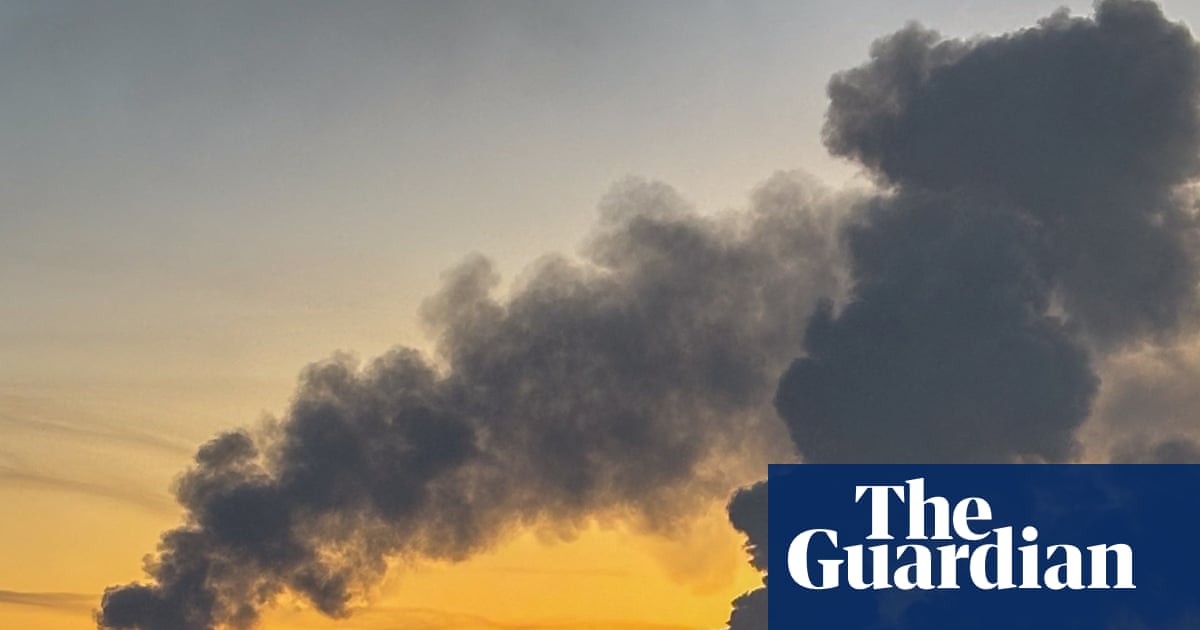 ✓
✓Ukraine has targeted Moscow and elsewhere in Russia in a major attack that involved hundreds of drones and the first acknowledged use of ballistic missiles by Kyiv in the four and a half year full scale war.
The attack killed at least two people and damaged what Ukraine’s president, Volodymyr Zelenskyy, said was one of the country’s “key oil industry facilities” on the final day of the country’s parliamentary elections, authorities said on Sunday.
Zelenskyy also said that that among the weapons used in the attack was the Pelican, a short range ballistic missile, which has an estimated range of about 350km (217 miles), not enough to reach Moscow directly.
Though the president did not offer any further details, the missile was likely to have been used as part of the overall complex of attacks; he listed 10 different weapons types all largely developed in Ukraine.
Ballistic missiles fly at several times the speed of sound in their terminal phase, making them very difficult to intercept unlike slower moving cruise missiles and drones. Until recently, Ukraine had lacked its own missile technology.
Moscow’s mayor, Sergey Sobyanin, said that more than 1,600 drones had been intercepted and shot down, 450 of which were aimed at Moscow, though these figures are often exaggerated, and Ukraine’s daily drone fire rate estimated a number in the low hundreds.
Sobyanin accused Ukraine of attempting to interfere with a tightly controlled three-day election in Russia that is expected to tighten Vladimir Putin’s 26-year grip on power.
“The unprecedented attack was clearly planned with the aim of disrupting the elections. The enemy did not succeed,” he said on Telegram.
Moscow’s regional governor said at least two people were killed – a 44-year-old woman and an elderly man – in two separate locations.
A fire triggered by a drone crashing into a 21-storey building also led to 400 people being evacuated, said Moscow’s regional governor, Andrey Vorobyov, without specifying the drones’ origin.
Kyiv has stepped up its long-range drone strike campaign against Russia in recent months, particularly against energy infrastructure to target a vital source of the Kremlin’s revenue to fund its war effort: now in its fifth year.
Ukrainian strikes have knocked out a significant part of Russia’s oil refining capacity, triggering oil product shortages, fuel price increases and long queues at filling stations in many regions across the country’s 11 time zones.
after newsletter promotion
A facility on the territory of the Moscow oil refinery had been damaged, Sobyanin said. No casualties had been reported so far and emergency services were on the scene. The refinery has already been hit by Ukrainian strikes in recent months.
The Pelican missile is understood to be the FP-7 made by Fire Point, Ukraine’s most successful long range drone and missile maker. The company is also developing the longer range FP-9 whose range of more than 500 miles means it could target Moscow in the future. A test flight is expected later this autumn.
The latest strike comes after the US president, Donald Trump, said on Monday that Ukraine and Russia had agreed not to target each other’s energy facilities. It also comes after Russians began voting on Friday in the country’s first parliamentary election since Moscow invaded Ukraine in February 2022.
Only parties that support Putin and the Kremlin’s military campaign have been registered to run. Moscow has also organised voting in occupied Ukraine. Few Russians doubt Putin’s United Russia party will coast to victory again, but the vote offers a gauge of public support for the war.
With Agence France-Presse and Reuters
Read the full story at BBC ↗ · The Guardian ↗ · NPR ↗
Authorities accuse Zelenskyy of trying to disrupt Russian elections, with at least two killed and oil refinery damaged. Ukraine has targeted Moscow and elsewhere in Russia in a…
This lens runs the verified story through Cinnamon's AI — wired in the next step.
Ukraine has targeted Moscow and elsewhere in Russia in a major attack that involved hundreds of drones and the first acknowledged use of ballistic missiles by Kyiv in the four and a half year full scale war.
The attack killed at least two people and damaged what Ukraine’s president, Volodymyr Zelenskyy, said was one of the country’s “key oil industry facilities” on the final day of the country’s parliamentary elections, authorities said on Sunday.
Zelenskyy also said that that among the weapons used in the attack was the Pelican, a short range ballistic missile, which has an estimated range of about 350km (217 miles), not enough to reach Moscow directly.
Though the president did not offer any further details, the missile was likely to have been used as part of the overall complex of attacks; he listed 10 different weapons types all largely developed in Ukraine.
Ballistic missiles fly at several times the speed of sound in their terminal phase, making them very difficult to intercept unlike slower moving cruise missiles and drones. Until recently, Ukraine had lacked its own missile technology.
Moscow’s mayor, Sergey Sobyanin, said that more than 1,600 drones had been intercepted and shot down, 450 of which were aimed at Moscow, though these figures are often exaggerated, and Ukraine’s daily drone fire rate estimated a number in the low hundreds.
Sobyanin accused Ukraine of attempting to interfere with a tightly controlled three-day election in Russia that is expected to tighten Vladimir Putin’s 26-year grip on power.
“The unprecedented attack was clearly planned with the aim of disrupting the elections. The enemy did not succeed,” he said on Telegram.
Moscow’s regional governor said at least two people were killed – a 44-year-old woman and an elderly man – in two separate locations.
A fire triggered by a drone crashing into a 21-storey building also led to 400 people being evacuated, said Moscow’s regional governor, Andrey Vorobyov, without specifying the drones’ origin.
Kyiv has stepped up its long-range drone strike campaign against Russia in recent months, particularly against energy infrastructure to target a vital source of the Kremlin’s revenue to fund its war effort: now in its fifth year.
Ukrainian strikes have knocked out a significant part of Russia’s oil refining capacity, triggering oil product shortages, fuel price increases and long queues at filling stations in many regions across the country’s 11 time zones.
after newsletter promotion
A facility on the territory of the Moscow oil refinery had been damaged, Sobyanin said. No casualties had been reported so far and emergency services were on the scene. The refinery has already been hit by Ukrainian strikes in recent months.
The Pelican missile is understood to be the FP-7 made by Fire Point, Ukraine’s most successful long range drone and missile maker. The company is also developing the longer range FP-9 whose range of more than 500 miles means it could target Moscow in the future. A test flight is expected later this autumn.
The latest strike comes after the US president, Donald Trump, said on Monday that Ukraine and Russia had agreed not to target each other’s energy facilities. It also comes after Russians began voting on Friday in the country’s first parliamentary election since Moscow invaded Ukraine in February 2022.
Only parties that support Putin and the Kremlin’s military campaign have been registered to run. Moscow has also organised voting in occupied Ukraine. Few Russians doubt Putin’s United Russia party will coast to victory again, but the vote offers a gauge of public support for the war.
With Agence France-Presse and Reuters
Read the full story at BBC ↗ · The Guardian ↗ · NPR ↗
Ukraine has targeted Moscow and elsewhere in Russia in a major attack that involved hundreds of drones and the first acknowledged use of ballistic missiles by Kyiv in the four and a half year full scale war.
The attack killed at least two people and damaged what Ukraine’s president, Volodymyr Zelenskyy, said was one of the country’s “key oil industry facilities” on the final day of the country’s parliamentary elections, authorities said on Sunday.
Zelenskyy also said that that among the weapons used in the attack was the Pelican, a short range ballistic missile, which has an estimated range of about 350km (217 miles), not enough to reach Moscow directly.
Though the president did not offer any further details, the missile was likely to have been used as part of the overall complex of attacks; he listed 10 different weapons types all largely developed in Ukraine.
Ballistic missiles fly at several times the speed of sound in their terminal phase, making them very difficult to intercept unlike slower moving cruise missiles and drones. Until recently, Ukraine had lacked its own missile technology.
Moscow’s mayor, Sergey Sobyanin, said that more than 1,600 drones had been intercepted and shot down, 450 of which were aimed at Moscow, though these figures are often exaggerated, and Ukraine’s daily drone fire rate estimated a number in the low hundreds.
Sobyanin accused Ukraine of attempting to interfere with a tightly controlled three-day election in Russia that is expected to tighten Vladimir Putin’s 26-year grip on power.
“The unprecedented attack was clearly planned with the aim of disrupting the elections. The enemy did not succeed,” he said on Telegram.
Moscow’s regional governor said at least two people were killed – a 44-year-old woman and an elderly man – in two separate locations.
A fire triggered by a drone crashing into a 21-storey building also led to 400 people being evacuated, said Moscow’s regional governor, Andrey Vorobyov, without specifying the drones’ origin.
Kyiv has stepped up its long-range drone strike campaign against Russia in recent months, particularly against energy infrastructure to target a vital source of the Kremlin’s revenue to fund its war effort: now in its fifth year.
Ukrainian strikes have knocked out a significant part of Russia’s oil refining capacity, triggering oil product shortages, fuel price increases and long queues at filling stations in many regions across the country’s 11 time zones.
after newsletter promotion
A facility on the territory of the Moscow oil refinery had been damaged, Sobyanin said. No casualties had been reported so far and emergency services were on the scene. The refinery has already been hit by Ukrainian strikes in recent months.
The Pelican missile is understood to be the FP-7 made by Fire Point, Ukraine’s most successful long range drone and missile maker. The company is also developing the longer range FP-9 whose range of more than 500 miles means it could target Moscow in the future. A test flight is expected later this autumn.
The latest strike comes after the US president, Donald Trump, said on Monday that Ukraine and Russia had agreed not to target each other’s energy facilities. It also comes after Russians began voting on Friday in the country’s first parliamentary election since Moscow invaded Ukraine in February 2022.
Only parties that support Putin and the Kremlin’s military campaign have been registered to run. Moscow has also organised voting in occupied Ukraine. Few Russians doubt Putin’s United Russia party will coast to victory again, but the vote offers a gauge of public support for the war.
With Agence France-Presse and Reuters
Read the full story at BBC ↗ · The Guardian ↗ · NPR ↗
This lens runs the verified story through Cinnamon's AI — wired in the next step.
- Authorities accuse Zelenskyy of trying to disrupt Russian elections, with at least two killed and oil refinery damaged.
- Ukraine has targeted Moscow and elsewhere in Russia in a…