UN nuclear chief says inspectors will visit Iran sites as part of war deal
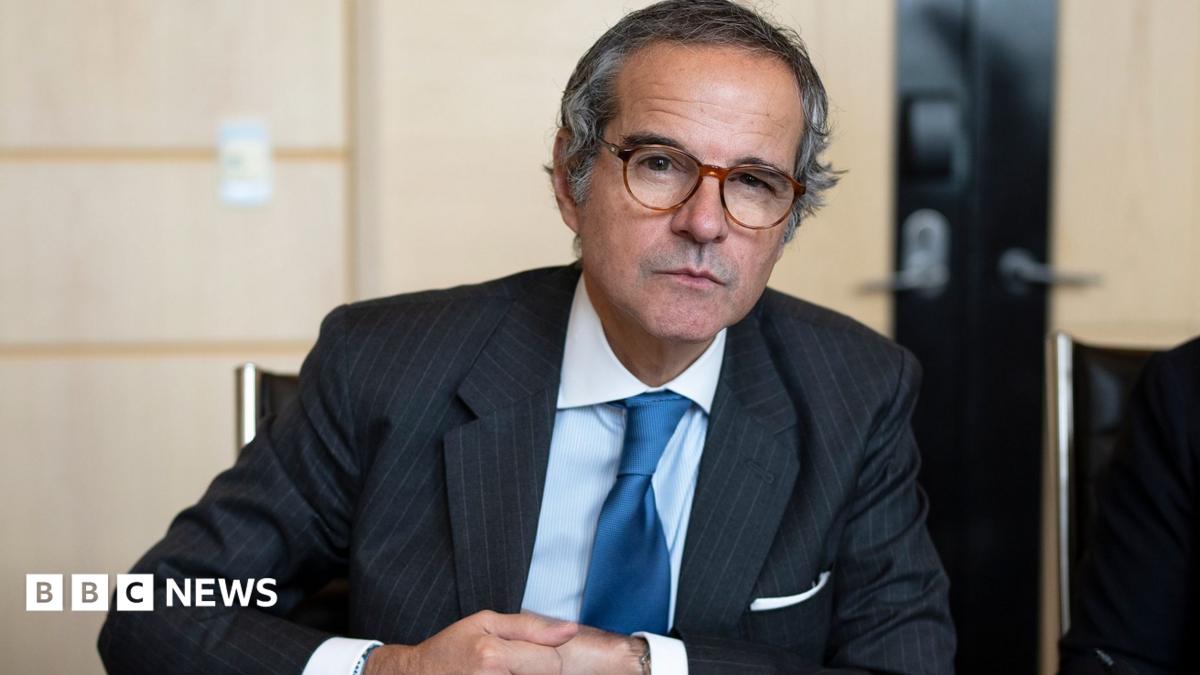
The head of the global nuclear watchdog has said it will carry out inspections in Iran under the country's preliminary peace agreement with the US.
"The inspections will indeed take place," International Atomic Energy Agency director general Rafael Grossi told reporters in Japan. "We will be working on the modalities - dates, procedures, places - very soon."
The agreement signed last week said "explicitly" that the dilution of Iran's highly enriched uranium would be carried out under IAEA supervision, he added.
However, Iran's deputy foreign minister said access to its damaged nuclear facilities and nuclear material would only be addressed within the framework of a final deal with the US.
Grossi's comments came as US Secretary of State Marco Rubio met UAE President Mohamed bin Zayed Al Nahyan before travelling to Kuwait and Bahrain to discuss the deal.
Speaking in Kuwait City Rubio said the US would not agree anything with Iran that would undermine the security of US allies in the region.
"We're going to be completely aligned with our partners in the Gulf," he told reporters.
"If Iran wants to make a good and real deal, the United States is open to that. If they're not, then of course the president has options," Rubio said, adding that negotiators were likely to meet again in Switzerland before the end of the month.
The initial US-Iran agreement also said that Iran would allow shipping to pass through the Strait of Hormuz while the US would lift a naval blockade on Iranian ports.
On Wednesday the price of Brent crude oil fell to below $75 (£57) for first time since the US-Israeli war on Iran began.
Meanwhile the UN said some ships had already passed through the strait under a scheme to evacuate thousands of sailors stranded by the war.
In recent days, there has been a dispute between the US and Iran over the issue of UN nuclear inspectors visiting sites in the country.
On Monday, following talks in Switzerland with Iran's chief negotiator, US Vice-President JD Vance said Iran had "agreed to invite IAEA inspectors back into their country".
The next day, Iranian foreign ministry spokesman said there had been "no detailed discussions" and that Iran had no plans to grant IAEA inspectors access to nuclear facilities which were bombed by the US during a 12-day war between Israel and Iran in June 2025.
US President Donald Trump then dismissed Iran's "protestations and false statements to the contrary", saying the country had "fully and completely agreed" to inspections.
"There's a war or words here. Some say 'yes', the others say 'no'," the IAEA's chief said on Wednesday. "I can understand political statements. They are part of the reality.
"But the fundamental thing... is that there has been a memorandum of understanding signed by both presidents," he added. "[It] says explicitly that the nuclear activities that are going to be carried out, with regards to nuclear material, facilities, will be supervised by the IAEA, in bold letters. This is going to happen."
Grossi said the inspections would take place in collaboration and co-operation with the Iranian government. "Whether this happens the day after tomorrow, or in one week, or in 10 days, it's important but not essential."
Iranian Deputy Foreign Minister Kazem Gharibabadi appeared to push back at the comments.
He wrote on X that access to Iran's damaged nuclear facilities and its nuclear materials would only be addressed within the framework of a final agreement with the US and after practical steps had been taken to lift all sanctions.
"Media noise cannot be used to impose facts on the ground," he added.
Under the 14-point memorandum of understanding, the US and Iran have committed to negotiating a final deal within 60 days.
It says they have "agreed to resolve the disposition of stockpiled enriched material, pursuant to a mechanism that will be mutually agreed upon... with the minimum methodology to be down-blending on site under the supervision of the IAEA".
The IAEA said in a recent report, external that its inspectors were allowed to visit Iran's Bushehr nuclear power plant earlier this month, but that they were still not given access to the sensitive nuclear facilities that were bombed last June.
The watchdog said that meant it could not provide any information on the current size, composition or whereabouts of Iran's stockpile of enriched uranium, or whether Iran had suspended all enrichment activities. Much of the stockpile is believed to be inside underground tunnels at the Isfahan site.
Enriched uranium can be used to make reactor fuel but also nuclear weapons.
Before the start of the US-Israeli war with Iran on 28 February, the IAEA reported that Iran had 440kg (970 lbs) of uranium that was enriched up to 60% purity, which is near weapons grade. That would theoretically be enough, if enriched to 90%, for as many as 10 bombs.
Iran insists its nuclear activities are entirely peaceful and that it would never seek to develop or acquire nuclear weapons.
Under a 2015 deal with the US and five other world powers, Iran agreed to limit its nuclear activities and allow continuous and robust monitoring by the IAEA's inspectors in return for relief from crippling economic sanctions.
However, Trump abandoned the agreement during his first term in 2018, saying it did too little to stop a pathway to a bomb, and reinstated US sanctions.
Iran retaliated by increasingly breaching the restrictions of the deal, particularly those relating to uranium enrichment.
Read the full story at BBC ↗
The head of the International Atomic Energy Agency said inspectors will visit Iran to oversee uranium dilution under a preliminary agreement signed between the US and Iran last week. The two countries have committed to negotiate a final deal within 60 days that includes resolving how Iran's stockpiled enriched uranium will be handled, with IAEA supervision. A dispute has emerged over the scope of inspections: US officials including Vice-President Vance and President Trump state Iran has agreed to grant IAEA access to all nuclear sites, while Iran's foreign ministry says detailed discussions on accessing damaged facilities have not occurred and such access depends on progress within a final agreement and sanctions relief. The IAEA chief noted that a signed memorandum between both presidents explicitly commits to IAEA supervision of nuclear activities. Iran's deputy foreign minister emphasised that access to damaged facilities and nuclear materials would only be addressed within the framework of a final deal. IAEA inspectors were permitted to visit Iran's Bushehr power plant earlier this month but were not given access to sensitive facilities bombed in June 2025, meaning the current status of Iran's enriched uranium stockpile—previously estimated at 440kg enriched to 60% purity—remains unverified by the watchdog.
Read the full story at BBC ↗
The head of the global nuclear watchdog has said it will carry out inspections in Iran under the country's preliminary peace agreement with the US.
"The inspections will indeed take place," International Atomic Energy Agency director general Rafael Grossi told reporters in Japan. "We will be working on the modalities - dates, procedures, places - very soon."
The agreement signed last week said "explicitly" that the dilution of Iran's highly enriched uranium would be carried out under IAEA supervision, he added.
However, Iran's deputy foreign minister said access to its damaged nuclear facilities and nuclear material would only be addressed within the framework of a final deal with the US.
Grossi's comments came as US Secretary of State Marco Rubio met UAE President Mohamed bin Zayed Al Nahyan before travelling to Kuwait and Bahrain to discuss the deal.
Speaking in Kuwait City Rubio said the US would not agree anything with Iran that would undermine the security of US allies in the region.
"We're going to be completely aligned with our partners in the Gulf," he told reporters.
"If Iran wants to make a good and real deal, the United States is open to that. If they're not, then of course the president has options," Rubio said, adding that negotiators were likely to meet again in Switzerland before the end of the month.
The initial US-Iran agreement also said that Iran would allow shipping to pass through the Strait of Hormuz while the US would lift a naval blockade on Iranian ports.
On Wednesday the price of Brent crude oil fell to below $75 (£57) for first time since the US-Israeli war on Iran began.
Meanwhile the UN said some ships had already passed through the strait under a scheme to evacuate thousands of sailors stranded by the war.
In recent days, there has been a dispute between the US and Iran over the issue of UN nuclear inspectors visiting sites in the country.
On Monday, following talks in Switzerland with Iran's chief negotiator, US Vice-President JD Vance said Iran had "agreed to invite IAEA inspectors back into their country".
The next day, Iranian foreign ministry spokesman said there had been "no detailed discussions" and that Iran had no plans to grant IAEA inspectors access to nuclear facilities which were bombed by the US during a 12-day war between Israel and Iran in June 2025.
US President Donald Trump then dismissed Iran's "protestations and false statements to the contrary", saying the country had "fully and completely agreed" to inspections.
"There's a war or words here. Some say 'yes', the others say 'no'," the IAEA's chief said on Wednesday. "I can understand political statements. They are part of the reality.
"But the fundamental thing... is that there has been a memorandum of understanding signed by both presidents," he added. "[It] says explicitly that the nuclear activities that are going to be carried out, with regards to nuclear material, facilities, will be supervised by the IAEA, in bold letters. This is going to happen."
Grossi said the inspections would take place in collaboration and co-operation with the Iranian government. "Whether this happens the day after tomorrow, or in one week, or in 10 days, it's important but not essential."
Iranian Deputy Foreign Minister Kazem Gharibabadi appeared to push back at the comments.
He wrote on X that access to Iran's damaged nuclear facilities and its nuclear materials would only be addressed within the framework of a final agreement with the US and after practical steps had been taken to lift all sanctions.
"Media noise cannot be used to impose facts on the ground," he added.
Under the 14-point memorandum of understanding, the US and Iran have committed to negotiating a final deal within 60 days.
It says they have "agreed to resolve the disposition of stockpiled enriched material, pursuant to a mechanism that will be mutually agreed upon... with the minimum methodology to be down-blending on site under the supervision of the IAEA".
The IAEA said in a recent report, external that its inspectors were allowed to visit Iran's Bushehr nuclear power plant earlier this month, but that they were still not given access to the sensitive nuclear facilities that were bombed last June.
The watchdog said that meant it could not provide any information on the current size, composition or whereabouts of Iran's stockpile of enriched uranium, or whether Iran had suspended all enrichment activities. Much of the stockpile is believed to be inside underground tunnels at the Isfahan site.
Enriched uranium can be used to make reactor fuel but also nuclear weapons.
Before the start of the US-Israeli war with Iran on 28 February, the IAEA reported that Iran had 440kg (970 lbs) of uranium that was enriched up to 60% purity, which is near weapons grade. That would theoretically be enough, if enriched to 90%, for as many as 10 bombs.
Iran insists its nuclear activities are entirely peaceful and that it would never seek to develop or acquire nuclear weapons.
Under a 2015 deal with the US and five other world powers, Iran agreed to limit its nuclear activities and allow continuous and robust monitoring by the IAEA's inspectors in return for relief from crippling economic sanctions.
However, Trump abandoned the agreement during his first term in 2018, saying it did too little to stop a pathway to a bomb, and reinstated US sanctions.
Iran retaliated by increasingly breaching the restrictions of the deal, particularly those relating to uranium enrichment.
Read the full story at BBC ↗
The IAEA director general Rafael Grossi stated inspectors will visit Iran sites to supervise uranium dilution under the preliminary peace agreement A memorandum of understanding was signed by both US and Iran presidents committing to IAEA supervision of nuclear material and facilities The agreement commits both countries to negotiate a final deal within 60 days US Vice-President JD Vance said Iran agreed to invite IAEA inspectors back into the country following Switzerland talks Iran's foreign ministry disputed this characterisation, stating there had been no detailed discussions on facility access President Trump dismissed Iran's statements as false protestations Iran's deputy foreign minister stated access to damaged nuclear facilities would only be addressed within a final agreement framework after sanctions relief IAEA inspectors visited Bushehr power plant this month but were denied access to sensitive bombed facilities Before the February war, Iran held 440kg of uranium enriched to 60% purity, theoretically enough for up to 10 nuclear bombs if further enriched to 90% Iran insists its nuclear activities are entirely peaceful and it would never develop nuclear weapons
Read the full story at BBC ↗
- UN nuclear watchdog chief Rafael Grossi confirmed IAEA inspectors will visit Iran to supervise uranium dilution under a preliminary US-Iran peace agreement signed last week
- Dispute exists between US and Iran over inspection access to damaged nuclear sites, with Iran's deputy foreign minister saying detailed access only comes within a final deal framework
- US chief negotiator JD Vance and President Trump assert Iran agreed to inspections; Iran disputes the characterisation, citing no detailed discussions on facility access
- The 60-day memorandum commits both countries to negotiate a final agreement on enriched uranium disposition under IAEA supervision
- IAEA inspectors visited Bushehr power plant this month but remain denied access to sensitive bombed facilities, leaving uranium stockpile status unverified