US AI stock sell-off shakes markets from Wall Street to Asia
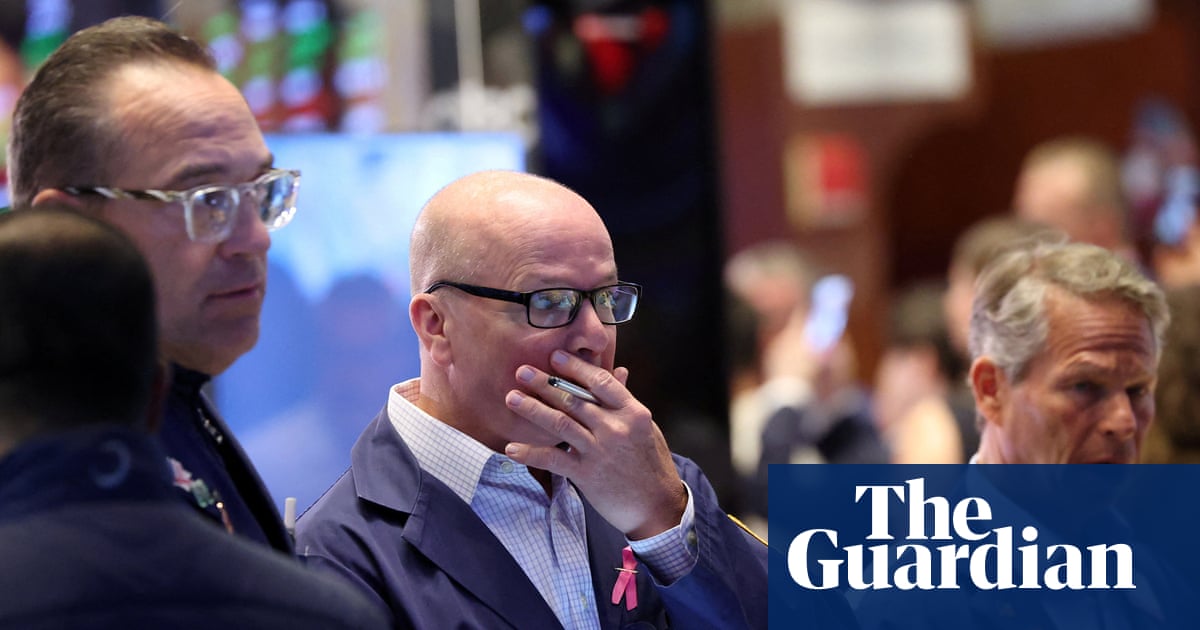
A tech sell-off shook global markets on Tuesday as attention turned away from developments in the US war with Iran and toward the future of AI companies and chipmakers that have driven stock markets to record highs.
The tech-heavy Nasdaq index closed 2.2% lower on Tuesday. The S&P 500 was also down by Tuesday afternoon, dropping 1.43% while the Dow remained steady.
All three major US indices have hit record highs this year, riding off a rush of funding to support AI technology and infrastructure. Nasdaq is up 10% for the year, while the Dow jumped 6% so far this year, breaching past 51,000 points, and the S&P 500 is up 7.3%.
But some economists have warned that the influx of AI spending is a bubble reminiscent of the dot-com bubble that burst in the early 2000s. Seven tech companies make up 30% of the S&P 500’s value.
The heavy reliance on a single industry and a few key companies has some investors wondering if it’s a matter of when, not if, there will be a burst. Those concerns have been heightened by signals from the Federal Reserve last week that it may increase interest rates, and therefore the cost of borrowing, in order to tackle rising inflation.
Those looking for signs of stumbling may have found confirmation after a series of developments on Monday. The stock market drop started when Google-parent, Alphabet, had its worst day on the market in over a year. A pair of high-profile AI researchers left the company last week, worrying investors. Alphabet’s share price had dropped 5% by closing Monday.
Elon Musk’s SpaceX, which debuted on the market on 12 June to much fanfare, dropped 16% on Monday as the company’s post-initial public offering (IPO) boost continued to ebb. On Monday, the company announced it was looking to raise $20bn in a bond sale, even after the company gained more than $85bn through its IPO, sparking concerns over the massive cost of the company’s projects.
“SpaceX is not yet part of the Nasdaq indices, but the fact that it is jumping on the bond train to fund excessive AI and infrastructure spending revives earlier concerns that Big Tech may be spending too much on AI infrastructure and increasingly financing that spending through debt,” said Ipek Ozkardeskaya, a senior analyst at Swissquote, noting that Morgan Stanley has estimated that AI-related borrowing will surpass $500bn this year
After the US stock market closed for the day on Monday, stocks in Asia appeared shaken by the drops around AI and tech companies. South Korea’s benchmark closed 10% down on Tuesday after the country’s largest chipmakers, SK Hynix and Samsung Electronics, both closed over 12% lower. Japan’s Nikkei 225 was down 3.5% at the close of trading.
after newsletter promotion
Some markets were able to avoid the sell-off, with London’s FTSE 100 steady at closing Tuesday.
Read the full story at The Guardian ↗
US equity markets experienced a significant decline on Tuesday as investors reassessed technology and AI-related holdings. The Nasdaq fell 2.2% and the S&P 500 dropped 1.43%, while international markets also weakened. The decline followed Monday's sell-off in major tech firms, notably Alphabet (down 5%) after losing key AI researchers, and SpaceX (down 16%) following its announcement of a $20bn bond offering. Asian markets reflected the shift, with South Korea's index down 10% and Japan's down 3.5%. Despite year-to-date gains across major indices—Nasdaq up 10%, S&P 500 up 7.3%, and the Dow up 6%—the concentration of market value in seven tech companies (30% of S&P 500) and signals from the Federal Reserve about potential interest rate increases have prompted reassessment of AI sector valuations and financing patterns.
Read the full story at The Guardian ↗
A tech sell-off shook global markets on Tuesday as attention turned away from developments in the US war with Iran and toward the future of AI companies and chipmakers that have driven stock markets to record highs.
The tech-heavy Nasdaq index closed 2.2% lower on Tuesday. The S&P 500 was also down by Tuesday afternoon, dropping 1.43% while the Dow remained steady.
All three major US indices have hit record highs this year, riding off a rush of funding to support AI technology and infrastructure. Nasdaq is up 10% for the year, while the Dow jumped 6% so far this year, breaching past 51,000 points, and the S&P 500 is up 7.3%.
But some economists have warned that the influx of AI spending is a bubble reminiscent of the dot-com bubble that burst in the early 2000s. Seven tech companies make up 30% of the S&P 500’s value.
The heavy reliance on a single industry and a few key companies has some investors wondering if it’s a matter of when, not if, there will be a burst. Those concerns have been heightened by signals from the Federal Reserve last week that it may increase interest rates, and therefore the cost of borrowing, in order to tackle rising inflation.
Those looking for signs of stumbling may have found confirmation after a series of developments on Monday. The stock market drop started when Google-parent, Alphabet, had its worst day on the market in over a year. A pair of high-profile AI researchers left the company last week, worrying investors. Alphabet’s share price had dropped 5% by closing Monday.
Elon Musk’s SpaceX, which debuted on the market on 12 June to much fanfare, dropped 16% on Monday as the company’s post-initial public offering (IPO) boost continued to ebb. On Monday, the company announced it was looking to raise $20bn in a bond sale, even after the company gained more than $85bn through its IPO, sparking concerns over the massive cost of the company’s projects.
“SpaceX is not yet part of the Nasdaq indices, but the fact that it is jumping on the bond train to fund excessive AI and infrastructure spending revives earlier concerns that Big Tech may be spending too much on AI infrastructure and increasingly financing that spending through debt,” said Ipek Ozkardeskaya, a senior analyst at Swissquote, noting that Morgan Stanley has estimated that AI-related borrowing will surpass $500bn this year
After the US stock market closed for the day on Monday, stocks in Asia appeared shaken by the drops around AI and tech companies. South Korea’s benchmark closed 10% down on Tuesday after the country’s largest chipmakers, SK Hynix and Samsung Electronics, both closed over 12% lower. Japan’s Nikkei 225 was down 3.5% at the close of trading.
after newsletter promotion
Some markets were able to avoid the sell-off, with London’s FTSE 100 steady at closing Tuesday.
Read the full story at The Guardian ↗
The Nasdaq closed 2.2% lower on Tuesday; the S&P 500 dropped 1.43%; the Dow remained steady Alphabet fell 5% on Monday after high-profile AI researchers departed the company SpaceX dropped 16% on Monday and announced a $20bn bond sale despite raising $85bn in its June IPO South Korea's benchmark fell 10% on Tuesday; SK Hynix and Samsung Electronics both fell over 12% Japan's Nikkei 225 fell 3.5%; London's FTSE 100 remained steady Seven tech companies make up 30% of the S&P 500's value The Federal Reserve signalled last week it may increase interest rates to tackle rising inflation AI spending patterns resemble the dot-com bubble of the early 2000s Investors are concerned about whether a tech market burst is a matter of when, not if The heavy reliance on a single industry and few companies raises questions about market concentration risk
Read the full story at The Guardian ↗
- US tech stocks fell sharply on Tuesday: Nasdaq dropped 2.2%, S&P 500 fell 1.43%, while the Dow held steady
- Alphabet fell 5% on Monday following departures of high-profile AI researchers; SpaceX dropped 16% after announcing a $20bn bond sale despite raising $85bn in its June IPO
- Asian markets declined following US weakness, with South Korea's benchmark down 10% and Japanese stocks down 3.5%
- Seven tech companies now comprise 30% of S&P 500 value; some economists warn AI spending patterns echo the dot-com bubble
- Federal Reserve signals of potential interest rate increases have amplified investor concerns about valuations