US and Iran threaten return to war after fiercest exchange of fire since truce
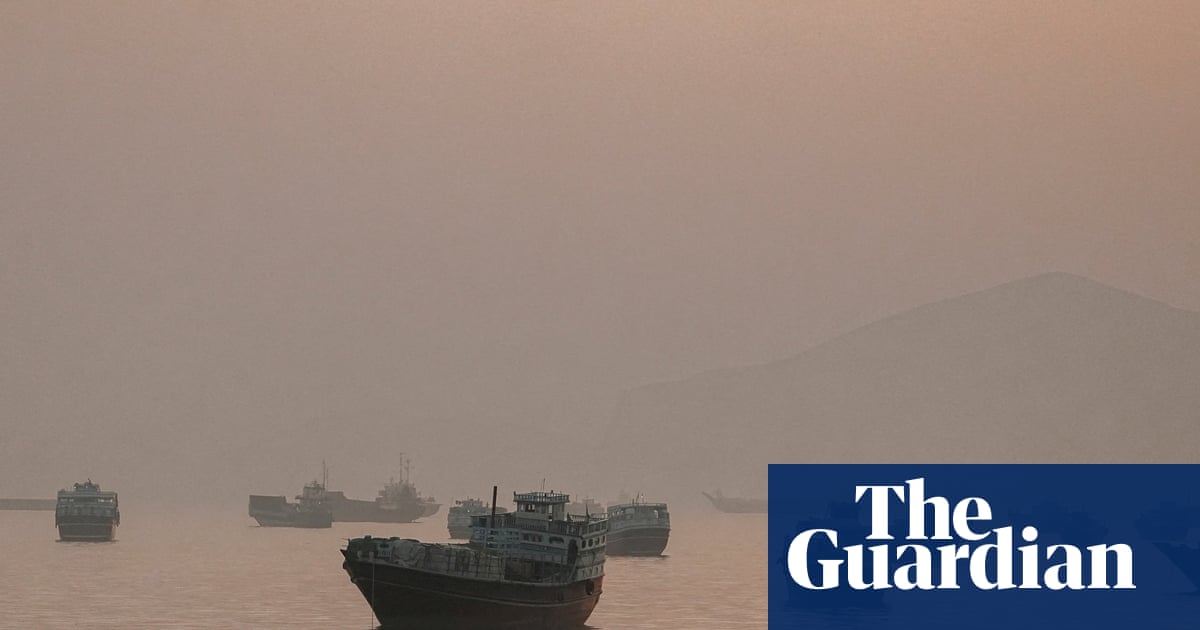
Iran and the US have threatened to reignite their conflict after the most extensive exchange of fire since an interim deal was signed last month.
On a chaotic day at the Nato summit in Ankara summit, Donald Trump said the US would probably hit the country again on Wednesday night and renewed his threat to take control of the strategic Kharg Island in the strait of Hormuz - a move that could provoke Iran to hit energy installations across the Gulf states.
He later tempered his remarks, saying he did not think a return to full-scale war was likely and that the fighting would be over quickly.
Iran announced that it was implementing a new strategic and military doctrine in which it would make no distinction between the US and its allies in the region, a reference to the Gulf states.
US central command said 80 targets had been struck in the early hours of Wednesday in response to Iranian attacks on three commercial vessels that were transiting through the strait of Hormuz on Tuesday. The US Treasury also revoked a temporary sanctions waiver for Tehran to export oil, one of the few tangible benefits Iran had from the memorandum of understanding (MoU) – the ceasefire negotiating framework agreed on June 14.
Iran, which said eight army and navy personnel had been killed in the US strikes, responded with attacks on US military sites in Bahrain and Kuwait. The Islamic Revolutionary Guard Corps (IRGC) said 85 facilities had been targeted. Air raid sirens were heard three times in Bahrain and twice in Kuwait.
The exchanges pushed oil prices up sharply on Wednesday morning.
At the centre of the resurgence of fighting is the Iranian claim that ships must traverse the strait only with its permission. Tehran wants ships use a northern passage and says a US-sponsored southern route close to the Omani coast breaches a clause in the MoU that left Iran in control, though under an obligation to use its best endeavours to restore shipping traffic to pre-war levels within 30 days, including by demining the strait.
Speaking at the Nato summit in Turkey, Trump said he thought the ceasefire was over before launching into a tirade of insults at the Iranian leadership. Trump said his negotiators “can talk, but I think they’re wasting their time … They’re a bunch of liars … They’re liars, they’re cheaters, they’re sick people.”
He later said: “I’ll give a little warning. We’re going to hit them hard tonight.”
The president claimed the overnight strikes against Iran had had a “huge impact” destroying Iranian surveillance radar sites. “In one day, we could take down all of Iran’s bridges,” as well as their power plants, he asserted, adding that Iran would be “powerless to stop it”.
“If we have to do it, we will destroy them,” he said, also threatening desalination plants. “We will destroy them if we have to.”
Trump also said he had issued orders on Tuesday evening to “bomb everything” on Kharg Island, but not to “touch the fuel lines”. “We could take control of Kharg Island,” he said.
By Wednesday evening, however, he had tempered his rhetoric. This will end “very quickly”, he said in his closing press conference in Ankara. “They hit a few ships and so we hit them much harder”, but “we do not intend to continue in the long term”.
He also said he believed Israel could yet withdraw from southern Lebanon, one of Iran’s key demands. It is possible Trump felt pressure to soften his tone as oil prices rose sharply and Nato allies such as the UK, France and Germany called on him to focus on a peace agreement with Iran.
The hostilities were the latest in a string of ceasefire violations by the two sides despite a truce that came into effect in April and the MoU signed last month. The memorandum was supposed to trigger at least 60 days of phased negotiations that were to end in an agreement on Iran’s nuclear programme and a permanent end to hostilities, including a ceasefire in Lebanon.
An agreement on the long-term future management of the strait – including whether to impose fees on commercial shipping – and on the lifting of US sanctions was proposed.
The US said Iran had struck three commercial vessels transiting the strait, including the Marshallese-flagged al Rekayyat, the Saudi-flagged Wedyan, and Liberian-flagged Cyprus Prosperity. The attack on al Rekayyat was particularly serious because the tanker was carrying Qatari liquid gas. Qatar has been acting as a mediator in the talks between Washington and Tehran, and summoned the deputy Iranian ambassador in Doha to demand an explanation.
The US said the attacks were a flagrant violation of the ceasefire and a threat to freedom of navigation, and required it to end the waiver issued a fortnight ago that lifted sanctions on Iranian oil exports, which was one of the first tangible benefits Tehran could claim from agreeing to lift its blockade of the strait.
Iranian foreign ministry officials at a press briefing in Tehran had said the strikes on the tankers were a reassertion of Iranian control of the waterway, the chokepoint through which as much as 20% of the world’s seaborne oil and gas flows.
The Iranian officials said the memorandum’s terms clearly put Iran in control of the strait for a minimum of 30 days from the document’s signing. They said the US was violating that commitment by trying to open new sea lanes without Iranian permission. “Responsibility for the dangerous consequences of this escalation lies with the deceitful US regime,” the foreign ministry said.
Announcing the attacks on Bahrain, Iran’s central command, Khatam al-Anbiya, reiterated its statement that “the only safe route for the passage of commercial ships and oil tankers in the strait is the route determined by the Islamic Republic of Iran”.
The military exchanges came as the funeral for the assassinated Iranian supreme leader Ali Khamenei was reaching its climax with his body was being flown from a shrine in Iraq back to Mashhad to be laid to rest. Vast crowds, many demanding revenge, attended the funeral in Iraq as Shia Muslims thronged the streets to bid farewell to one of their most important religious leaders.
Nato’s secretary general, Mark Rutte, backed the US attacks, pinning responsibility for the breaches of the ceasefire entirely on Iran, an interpretation that requires a narrow reading of the MoU.
All three tankers struck on Tuesday were close to Oman. Iran has said it wants to charge fees in return for providing security for all commercial ships using the strait, a proposal dismissed as a protection racket and in clear breach of the law of the sea. The proposal is certain to be rejected by Oman. Trying to find a way to marry the Iranian and Omani plans is critical to a diplomatic solution.
Read the full story at The Guardian ↗
Tensions escalated between Iran and the US following attacks on three commercial tankers in the Strait of Hormuz on Tuesday. Iran struck the vessels; the US responded with strikes on Iranian targets early Wednesday, killing eight Iranian military personnel according to Iranian sources. Iran then attacked US military facilities in Bahrain and Kuwait. The US revoked a temporary sanctions waiver allowing Iranian oil exports, removing a key benefit Iran had gained from a ceasefire agreement signed June 14. The immediate trigger was a dispute over shipping routes: Iran asserts control of the strait under the memorandum and demands vessels use a northern passage, while the US backs a southern route near Oman. Both sides have threatened further military action. Trump stated he expects the situation to resolve quickly. The exchanges mark violations of a ceasefire meant to enable 60 days of phased nuclear negotiations. Oil prices increased significantly.
Read the full story at The Guardian ↗
Iran and the US have threatened to reignite their conflict after the most extensive exchange of fire since an interim deal was signed last month.
On a chaotic day at the Nato summit in Ankara summit, Donald Trump said the US would probably hit the country again on Wednesday night and renewed his threat to take control of the strategic Kharg Island in the strait of Hormuz - a move that could provoke Iran to hit energy installations across the Gulf states.
He later tempered his remarks, saying he did not think a return to full-scale war was likely and that the fighting would be over quickly.
Iran announced that it was implementing a new strategic and military doctrine in which it would make no distinction between the US and its allies in the region, a reference to the Gulf states.
US central command said 80 targets had been struck in the early hours of Wednesday in response to Iranian attacks on three commercial vessels that were transiting through the strait of Hormuz on Tuesday. The US Treasury also revoked a temporary sanctions waiver for Tehran to export oil, one of the few tangible benefits Iran had from the memorandum of understanding (MoU) – the ceasefire negotiating framework agreed on June 14.
Iran, which said eight army and navy personnel had been killed in the US strikes, responded with attacks on US military sites in Bahrain and Kuwait. The Islamic Revolutionary Guard Corps (IRGC) said 85 facilities had been targeted. Air raid sirens were heard three times in Bahrain and twice in Kuwait.
The exchanges pushed oil prices up sharply on Wednesday morning.
At the centre of the resurgence of fighting is the Iranian claim that ships must traverse the strait only with its permission. Tehran wants ships use a northern passage and says a US-sponsored southern route close to the Omani coast breaches a clause in the MoU that left Iran in control, though under an obligation to use its best endeavours to restore shipping traffic to pre-war levels within 30 days, including by demining the strait.
Speaking at the Nato summit in Turkey, Trump said he thought the ceasefire was over before launching into a tirade of insults at the Iranian leadership. Trump said his negotiators “can talk, but I think they’re wasting their time … They’re a bunch of liars … They’re liars, they’re cheaters, they’re sick people.”
He later said: “I’ll give a little warning. We’re going to hit them hard tonight.”
The president claimed the overnight strikes against Iran had had a “huge impact” destroying Iranian surveillance radar sites. “In one day, we could take down all of Iran’s bridges,” as well as their power plants, he asserted, adding that Iran would be “powerless to stop it”.
“If we have to do it, we will destroy them,” he said, also threatening desalination plants. “We will destroy them if we have to.”
Trump also said he had issued orders on Tuesday evening to “bomb everything” on Kharg Island, but not to “touch the fuel lines”. “We could take control of Kharg Island,” he said.
By Wednesday evening, however, he had tempered his rhetoric. This will end “very quickly”, he said in his closing press conference in Ankara. “They hit a few ships and so we hit them much harder”, but “we do not intend to continue in the long term”.
He also said he believed Israel could yet withdraw from southern Lebanon, one of Iran’s key demands. It is possible Trump felt pressure to soften his tone as oil prices rose sharply and Nato allies such as the UK, France and Germany called on him to focus on a peace agreement with Iran.
The hostilities were the latest in a string of ceasefire violations by the two sides despite a truce that came into effect in April and the MoU signed last month. The memorandum was supposed to trigger at least 60 days of phased negotiations that were to end in an agreement on Iran’s nuclear programme and a permanent end to hostilities, including a ceasefire in Lebanon.
An agreement on the long-term future management of the strait – including whether to impose fees on commercial shipping – and on the lifting of US sanctions was proposed.
The US said Iran had struck three commercial vessels transiting the strait, including the Marshallese-flagged al Rekayyat, the Saudi-flagged Wedyan, and Liberian-flagged Cyprus Prosperity. The attack on al Rekayyat was particularly serious because the tanker was carrying Qatari liquid gas. Qatar has been acting as a mediator in the talks between Washington and Tehran, and summoned the deputy Iranian ambassador in Doha to demand an explanation.
The US said the attacks were a flagrant violation of the ceasefire and a threat to freedom of navigation, and required it to end the waiver issued a fortnight ago that lifted sanctions on Iranian oil exports, which was one of the first tangible benefits Tehran could claim from agreeing to lift its blockade of the strait.
Iranian foreign ministry officials at a press briefing in Tehran had said the strikes on the tankers were a reassertion of Iranian control of the waterway, the chokepoint through which as much as 20% of the world’s seaborne oil and gas flows.
The Iranian officials said the memorandum’s terms clearly put Iran in control of the strait for a minimum of 30 days from the document’s signing. They said the US was violating that commitment by trying to open new sea lanes without Iranian permission. “Responsibility for the dangerous consequences of this escalation lies with the deceitful US regime,” the foreign ministry said.
Announcing the attacks on Bahrain, Iran’s central command, Khatam al-Anbiya, reiterated its statement that “the only safe route for the passage of commercial ships and oil tankers in the strait is the route determined by the Islamic Republic of Iran”.
The military exchanges came as the funeral for the assassinated Iranian supreme leader Ali Khamenei was reaching its climax with his body was being flown from a shrine in Iraq back to Mashhad to be laid to rest. Vast crowds, many demanding revenge, attended the funeral in Iraq as Shia Muslims thronged the streets to bid farewell to one of their most important religious leaders.
Nato’s secretary general, Mark Rutte, backed the US attacks, pinning responsibility for the breaches of the ceasefire entirely on Iran, an interpretation that requires a narrow reading of the MoU.
All three tankers struck on Tuesday were close to Oman. Iran has said it wants to charge fees in return for providing security for all commercial ships using the strait, a proposal dismissed as a protection racket and in clear breach of the law of the sea. The proposal is certain to be rejected by Oman. Trying to find a way to marry the Iranian and Omani plans is critical to a diplomatic solution.
Read the full story at The Guardian ↗
Iran struck three commercial vessels transiting the Strait of Hormuz on Tuesday; the US responded with strikes on Iranian targets early Wednesday The US said it struck 80 targets; Iran's IRGC said it targeted 85 facilities in Bahrain and Kuwait Iran reported 8 military personnel killed; air raid sirens sounded in Bahrain and Kuwait The US revoked a sanctions waiver on Iranian oil exports that had been in place since June 14 The dispute centers on shipping routes in the Strait of Hormuz: Iran claims the memorandum gives it control and demands a northern passage; the US backs a southern route near Oman The attacks violated a ceasefire that began in April and a June 14 memorandum intended to trigger 60 days of phased negotiations on Iran's nuclear programme and permanent hostilities cessation Trump said the ceasefire was over and threatened further strikes including on Kharg Island, but later stated he expected the situation to end quickly without long-term continuation Iran announced a new military doctrine treating the US and its regional allies as unified targets NATO Secretary General Mark Rutte backed the US strikes and attributed ceasefire breaches entirely to Iran Iran's foreign ministry characterized US actions as violations of the memorandum; the US characterized Iran's actions as violations Iran frames its demands as reassertion of control under the memorandum; the US frames the demands as a protection racket and violation of maritime law
Read the full story at The Guardian ↗
- Iran and the US exchanged fire in the Strait of Hormuz after Iran struck three commercial vessels; the US responded with strikes on Iranian targets and revoked a sanctions waiver
- The dispute centers on shipping routes through the strait: Iran claims control under a June memorandum and wants a northern passage; the US supports a southern route near Oman
- Trump threatened further strikes including on Kharg Island but later said he expected quick resolution; Iran announced it would treat US and regional allies as unified targets
- Oil prices rose sharply; the exchanges violated a ceasefire that began in April and a memorandum signed June 14 meant to trigger 60 days of nuclear negotiations