US says it has agreed to 'stand down' after exchange of strikes with Iran
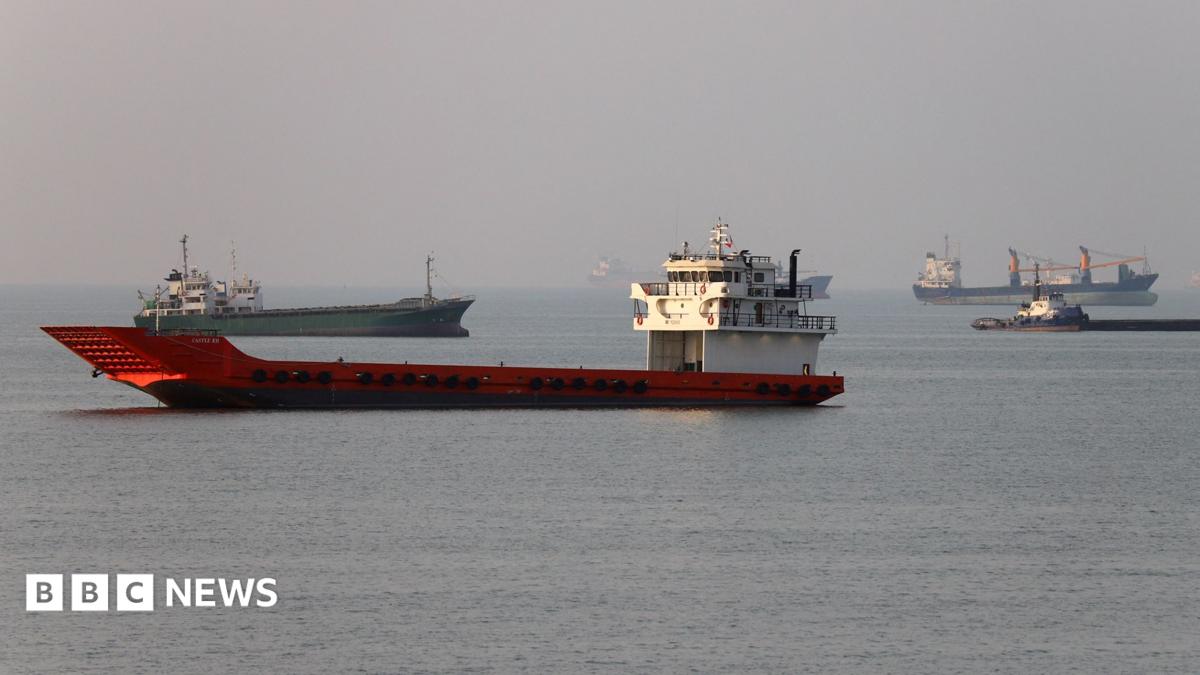
The US and Iran have agreed to "stand down" following an exchange of strikes over the past few days, media reports cite a US official as saying.
It comes after several attacks in and around the Strait of Hormuz, with both nations accusing each other of violating their ceasefire.
The US official told the BBC's US partner CBS News on Sunday that vessels would be able to move through the Gulf waterway "freely", and that talks on a deal to permanently end the war would continue.
On Monday, Deputy Iranian Foreign Minister Kazem Gharibabadi denied that there were plans for technical talks this week. But US President Donald Trump said a meeting would be held in Qatar's capital at Iran's request.
"IRAN HAS REQUESTED A MEETING. IT WILL TAKE PLACE TOMORROW IN DOHA!" he wrote on Truth Social, without giving any details.
Later, White House Press Secretary Karoline Leavitt told Fox News that US special envoy Steve Witkoff and Trump's son-in-law Jared Kushner "will be flying to Doha for high-level meetings this week, as we continue to discuss the memorandum of understanding".
On 17 June, the US and Iran signed a 14-point Memorandum of Understanding (MoU), which included an "immediate and permanent termination of military operations on all fronts".
As part of the MoU, Iran agreed to use its "best efforts for the safe passage of commercial vessels with no charge for 60 days".
But the ceasefire agreed less than two weeks ago has been under threat in recent days because of renewed attacks by both sides.
Strikes resumed on Thursday after an Iranian projectile hit a cargo ship in the Strait of Hormuz.
Over the weekend, the US retaliated with a series of strikes on Iran, hitting multiple targets in what US Central Command (Centcom) called a direct response to the "continued aggression" against commercial shipping.
On Saturday, Iran responded with strikes on US bases in Kuwait and Bahrain. The US has said none of these attacks reached their targets, and there were no casualties or damage.
The Strait of Hormuz is a key waterway for oil and gas shipments, and was effectively closed by Tehran after the US and Israel launched attacks on Iran at the end of February.
On Friday, the US also mediated the signing of a framework agreement between Israel and Lebanon aimed at paving the way to a lasting peace.
Due to ongoing fighting between Israeli forces and the Iranian-backed armed group Hezbollah in southern Lebanon, that ceasefire also looked shaky.
The leader of Hezbollah rejected the agreement and accused the Lebanese government of undermining Lebanon's sovereignty.
On Sunday, two days after the agreement was signed, the Israeli army said it had struck a 200m-long tunnel used by Hezbollah in southern Lebanon, which it said contained hundreds of weapons.
The US was informed ahead of the attack, according to a statement from Israeli Prime Minister Benjamin Netanyahu and Defence Minister Israel Katz.
Tehran says hostilities in Lebanon must stop for a wider ceasefire deal to stick.
Read the full story at BBC ↗
The US and Iran have announced a mutual 'stand down' following recent military exchanges near the Strait of Hormuz. Both nations had conducted strikes over the past several days, each claiming the other breached a ceasefire agreement signed on 17 June. That agreement committed both parties to halt military operations and allow commercial vessels safe passage through the waterway for 60 days. US officials stated that shipping can now move through the Gulf freely and that diplomatic talks on a permanent deal will continue, with US envoys travelling to Doha this week. Iran's deputy foreign minister initially denied planned technical talks, though US President Trump announced a meeting at Iran's request. Separately, a ceasefire framework between Israel and Lebanon signed Friday is also under strain following reported Israeli strikes on Hezbollah positions in southern Lebanon; Tehran has indicated that Lebanese hostilities must cease for a broader regional agreement to hold. The Strait of Hormuz is a major global shipping artery for oil and gas.
Read the full story at BBC ↗
The US and Iran have agreed to "stand down" following an exchange of strikes over the past few days, media reports cite a US official as saying.
It comes after several attacks in and around the Strait of Hormuz, with both nations accusing each other of violating their ceasefire.
The US official told the BBC's US partner CBS News on Sunday that vessels would be able to move through the Gulf waterway "freely", and that talks on a deal to permanently end the war would continue.
On Monday, Deputy Iranian Foreign Minister Kazem Gharibabadi denied that there were plans for technical talks this week. But US President Donald Trump said a meeting would be held in Qatar's capital at Iran's request.
"IRAN HAS REQUESTED A MEETING. IT WILL TAKE PLACE TOMORROW IN DOHA!" he wrote on Truth Social, without giving any details.
Later, White House Press Secretary Karoline Leavitt told Fox News that US special envoy Steve Witkoff and Trump's son-in-law Jared Kushner "will be flying to Doha for high-level meetings this week, as we continue to discuss the memorandum of understanding".
On 17 June, the US and Iran signed a 14-point Memorandum of Understanding (MoU), which included an "immediate and permanent termination of military operations on all fronts".
As part of the MoU, Iran agreed to use its "best efforts for the safe passage of commercial vessels with no charge for 60 days".
But the ceasefire agreed less than two weeks ago has been under threat in recent days because of renewed attacks by both sides.
Strikes resumed on Thursday after an Iranian projectile hit a cargo ship in the Strait of Hormuz.
Over the weekend, the US retaliated with a series of strikes on Iran, hitting multiple targets in what US Central Command (Centcom) called a direct response to the "continued aggression" against commercial shipping.
On Saturday, Iran responded with strikes on US bases in Kuwait and Bahrain. The US has said none of these attacks reached their targets, and there were no casualties or damage.
The Strait of Hormuz is a key waterway for oil and gas shipments, and was effectively closed by Tehran after the US and Israel launched attacks on Iran at the end of February.
On Friday, the US also mediated the signing of a framework agreement between Israel and Lebanon aimed at paving the way to a lasting peace.
Due to ongoing fighting between Israeli forces and the Iranian-backed armed group Hezbollah in southern Lebanon, that ceasefire also looked shaky.
The leader of Hezbollah rejected the agreement and accused the Lebanese government of undermining Lebanon's sovereignty.
On Sunday, two days after the agreement was signed, the Israeli army said it had struck a 200m-long tunnel used by Hezbollah in southern Lebanon, which it said contained hundreds of weapons.
The US was informed ahead of the attack, according to a statement from Israeli Prime Minister Benjamin Netanyahu and Defence Minister Israel Katz.
Tehran says hostilities in Lebanon must stop for a wider ceasefire deal to stick.
Read the full story at BBC ↗
The US and Iran agreed to 'stand down' following an exchange of strikes around the Strait of Hormuz Both sides accused each other of violating a ceasefire signed 17 June The 17 June Memorandum of Understanding included commitments to halt military operations and allow safe commercial passage for 60 days Iranian projectiles hit a cargo ship on Thursday, prompting US retaliation over the weekend against multiple targets Iran responded with strikes on US bases in Kuwait and Bahrain on Saturday The US stated no Iranian attacks reached their targets and caused no casualties or damage US envoys will travel to Doha this week for talks on the memorandum of understanding Israel conducted strikes on a Hezbollah tunnel in southern Lebanon two days after signing a ceasefire framework with Lebanon Hezbollah's leader rejected the Israel-Lebanon agreement and accused the Lebanese government of undermining sovereignty Tehran says hostilities in Lebanon must stop for a wider ceasefire deal to hold
Read the full story at BBC ↗
- The US and Iran agreed to 'stand down' after a series of tit-for-tat strikes over the past few days around the Strait of Hormuz
- Both sides accused each other of violating a ceasefire signed on 17 June that included commitments to halt military operations and allow safe commercial passage
- US officials confirmed talks will continue, with envoys flying to Doha this week to discuss a memorandum of understanding
- A parallel Israel-Lebanon ceasefire framework signed Friday also faces pressure after reported Israeli strikes on Hezbollah positions in southern Lebanon
- The Strait of Hormuz remains critical for global oil and gas shipping and was previously closed by Iran following earlier military exchanges