US strikes first tanker with missiles as it enforces new blockade
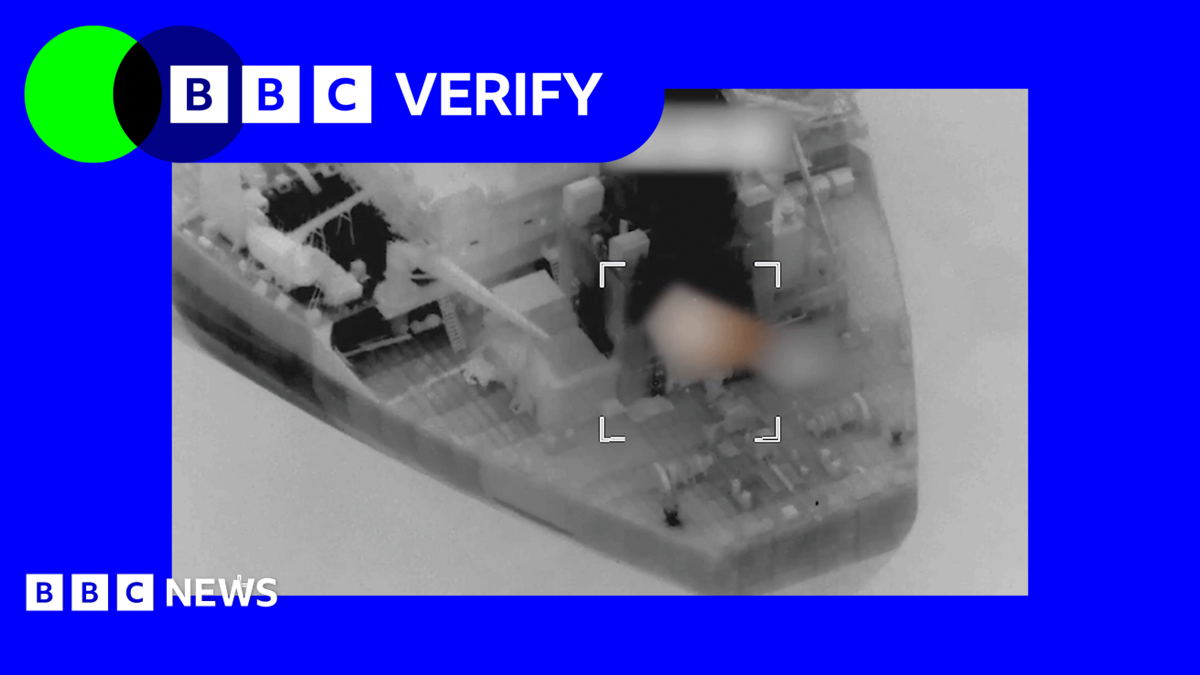
Belma, which had previously been sanctioned by the US under a former name for links with Iran, entered the Gulf on Tuesday after passing through the Strait of Hormuz, according to ship-tracking data from MarineTraffic.
It was reporting no cargo on board and last broadcast its location about 100km (63 miles) south-east of Kharg Island on Thursday.
Another crude oil tanker under US sanctions for links with Iran reversed course on Thursday, returning to Iranian waters in the Gulf of Oman, ship tracking data shows.
It is not clear whether the vessel - Fuyao - which was listed on MarineTraffic as heading for Pakistan with a cargo of oil changed its course in response to US enforcement of the blockade.
As part of the ceasefire deal Washington also eased decades-old sanctions by issuing a temporary license to allow the sale of Iranian oil and payment to Tehran in US dollars.
In the weeks that followed, Iran was selling oil at prices roughly 20% higher than before the war, according to its chief negotiator Mohammad Bagher Ghalibaf.
Analysts with advocacy and monitoring group United Against Nuclear Iran (UANI) and shipping experts TankerTrackers.com estimate that between the end of the blockade and its resumption Iran has exported at least 74 million barrels of oil. UANI has said this has an estimated value of more than $6bn (£4.4bn).
The US restricted this licence last week after Iran carried out a series of attacks on ships in the Strait of Hormuz.
Read the full story at BBC ↗
The US military targeted an unladen oil tanker which it said was heading for the key Iranian oil terminal on Kharg island
This lens runs the verified story through Cinnamon's AI — wired in the next step.
Belma, which had previously been sanctioned by the US under a former name for links with Iran, entered the Gulf on Tuesday after passing through the Strait of Hormuz, according to ship-tracking data from MarineTraffic.
It was reporting no cargo on board and last broadcast its location about 100km (63 miles) south-east of Kharg Island on Thursday.
Another crude oil tanker under US sanctions for links with Iran reversed course on Thursday, returning to Iranian waters in the Gulf of Oman, ship tracking data shows.
It is not clear whether the vessel - Fuyao - which was listed on MarineTraffic as heading for Pakistan with a cargo of oil changed its course in response to US enforcement of the blockade.
As part of the ceasefire deal Washington also eased decades-old sanctions by issuing a temporary license to allow the sale of Iranian oil and payment to Tehran in US dollars.
In the weeks that followed, Iran was selling oil at prices roughly 20% higher than before the war, according to its chief negotiator Mohammad Bagher Ghalibaf.
Analysts with advocacy and monitoring group United Against Nuclear Iran (UANI) and shipping experts TankerTrackers.com estimate that between the end of the blockade and its resumption Iran has exported at least 74 million barrels of oil. UANI has said this has an estimated value of more than $6bn (£4.4bn).
The US restricted this licence last week after Iran carried out a series of attacks on ships in the Strait of Hormuz.
Read the full story at BBC ↗
Belma, which had previously been sanctioned by the US under a former name for links with Iran, entered the Gulf on Tuesday after passing through the Strait of Hormuz, according to ship-tracking data from MarineTraffic.
It was reporting no cargo on board and last broadcast its location about 100km (63 miles) south-east of Kharg Island on Thursday.
Another crude oil tanker under US sanctions for links with Iran reversed course on Thursday, returning to Iranian waters in the Gulf of Oman, ship tracking data shows.
It is not clear whether the vessel - Fuyao - which was listed on MarineTraffic as heading for Pakistan with a cargo of oil changed its course in response to US enforcement of the blockade.
As part of the ceasefire deal Washington also eased decades-old sanctions by issuing a temporary license to allow the sale of Iranian oil and payment to Tehran in US dollars.
In the weeks that followed, Iran was selling oil at prices roughly 20% higher than before the war, according to its chief negotiator Mohammad Bagher Ghalibaf.
Analysts with advocacy and monitoring group United Against Nuclear Iran (UANI) and shipping experts TankerTrackers.com estimate that between the end of the blockade and its resumption Iran has exported at least 74 million barrels of oil. UANI has said this has an estimated value of more than $6bn (£4.4bn).
The US restricted this licence last week after Iran carried out a series of attacks on ships in the Strait of Hormuz.
Read the full story at BBC ↗
This lens runs the verified story through Cinnamon's AI — wired in the next step.
- The US military targeted an unladen oil tanker which it said was heading for the key Iranian oil terminal on Kharg island