We Are Not Machines by Sarah O’Connor review – can dignity at work survive the tech revolution?
It’s never been easy to land and keep a decent job. But it feels like it’s getting harder. In June, the number of job vacancies in the UK fell to a five-year low; headlines warn of a looming AI-employment shock. What might the future of work look like – and who or what will shape its terms? In her new book, Sarah O’Connor goes looking for answers in the modern collision of artificial intelligence, automation, and human labour.
This clash between human and machine – and the fight to secure decent working conditions even as the pressure to maximise production mounts – is nothing new. Neither are concerns about the health risks of repetitive factory work or the loss of creative craftsmanship and independent judgment in the wake of mechanisation. O’Connor has been a reporter at the Financial Times for nearly two decades, and although We Are Not Machines looks to the future, many of the threats AI poses to workers’ dignity and safety look a lot like reconfigurations of old battles. The book takes its title from the signs striking Swedish miners carried in 1969 as they protested their employers’ new methods of monitoring their output. “Vi är ej maskiner”, their signs read: “We are not machines.”
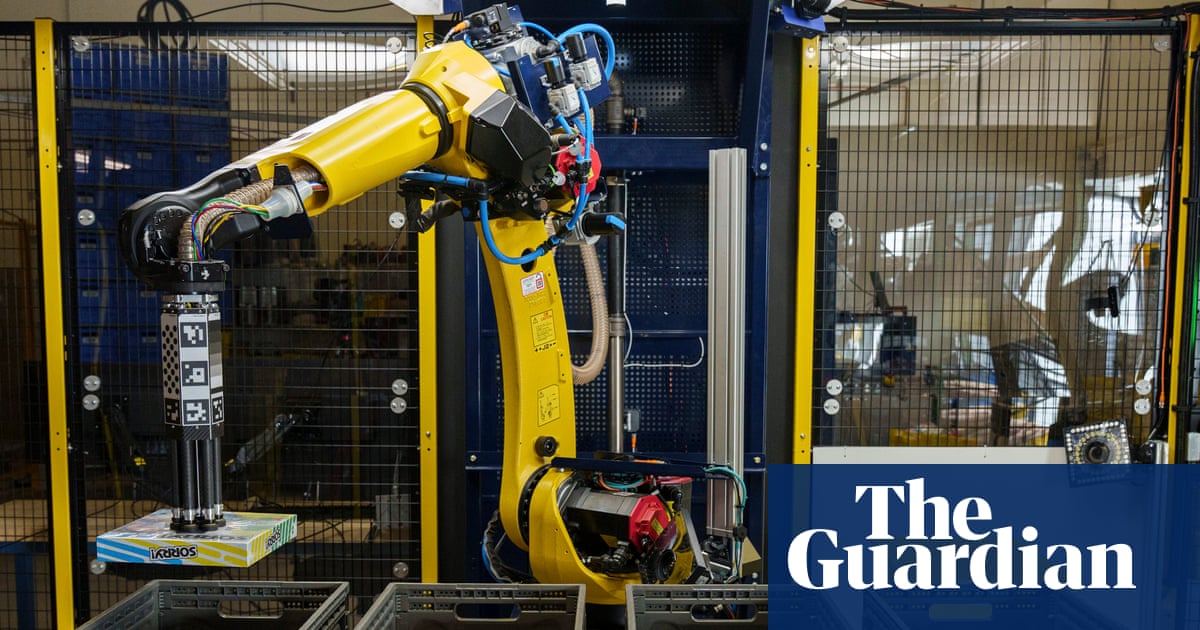
That may be true, but we increasingly share our work with machines. O’Connor visits the EMA4 Amazon Warehouse in Sutton Coldfield where robots and humans labour side by side, “picking” and “stowing” items. Warehouses like EMA4 are supported by remote workers in Costa Rica and India, whose jobs are to monitor video feeds of Amazon shelves, auditing the accuracy of the AI camera systems that track where items are placed. They work nine-hour shifts, screening up to 8,000 videos a week: an entirely new online production line has been created. Is this really progress?
Frederick Winslow Taylor, the father of management consulting and patron saint of maximising productivity, figures prominently in this book. Though Taylor died more than a century ago, some form of “Taylorism” – the idea that production workflows can be broken into discrete components, subdividing any process into a series of measurable systems – lives on in most workplaces today. The real issue, as O’Connor sees it, isn’t necessarily new technology but the assumptions that accompany it – the way “seemingly neutral technological tools can smuggle powerful ideas into a marketplace by the back door”. In the age of automation and AI, some of those ideas have to do with the interchangeability of human and machine contributions: “If you see human labour as one element to be optimised within a complex system that is planned and controlled from above,” O’Connor writes, “then you are likely to see the possibilities afforded by new technology in the same light.”
Still other assumptions have to do with the very purpose of work. As O’Connor puts it: “If a machine’s work is a little bit worse than a human’s, but an awful lot cheaper and faster, that might be a trade some employers, clients, and customers are willing to make.” (If you’ve tried to assemble a piece of furniture with nonsensical AI-written instructions or become caught in an online customer service chatbot labyrinth, you’ve experienced the effects of this tradeoff first-hand.)
But employees and consumers aren’t powerless. The most hopeful stories in the book show workers taking things into their own hands: the Writers Guild of America screenwriters who strike to set the terms of when and how AI can be used in scripts; the Dutch care workers who establish their own practice so they can tailor care to individual patients without strict time constraints.
We Are Not Machines concludes on a note of caution: “The goal might be to make machines in our image,” O’Connor writes. “But what I fear is that – perhaps without even quite noticing – we remake ourselves in theirs.” The good news? These are not yet settled questions, and the future of work is still something we have the power to shape.
Read the full story at The Guardian ↗
Sarah O'Connor's new book examines the intersection of artificial intelligence, automation, and human labour in contemporary workplaces. She traces current concerns about worker dignity and safety to earlier mechanisation battles, noting that the underlying dynamics—subdividing work into measurable tasks, monitoring output, prioritising speed and cost over quality—persist despite technological change. O'Connor observes that the assumptions accompanying new tools often matter more than the tools themselves: when labour is treated as one element in a system to be optimised from above, automation follows that same logic. She documents both the risks this poses and instances where workers have successfully shaped outcomes through collective action. The book concludes that these questions about work's future remain open and contestable.
Read the full story at The Guardian ↗
It’s never been easy to land and keep a decent job. But it feels like it’s getting harder. In June, the number of job vacancies in the UK fell to a five-year low; headlines warn of a looming AI-employment shock. What might the future of work look like – and who or what will shape its terms? In her new book, Sarah O’Connor goes looking for answers in the modern collision of artificial intelligence, automation, and human labour.
This clash between human and machine – and the fight to secure decent working conditions even as the pressure to maximise production mounts – is nothing new. Neither are concerns about the health risks of repetitive factory work or the loss of creative craftsmanship and independent judgment in the wake of mechanisation. O’Connor has been a reporter at the Financial Times for nearly two decades, and although We Are Not Machines looks to the future, many of the threats AI poses to workers’ dignity and safety look a lot like reconfigurations of old battles. The book takes its title from the signs striking Swedish miners carried in 1969 as they protested their employers’ new methods of monitoring their output. “Vi är ej maskiner”, their signs read: “We are not machines.”
That may be true, but we increasingly share our work with machines. O’Connor visits the EMA4 Amazon Warehouse in Sutton Coldfield where robots and humans labour side by side, “picking” and “stowing” items. Warehouses like EMA4 are supported by remote workers in Costa Rica and India, whose jobs are to monitor video feeds of Amazon shelves, auditing the accuracy of the AI camera systems that track where items are placed. They work nine-hour shifts, screening up to 8,000 videos a week: an entirely new online production line has been created. Is this really progress?
Frederick Winslow Taylor, the father of management consulting and patron saint of maximising productivity, figures prominently in this book. Though Taylor died more than a century ago, some form of “Taylorism” – the idea that production workflows can be broken into discrete components, subdividing any process into a series of measurable systems – lives on in most workplaces today. The real issue, as O’Connor sees it, isn’t necessarily new technology but the assumptions that accompany it – the way “seemingly neutral technological tools can smuggle powerful ideas into a marketplace by the back door”. In the age of automation and AI, some of those ideas have to do with the interchangeability of human and machine contributions: “If you see human labour as one element to be optimised within a complex system that is planned and controlled from above,” O’Connor writes, “then you are likely to see the possibilities afforded by new technology in the same light.”
Still other assumptions have to do with the very purpose of work. As O’Connor puts it: “If a machine’s work is a little bit worse than a human’s, but an awful lot cheaper and faster, that might be a trade some employers, clients, and customers are willing to make.” (If you’ve tried to assemble a piece of furniture with nonsensical AI-written instructions or become caught in an online customer service chatbot labyrinth, you’ve experienced the effects of this tradeoff first-hand.)
But employees and consumers aren’t powerless. The most hopeful stories in the book show workers taking things into their own hands: the Writers Guild of America screenwriters who strike to set the terms of when and how AI can be used in scripts; the Dutch care workers who establish their own practice so they can tailor care to individual patients without strict time constraints.
We Are Not Machines concludes on a note of caution: “The goal might be to make machines in our image,” O’Connor writes. “But what I fear is that – perhaps without even quite noticing – we remake ourselves in theirs.” The good news? These are not yet settled questions, and the future of work is still something we have the power to shape.
Read the full story at The Guardian ↗
UK job vacancies fell to a five-year low in June Sarah O'Connor is a Financial Times reporter with nearly two decades at the outlet Swedish miners protested new monitoring methods in 1969 carrying signs reading 'Vi är ej maskiner' (We are not machines) Amazon's EMA4 warehouse in Sutton Coldfield uses robots and humans working together for picking and stowing items Remote workers in Costa Rica and India monitor Amazon shelf videos, screening up to 8,000 videos weekly in nine-hour shifts Frederick Winslow Taylor's philosophy of breaking work into discrete, measurable components remains influential in most modern workplaces AI and automation represent fundamentally new threats to worker dignity Technological tools are 'seemingly neutral' but 'smuggle powerful ideas into a marketplace by the back door' An entirely new online production line has been created through remote monitoring work Workers remain powerless in the face of automation Writers Guild strikes and Dutch care workers establishing independent practices demonstrate effective worker agency in shaping technology's role The future of work is 'still something we have the power to shape'
Read the full story at The Guardian ↗
- Sarah O'Connor's book examines how AI and automation are reshaping work, drawing parallels to historical labour struggles over dignity and monitoring
- Modern workplaces still reflect Taylorism—the early 20th-century philosophy that breaks work into measurable, optimised components—now applied through algorithmic control
- New supply chains have emerged: Amazon warehouses use robots alongside humans, supported by remote workers in Costa Rica and India monitoring AI systems across 8,000+ videos weekly
- Employers increasingly accept lower-quality machine output if it's faster and cheaper, affecting both workers and consumers
- Workers retain agency: examples include Writers Guild strikes over AI use in screenwriting and Dutch care workers creating independent practices to preserve personalised service