‘We can’t leave people behind’: frustration and hope mingle in the wake of Lismore’s post-flood renewal
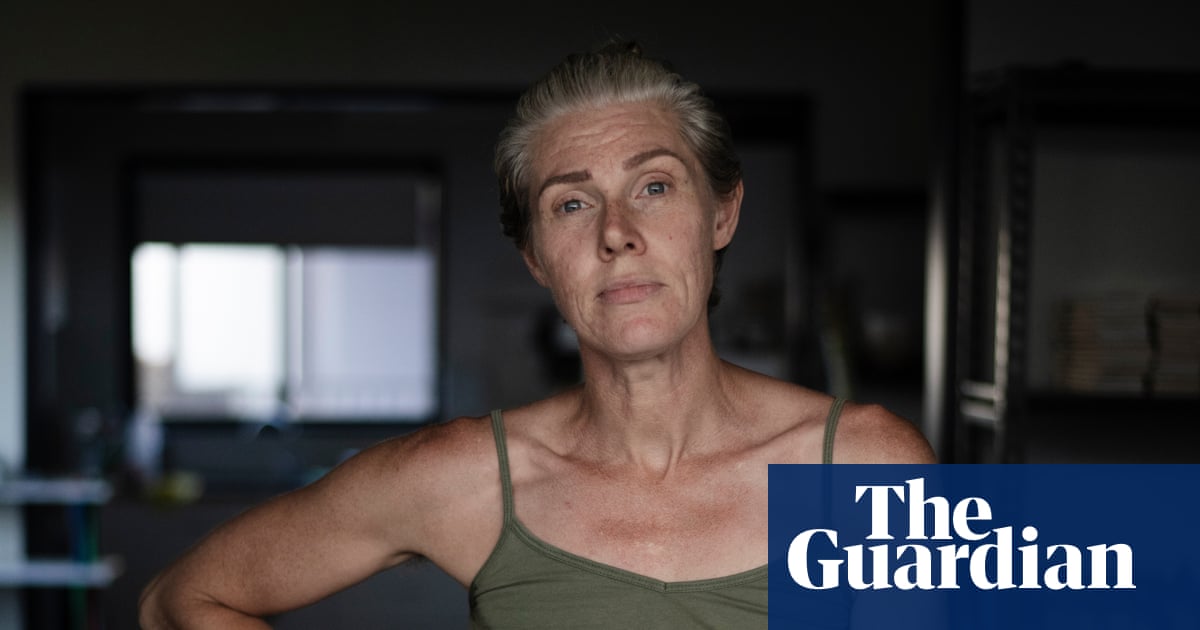 ✓
✓Alison Norris looks admiringly around the simple two-bedroom home that has housed her and her three children for the past nine months. From the outside, it looks like a demountable found at a construction site, bordered by a tidy native garden. But it’s more than she has had in the nearly five years since the worst flood in Australia’s history took her family home away.
“I used to have to walk around at night getting canisters of water to flush the toilet,” she says. This time last year they were living in a squat; now she is at her own dining room table, frequently popping up to point out the features of her home with the energy of someone who doesn’t like to sit still. “This one has got walls and it’s got air conditioning and a fridge and electricity.”
“It’s heaven,” she adds, sadly. “It was absolute heaven.”
It is now being taken away, and Norris and her children must move again. The small home is part of a temporary refuge that was set up in the wake of the 2022 Lismore floods, one of the most damaging natural disasters in Australia’s history – and its most expensive recovery. Everyone still here has been told they must be out by mid-December.
Norris has nowhere else to go: her children have to remain in the district. “I’ve got kids in school … I can’t leave.”
National attention has long since moved on from Lismore. The climate has, too, from a rare three-year long La Niña period – a phenomenon associated with flooding in Australia’s east coast, which culminated in the 2022 floods – to a predicted “Godzilla-level” El Niño, associated with drought.
Many locals have finally found a permanent home, as the town’s footprint retreats from parts of the floodplain and expands into safer, higher areas. Signs of hope and renewal are everywhere.
But many others, like Norris, are still immersed in navigating their way out of disaster.
“It really does feel like a tale of two cities at times,” says Carlie Aitkinson, a Bundjalung and Yiman woman.
“There is a Lismore that is rebuilding, hopeful and imagining what comes next. But alongside that there are still people who are deeply affected by what happened, financially, emotionally and in terms of their safety and sense of belonging. We can’t leave those people behind.”
Lismore sits in what Aitkinson describes as “a wok” of surrounding valleys. The Bundjalung traditional owners refer to the area as dundarimba, which means marshland. Aitkinson says that in the mid-1800s when white settlers began to build cottages on the flood plain, “blackfellas told them: don’t build there”.
Aitkinson lives in the hills. “I was told very clearly by my grandfather: you need to live in the hills, you don’t live in the floodplains … Most mob are told that, but there are some mob that live within flood zones, and that’s simply because of cost. It’s heaps cheaper.”
Since 1850, the town of Lismore has flooded 155 times, ranging from minor to catastrophic.
People have attempted to adapt over the decades, raising their homes on stilts above where the river was known to peak. But then, on 28 February 2022, came a bigger flood. It eclipsed the old water line, rising to more than 14m.
People clung to their roofs; four people died and thousands were displaced. More than 3,500 buildings were damaged beyond repair. Entire streets were struck out. In some areas, it was deemed unsafe to rebuild.
Residential blocks now look like parklands after the New South Wales government decided it was time to retreat from the floodplain, announcing almost $1bn in buyback programs or to fund retrofits or relocations. In May this year, a report by the NSW auditor general found that the programs had not delivered what was promised.
But after years of bureaucratic inertia, there has suddenly been progress: on 1 October the state government announced it would release more land for flood-affected residents. Plans have also been announced to build more than 500 new homes with Landcombe, a government owned developer in East Lismore, with an additional 50 build-to-rent homes expected to be completed next year.
Dan Etheridge, the executive director of Northern Rivers Living Labs and a climate resilience expert, says many in the town were already struggling with a housing crisis before the floods knocked out a large portion of the affordable rentals.
“Disasters meet people where they’re at,” he says. “If you’re pretty financially secure, and your house isn’t on the floodplain … You might not have thought about the flood in a while. But if the flood found you less financially secure, less socially connected … then you’re probably still deep in navigating your way out of it.”
Janelle Saffin, Lismore’s MP and the minister for disaster recovery, says Lismore has become a more resilient city. Asked if there was anything she wished was done differently, she talks about a more “managed retreat” from the floodplain, to give the community a better understanding of both the recovery timeline and their choices.
“Could it have been better? Of course it could have been. Have people learned things from it? Of course they have. But have we done OK given the catastrophe that happened to us? Yes,” she tells Guardian Australia.
Paul Paitson has no intention to leave his home, which is in the floodplain, but built from local hardwood that can withstand the water.
He bought the home with his wife in 1989. It’s where he raised his children, and where his wife died. He initially knocked back the buyback offer, instead working to make his home more resilient for the next flood.
“There wasn’t a single piece of timber in my house that had to be replaced. Not one. Nothing had to be replaced,” he says.
In his back yard, among a garden he has tended for 37 years, is an ark-like structure made out of salvaged cold room panels that he says is strong enough to float his Hilux ute when the next flood comes.
It’s now the only house left on the street. The rest, taken over by squatters and backpackers after the floods, have been demolished or relocated. “It’s quite nice being here, surrounded by more birds and trees and watching nature slowly reclaim its home,” he says.
But he has been offered buyback funds again, and is considering taking it. He’s not sure he has another flood in him and worries he won’t have anything to leave his children. But the uncertainty frightens him: many have found the buyback funds aren’t enough to buy another comparable home.
“I’ve got older friends who are still just wandering around in the van years later … they’re just living in a van,” he says.
“Here I have a place, rent-free on a pension. I’m wealthy because this is all I need … Should I trade that in, to being at least temporarily a homeless person in a van?”
Norris was one of those who spent time squatting on Paitson’s street. The home she lost was a rental; the buyback funds did not go to her. In the years since the flood, she and her children have largely remained adrift.
The pod village was her shot at security. Then, in September, she and the other remaining residents received a letter from Northern Rivers Housing, seen by Guardian Australia, which said they had to be out by 21 January. That eviction date was then revised back to December – with no explanation as to why. Singles have been offered $5,000 to get them back on their feet, while families have been offered $10,000.
The construction site for the 50 build-to-rent homes, 10 of which will be deemed “affordable”, is next door to the pod village. Pod residents will be long gone by the time they’re built.
Norris has found another two-bedroom home to move into. It’s not big enough for four and the rent is double what she pays now, but it’s safe.
Others aren’t sure what they’ll do. Kareema is hoping she and her two boys will finally be offered a place in social housing.
Local housing advocates House You say the state should let people remain. The government has opened for expressions of interest for a community housing provider to take over the pods, but nothing has been confirmed.
Saffin says Homes NSW is working with the pod resident to have them housed elsewhere and that nobody would be made homeless.
Kellie Holmes, together with her partner, daughter, and three grandchildren, were kicked out of the pod village in August after being told they earned too much. She had been applying for private rentals every morning over breakfast for a year.
Her family spent two weeks in hotels before they were finally accepted for a home – on a six-month lease.
“It feels surreal,” the 58-year-old says. “I’m terrified it’s a dream, that someone is going to pull it from under our feet.
“I’ve got a roof over my head, but for how long do I have that?”
Lismore’s central business district runs parallel to the troublesome Wilsons River. Rather than move to high ground, it has adapted.
On a cloudless October morning, a cafe that feels like it has been plucked from Melbourne’s inner north is busy serving coffee. Co-owned by Etheridge, it was built after the flood and designed so that every part of the fit-out can be picked up and moved – even major electrical components. When a flood comes, the plan is to clear out and hose everything that remains.
Other businesses are adopting the same plan.
“People that are choosing to stay and be part of this community have done some pretty powerful, deep thinking about what you can and can’t take for granted, and how you have to be prepared,” says Etheridge.
But it is not, he adds, something that everyone can do. “We’re also at a time economically where there’s not a lot of choice for most people. Choice is a luxury; it’s a privilege. Most people don’t have it.”
There have been a lot of other adaptations in the past year. A modern-looking lift is now attached to the building that houses the music conservatory; it’s big enough to cart a grand piano, alongside their other instruments, to the top floor when a flood comes. The skatepark has been rebuilt, and a new performing arts space has opened up that feels like a mini Sydney’s Carriageworks.
“The whole downstairs is sacrificial, formed of concrete – like a road – and hardwood and steel. So we’ve actually got a venue now that you can just hose out, and you’re back in a week [after a flood],” the theatre director, Julian Louis, says.
“There is a lot of hope, a lot has been rebuilt. There’s a lot of funding that has been realised and activated.”
Aitkinson, a trauma expert who has run a healing hub since the flood, says supporting people to rebuild a relationship to the river has helped them heal.
“There’s a real healthy understanding that the poor old river really had nowhere else to go, as opposed to ‘this thing terrifies me’,” she says.
That healing work must exist alongside practical realities, she says.
“It does worry me we are rebuilding on the floodplain. Our climate has changed, stuff has been mucked up, and we’re watching that now play out.
“Yes, it’s always flooded, but this is kind of different.”
For many, there is a cautious sense of hope. Hamish Webster, who grew up in Lismore, was among the first to relocate after getting a buyback payment. He’s given up the land – but kept the house, relocating it to an area outside Nimbin, about 30km north.
“I just had no faith in any kind of … government-subsidised land releases or anything like that … I’m so glad I didn’t wait because I’d still be sitting there waiting,” he says. “I had to borrow more money for the cost of the actual relocation.”
His home used to back on to the Lismore oval. It now has views of the Nightcap national park, a world heritage-listed ancient rainforest. It is decorated with murals salvaged from homes used by squatters.
Three of his closest friends are now his neighbours, part of a group of seven, including Webster, who relocated their homes to the same subdivision.
Webster is frustrated the Reconstruction Authority didn’t make an effort to relocate more homes in Lismore instead of demolishing them. The state is offering a grant for people who want to handle the relocation themselves.
The authority has so far relocated four homes and offered them to people to purchase via a ballot. One was bought by Julian Page. She fought for years to qualify for a buyback for her family home, which was almost fully submerged in the flood, but it wasn’t enough to buy another home other than those in the flood zone.
“We feel safe now that we will have this home because I don’t feel at all confident that it’s not going to happen again,” she says. “Unfortunately some people have just had to move back on to the flood plain because that’s all they can afford.”
Despite the long road to a secure home, Page is grateful.
“We’re really lucky that when a disaster happens, the government buys back your house so you’re safe? Like, wow, that is bloody amazing. Yes it has not been perfect, but which other country would do that? I don’t know a single one.”
Read the full story at The Guardian ↗ · BBC ↗ · Sky News ↗ · The Guardian ↗
Almost five years after it was devastated by a record-breaking flood, Lismore is a city divided into those rebuilding and those still navigating a way out. Get our breaking news…
This lens runs the verified story through Cinnamon's AI — wired in the next step.
Alison Norris looks admiringly around the simple two-bedroom home that has housed her and her three children for the past nine months. From the outside, it looks like a demountable found at a construction site, bordered by a tidy native garden. But it’s more than she has had in the nearly five years since the worst flood in Australia’s history took her family home away.
“I used to have to walk around at night getting canisters of water to flush the toilet,” she says. This time last year they were living in a squat; now she is at her own dining room table, frequently popping up to point out the features of her home with the energy of someone who doesn’t like to sit still. “This one has got walls and it’s got air conditioning and a fridge and electricity.”
“It’s heaven,” she adds, sadly. “It was absolute heaven.”
It is now being taken away, and Norris and her children must move again. The small home is part of a temporary refuge that was set up in the wake of the 2022 Lismore floods, one of the most damaging natural disasters in Australia’s history – and its most expensive recovery. Everyone still here has been told they must be out by mid-December.
Norris has nowhere else to go: her children have to remain in the district. “I’ve got kids in school … I can’t leave.”
National attention has long since moved on from Lismore. The climate has, too, from a rare three-year long La Niña period – a phenomenon associated with flooding in Australia’s east coast, which culminated in the 2022 floods – to a predicted “Godzilla-level” El Niño, associated with drought.
Many locals have finally found a permanent home, as the town’s footprint retreats from parts of the floodplain and expands into safer, higher areas. Signs of hope and renewal are everywhere.
But many others, like Norris, are still immersed in navigating their way out of disaster.
“It really does feel like a tale of two cities at times,” says Carlie Aitkinson, a Bundjalung and Yiman woman.
“There is a Lismore that is rebuilding, hopeful and imagining what comes next. But alongside that there are still people who are deeply affected by what happened, financially, emotionally and in terms of their safety and sense of belonging. We can’t leave those people behind.”
Lismore sits in what Aitkinson describes as “a wok” of surrounding valleys. The Bundjalung traditional owners refer to the area as dundarimba, which means marshland. Aitkinson says that in the mid-1800s when white settlers began to build cottages on the flood plain, “blackfellas told them: don’t build there”.
Aitkinson lives in the hills. “I was told very clearly by my grandfather: you need to live in the hills, you don’t live in the floodplains … Most mob are told that, but there are some mob that live within flood zones, and that’s simply because of cost. It’s heaps cheaper.”
Since 1850, the town of Lismore has flooded 155 times, ranging from minor to catastrophic.
People have attempted to adapt over the decades, raising their homes on stilts above where the river was known to peak. But then, on 28 February 2022, came a bigger flood. It eclipsed the old water line, rising to more than 14m.
People clung to their roofs; four people died and thousands were displaced. More than 3,500 buildings were damaged beyond repair. Entire streets were struck out. In some areas, it was deemed unsafe to rebuild.
Residential blocks now look like parklands after the New South Wales government decided it was time to retreat from the floodplain, announcing almost $1bn in buyback programs or to fund retrofits or relocations. In May this year, a report by the NSW auditor general found that the programs had not delivered what was promised.
But after years of bureaucratic inertia, there has suddenly been progress: on 1 October the state government announced it would release more land for flood-affected residents. Plans have also been announced to build more than 500 new homes with Landcombe, a government owned developer in East Lismore, with an additional 50 build-to-rent homes expected to be completed next year.
Dan Etheridge, the executive director of Northern Rivers Living Labs and a climate resilience expert, says many in the town were already struggling with a housing crisis before the floods knocked out a large portion of the affordable rentals.
“Disasters meet people where they’re at,” he says. “If you’re pretty financially secure, and your house isn’t on the floodplain … You might not have thought about the flood in a while. But if the flood found you less financially secure, less socially connected … then you’re probably still deep in navigating your way out of it.”
Janelle Saffin, Lismore’s MP and the minister for disaster recovery, says Lismore has become a more resilient city. Asked if there was anything she wished was done differently, she talks about a more “managed retreat” from the floodplain, to give the community a better understanding of both the recovery timeline and their choices.
“Could it have been better? Of course it could have been. Have people learned things from it? Of course they have. But have we done OK given the catastrophe that happened to us? Yes,” she tells Guardian Australia.
Paul Paitson has no intention to leave his home, which is in the floodplain, but built from local hardwood that can withstand the water.
He bought the home with his wife in 1989. It’s where he raised his children, and where his wife died. He initially knocked back the buyback offer, instead working to make his home more resilient for the next flood.
“There wasn’t a single piece of timber in my house that had to be replaced. Not one. Nothing had to be replaced,” he says.
In his back yard, among a garden he has tended for 37 years, is an ark-like structure made out of salvaged cold room panels that he says is strong enough to float his Hilux ute when the next flood comes.
It’s now the only house left on the street. The rest, taken over by squatters and backpackers after the floods, have been demolished or relocated. “It’s quite nice being here, surrounded by more birds and trees and watching nature slowly reclaim its home,” he says.
But he has been offered buyback funds again, and is considering taking it. He’s not sure he has another flood in him and worries he won’t have anything to leave his children. But the uncertainty frightens him: many have found the buyback funds aren’t enough to buy another comparable home.
“I’ve got older friends who are still just wandering around in the van years later … they’re just living in a van,” he says.
“Here I have a place, rent-free on a pension. I’m wealthy because this is all I need … Should I trade that in, to being at least temporarily a homeless person in a van?”
Norris was one of those who spent time squatting on Paitson’s street. The home she lost was a rental; the buyback funds did not go to her. In the years since the flood, she and her children have largely remained adrift.
The pod village was her shot at security. Then, in September, she and the other remaining residents received a letter from Northern Rivers Housing, seen by Guardian Australia, which said they had to be out by 21 January. That eviction date was then revised back to December – with no explanation as to why. Singles have been offered $5,000 to get them back on their feet, while families have been offered $10,000.
The construction site for the 50 build-to-rent homes, 10 of which will be deemed “affordable”, is next door to the pod village. Pod residents will be long gone by the time they’re built.
Norris has found another two-bedroom home to move into. It’s not big enough for four and the rent is double what she pays now, but it’s safe.
Others aren’t sure what they’ll do. Kareema is hoping she and her two boys will finally be offered a place in social housing.
Local housing advocates House You say the state should let people remain. The government has opened for expressions of interest for a community housing provider to take over the pods, but nothing has been confirmed.
Saffin says Homes NSW is working with the pod resident to have them housed elsewhere and that nobody would be made homeless.
Kellie Holmes, together with her partner, daughter, and three grandchildren, were kicked out of the pod village in August after being told they earned too much. She had been applying for private rentals every morning over breakfast for a year.
Her family spent two weeks in hotels before they were finally accepted for a home – on a six-month lease.
“It feels surreal,” the 58-year-old says. “I’m terrified it’s a dream, that someone is going to pull it from under our feet.
“I’ve got a roof over my head, but for how long do I have that?”
Lismore’s central business district runs parallel to the troublesome Wilsons River. Rather than move to high ground, it has adapted.
On a cloudless October morning, a cafe that feels like it has been plucked from Melbourne’s inner north is busy serving coffee. Co-owned by Etheridge, it was built after the flood and designed so that every part of the fit-out can be picked up and moved – even major electrical components. When a flood comes, the plan is to clear out and hose everything that remains.
Other businesses are adopting the same plan.
“People that are choosing to stay and be part of this community have done some pretty powerful, deep thinking about what you can and can’t take for granted, and how you have to be prepared,” says Etheridge.
But it is not, he adds, something that everyone can do. “We’re also at a time economically where there’s not a lot of choice for most people. Choice is a luxury; it’s a privilege. Most people don’t have it.”
There have been a lot of other adaptations in the past year. A modern-looking lift is now attached to the building that houses the music conservatory; it’s big enough to cart a grand piano, alongside their other instruments, to the top floor when a flood comes. The skatepark has been rebuilt, and a new performing arts space has opened up that feels like a mini Sydney’s Carriageworks.
“The whole downstairs is sacrificial, formed of concrete – like a road – and hardwood and steel. So we’ve actually got a venue now that you can just hose out, and you’re back in a week [after a flood],” the theatre director, Julian Louis, says.
“There is a lot of hope, a lot has been rebuilt. There’s a lot of funding that has been realised and activated.”
Aitkinson, a trauma expert who has run a healing hub since the flood, says supporting people to rebuild a relationship to the river has helped them heal.
“There’s a real healthy understanding that the poor old river really had nowhere else to go, as opposed to ‘this thing terrifies me’,” she says.
That healing work must exist alongside practical realities, she says.
“It does worry me we are rebuilding on the floodplain. Our climate has changed, stuff has been mucked up, and we’re watching that now play out.
“Yes, it’s always flooded, but this is kind of different.”
For many, there is a cautious sense of hope. Hamish Webster, who grew up in Lismore, was among the first to relocate after getting a buyback payment. He’s given up the land – but kept the house, relocating it to an area outside Nimbin, about 30km north.
“I just had no faith in any kind of … government-subsidised land releases or anything like that … I’m so glad I didn’t wait because I’d still be sitting there waiting,” he says. “I had to borrow more money for the cost of the actual relocation.”
His home used to back on to the Lismore oval. It now has views of the Nightcap national park, a world heritage-listed ancient rainforest. It is decorated with murals salvaged from homes used by squatters.
Three of his closest friends are now his neighbours, part of a group of seven, including Webster, who relocated their homes to the same subdivision.
Webster is frustrated the Reconstruction Authority didn’t make an effort to relocate more homes in Lismore instead of demolishing them. The state is offering a grant for people who want to handle the relocation themselves.
The authority has so far relocated four homes and offered them to people to purchase via a ballot. One was bought by Julian Page. She fought for years to qualify for a buyback for her family home, which was almost fully submerged in the flood, but it wasn’t enough to buy another home other than those in the flood zone.
“We feel safe now that we will have this home because I don’t feel at all confident that it’s not going to happen again,” she says. “Unfortunately some people have just had to move back on to the flood plain because that’s all they can afford.”
Despite the long road to a secure home, Page is grateful.
“We’re really lucky that when a disaster happens, the government buys back your house so you’re safe? Like, wow, that is bloody amazing. Yes it has not been perfect, but which other country would do that? I don’t know a single one.”
Read the full story at The Guardian ↗ · BBC ↗ · Sky News ↗ · The Guardian ↗
Alison Norris looks admiringly around the simple two-bedroom home that has housed her and her three children for the past nine months. From the outside, it looks like a demountable found at a construction site, bordered by a tidy native garden. But it’s more than she has had in the nearly five years since the worst flood in Australia’s history took her family home away.
“I used to have to walk around at night getting canisters of water to flush the toilet,” she says. This time last year they were living in a squat; now she is at her own dining room table, frequently popping up to point out the features of her home with the energy of someone who doesn’t like to sit still. “This one has got walls and it’s got air conditioning and a fridge and electricity.”
“It’s heaven,” she adds, sadly. “It was absolute heaven.”
It is now being taken away, and Norris and her children must move again. The small home is part of a temporary refuge that was set up in the wake of the 2022 Lismore floods, one of the most damaging natural disasters in Australia’s history – and its most expensive recovery. Everyone still here has been told they must be out by mid-December.
Norris has nowhere else to go: her children have to remain in the district. “I’ve got kids in school … I can’t leave.”
National attention has long since moved on from Lismore. The climate has, too, from a rare three-year long La Niña period – a phenomenon associated with flooding in Australia’s east coast, which culminated in the 2022 floods – to a predicted “Godzilla-level” El Niño, associated with drought.
Many locals have finally found a permanent home, as the town’s footprint retreats from parts of the floodplain and expands into safer, higher areas. Signs of hope and renewal are everywhere.
But many others, like Norris, are still immersed in navigating their way out of disaster.
“It really does feel like a tale of two cities at times,” says Carlie Aitkinson, a Bundjalung and Yiman woman.
“There is a Lismore that is rebuilding, hopeful and imagining what comes next. But alongside that there are still people who are deeply affected by what happened, financially, emotionally and in terms of their safety and sense of belonging. We can’t leave those people behind.”
Lismore sits in what Aitkinson describes as “a wok” of surrounding valleys. The Bundjalung traditional owners refer to the area as dundarimba, which means marshland. Aitkinson says that in the mid-1800s when white settlers began to build cottages on the flood plain, “blackfellas told them: don’t build there”.
Aitkinson lives in the hills. “I was told very clearly by my grandfather: you need to live in the hills, you don’t live in the floodplains … Most mob are told that, but there are some mob that live within flood zones, and that’s simply because of cost. It’s heaps cheaper.”
Since 1850, the town of Lismore has flooded 155 times, ranging from minor to catastrophic.
People have attempted to adapt over the decades, raising their homes on stilts above where the river was known to peak. But then, on 28 February 2022, came a bigger flood. It eclipsed the old water line, rising to more than 14m.
People clung to their roofs; four people died and thousands were displaced. More than 3,500 buildings were damaged beyond repair. Entire streets were struck out. In some areas, it was deemed unsafe to rebuild.
Residential blocks now look like parklands after the New South Wales government decided it was time to retreat from the floodplain, announcing almost $1bn in buyback programs or to fund retrofits or relocations. In May this year, a report by the NSW auditor general found that the programs had not delivered what was promised.
But after years of bureaucratic inertia, there has suddenly been progress: on 1 October the state government announced it would release more land for flood-affected residents. Plans have also been announced to build more than 500 new homes with Landcombe, a government owned developer in East Lismore, with an additional 50 build-to-rent homes expected to be completed next year.
Dan Etheridge, the executive director of Northern Rivers Living Labs and a climate resilience expert, says many in the town were already struggling with a housing crisis before the floods knocked out a large portion of the affordable rentals.
“Disasters meet people where they’re at,” he says. “If you’re pretty financially secure, and your house isn’t on the floodplain … You might not have thought about the flood in a while. But if the flood found you less financially secure, less socially connected … then you’re probably still deep in navigating your way out of it.”
Janelle Saffin, Lismore’s MP and the minister for disaster recovery, says Lismore has become a more resilient city. Asked if there was anything she wished was done differently, she talks about a more “managed retreat” from the floodplain, to give the community a better understanding of both the recovery timeline and their choices.
“Could it have been better? Of course it could have been. Have people learned things from it? Of course they have. But have we done OK given the catastrophe that happened to us? Yes,” she tells Guardian Australia.
Paul Paitson has no intention to leave his home, which is in the floodplain, but built from local hardwood that can withstand the water.
He bought the home with his wife in 1989. It’s where he raised his children, and where his wife died. He initially knocked back the buyback offer, instead working to make his home more resilient for the next flood.
“There wasn’t a single piece of timber in my house that had to be replaced. Not one. Nothing had to be replaced,” he says.
In his back yard, among a garden he has tended for 37 years, is an ark-like structure made out of salvaged cold room panels that he says is strong enough to float his Hilux ute when the next flood comes.
It’s now the only house left on the street. The rest, taken over by squatters and backpackers after the floods, have been demolished or relocated. “It’s quite nice being here, surrounded by more birds and trees and watching nature slowly reclaim its home,” he says.
But he has been offered buyback funds again, and is considering taking it. He’s not sure he has another flood in him and worries he won’t have anything to leave his children. But the uncertainty frightens him: many have found the buyback funds aren’t enough to buy another comparable home.
“I’ve got older friends who are still just wandering around in the van years later … they’re just living in a van,” he says.
“Here I have a place, rent-free on a pension. I’m wealthy because this is all I need … Should I trade that in, to being at least temporarily a homeless person in a van?”
Norris was one of those who spent time squatting on Paitson’s street. The home she lost was a rental; the buyback funds did not go to her. In the years since the flood, she and her children have largely remained adrift.
The pod village was her shot at security. Then, in September, she and the other remaining residents received a letter from Northern Rivers Housing, seen by Guardian Australia, which said they had to be out by 21 January. That eviction date was then revised back to December – with no explanation as to why. Singles have been offered $5,000 to get them back on their feet, while families have been offered $10,000.
The construction site for the 50 build-to-rent homes, 10 of which will be deemed “affordable”, is next door to the pod village. Pod residents will be long gone by the time they’re built.
Norris has found another two-bedroom home to move into. It’s not big enough for four and the rent is double what she pays now, but it’s safe.
Others aren’t sure what they’ll do. Kareema is hoping she and her two boys will finally be offered a place in social housing.
Local housing advocates House You say the state should let people remain. The government has opened for expressions of interest for a community housing provider to take over the pods, but nothing has been confirmed.
Saffin says Homes NSW is working with the pod resident to have them housed elsewhere and that nobody would be made homeless.
Kellie Holmes, together with her partner, daughter, and three grandchildren, were kicked out of the pod village in August after being told they earned too much. She had been applying for private rentals every morning over breakfast for a year.
Her family spent two weeks in hotels before they were finally accepted for a home – on a six-month lease.
“It feels surreal,” the 58-year-old says. “I’m terrified it’s a dream, that someone is going to pull it from under our feet.
“I’ve got a roof over my head, but for how long do I have that?”
Lismore’s central business district runs parallel to the troublesome Wilsons River. Rather than move to high ground, it has adapted.
On a cloudless October morning, a cafe that feels like it has been plucked from Melbourne’s inner north is busy serving coffee. Co-owned by Etheridge, it was built after the flood and designed so that every part of the fit-out can be picked up and moved – even major electrical components. When a flood comes, the plan is to clear out and hose everything that remains.
Other businesses are adopting the same plan.
“People that are choosing to stay and be part of this community have done some pretty powerful, deep thinking about what you can and can’t take for granted, and how you have to be prepared,” says Etheridge.
But it is not, he adds, something that everyone can do. “We’re also at a time economically where there’s not a lot of choice for most people. Choice is a luxury; it’s a privilege. Most people don’t have it.”
There have been a lot of other adaptations in the past year. A modern-looking lift is now attached to the building that houses the music conservatory; it’s big enough to cart a grand piano, alongside their other instruments, to the top floor when a flood comes. The skatepark has been rebuilt, and a new performing arts space has opened up that feels like a mini Sydney’s Carriageworks.
“The whole downstairs is sacrificial, formed of concrete – like a road – and hardwood and steel. So we’ve actually got a venue now that you can just hose out, and you’re back in a week [after a flood],” the theatre director, Julian Louis, says.
“There is a lot of hope, a lot has been rebuilt. There’s a lot of funding that has been realised and activated.”
Aitkinson, a trauma expert who has run a healing hub since the flood, says supporting people to rebuild a relationship to the river has helped them heal.
“There’s a real healthy understanding that the poor old river really had nowhere else to go, as opposed to ‘this thing terrifies me’,” she says.
That healing work must exist alongside practical realities, she says.
“It does worry me we are rebuilding on the floodplain. Our climate has changed, stuff has been mucked up, and we’re watching that now play out.
“Yes, it’s always flooded, but this is kind of different.”
For many, there is a cautious sense of hope. Hamish Webster, who grew up in Lismore, was among the first to relocate after getting a buyback payment. He’s given up the land – but kept the house, relocating it to an area outside Nimbin, about 30km north.
“I just had no faith in any kind of … government-subsidised land releases or anything like that … I’m so glad I didn’t wait because I’d still be sitting there waiting,” he says. “I had to borrow more money for the cost of the actual relocation.”
His home used to back on to the Lismore oval. It now has views of the Nightcap national park, a world heritage-listed ancient rainforest. It is decorated with murals salvaged from homes used by squatters.
Three of his closest friends are now his neighbours, part of a group of seven, including Webster, who relocated their homes to the same subdivision.
Webster is frustrated the Reconstruction Authority didn’t make an effort to relocate more homes in Lismore instead of demolishing them. The state is offering a grant for people who want to handle the relocation themselves.
The authority has so far relocated four homes and offered them to people to purchase via a ballot. One was bought by Julian Page. She fought for years to qualify for a buyback for her family home, which was almost fully submerged in the flood, but it wasn’t enough to buy another home other than those in the flood zone.
“We feel safe now that we will have this home because I don’t feel at all confident that it’s not going to happen again,” she says. “Unfortunately some people have just had to move back on to the flood plain because that’s all they can afford.”
Despite the long road to a secure home, Page is grateful.
“We’re really lucky that when a disaster happens, the government buys back your house so you’re safe? Like, wow, that is bloody amazing. Yes it has not been perfect, but which other country would do that? I don’t know a single one.”
Read the full story at The Guardian ↗ · BBC ↗ · Sky News ↗ · The Guardian ↗
This lens runs the verified story through Cinnamon's AI — wired in the next step.
- Almost five years after it was devastated by a record-breaking flood, Lismore is a city divided into those rebuilding and those still navigating a way out.
- Get our breaking news…