‘We humans are inept at taking care of baby animals’: why well-fed orphan bears die in the wild
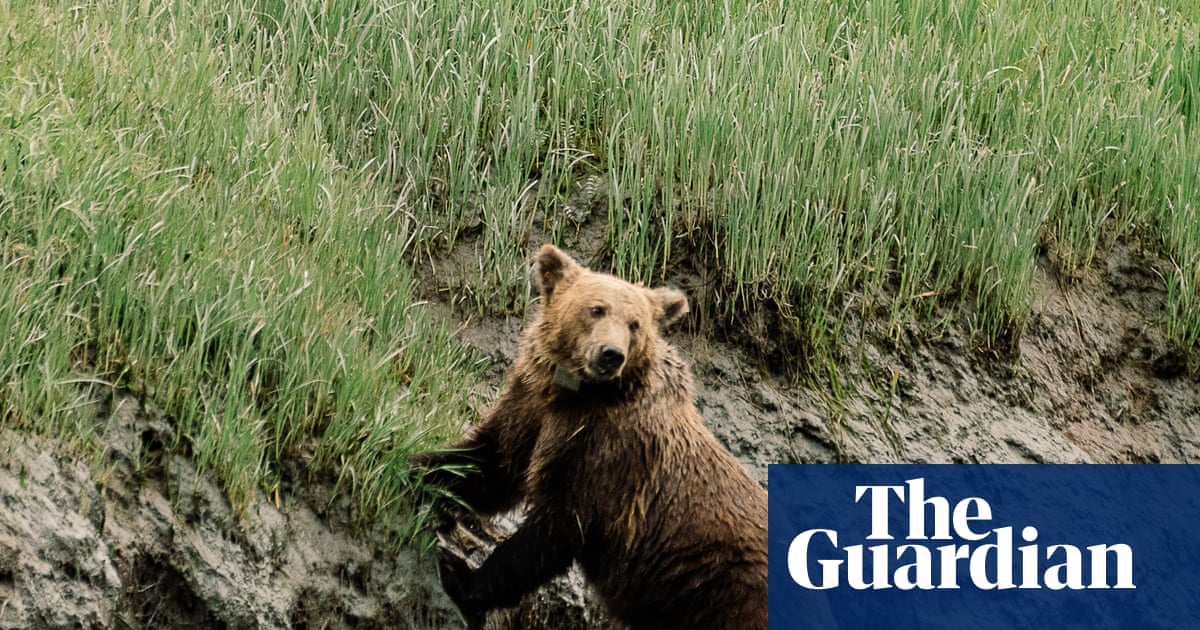
The orphaned grizzly bear cubs were bulked up with a generous diet of roadkill, watermelon, dog food and snacks donated by the public. Their contact with carers was limited to two people. Then, after up to a year in rehabilitation, they returned home to the wilds of British Columbia.
“It’s a feelgood thing – people feel good when the cage opens,” says Dr Lana M Ciarniello, a bear specialist who tracked the Canadian yearlings in a recent study. There is a perception that bears will thrive in their natural habitat, she says. “The reality is they’re not followed up on.”
When Ciarniello studied their fate, she was surprised by her bleak findings. All but two of 12 bears that could be monitored died within a year. Most were killed before their first winter hibernation. The young bears may have unintentionally been set up for failure, she concluded.
Beefed up so much they were 3.5 times the size of typical wild-reared yearlings, they were apparently burdened by their outsize frames and unable to meet their calorie needs after their release. Some bears also appeared to be unafraid of humans, with one female persistently approaching mine workers in search of food.
Rescue and release projects often appeal strongly to the public, but the study warns that if such work produces bears that are ill-equipped to navigate the wild then it remains “a form of sympathetic management” rather than an effective conservation tool.
Teaching a cub to forage and avoid dangers when they have had little or no maternal care – all while preventing them from growing used to human contact – is highly challenging.
Bears have a culture that they learn from their mother over a period of two to three years, says Chris Servheen, co-chair of the International Union for Conservation of Nature’s (IUCN) North American bears expert team. “Their mother teaches them what to eat and where to go to look for foods at different times of the year, what to avoid, what to be afraid of,” he says.
“An orphaned animal of any kind, people want to take care of them.” The problem is, he says: “We humans are very inept at taking care of baby animals.”
Broad guidelines, which are shaped by research relating to American black bears, suggest that a larger body mass gives rehabilitated bears an advantage against predators. A target release weight of about 1.5 times that of a wild-reared bear is recommended.
Ciarniello’s study, which was funded by the Grizzly Bear Foundation, suggests going beyond this could be detrimental. In the bears she observed, which were 3.5 times the weight of wild-reared yearlings, a high calorie intake had increased all metrics: body length, chest girth and neck circumference.
“They’re not just fat little roly-poly things. It’s skeletal. Once you’ve got that big frame, now you have to maintain it,” says Ciarniello. This led to what she terms a “metabolic trap”.
Two females, released in areas without salmon access, lost on average 0.48kg (1lb) a day. Even in areas with abundant food sources, the bears could not eat enough.
Giving the bears a small buffer makes sense, says Ciarniello, who is also co-chair of the IUCN’s human-bear conflict expert team. Too much could be counterproductive.
Experts had previously hypothesised that cutting off contact for two weeks before release would undo familiarity bears have developed with humans. However, the bears continued to associate humans with food, even after much longer periods in the wild without contact. Siggi, a female, spent 59 days in a remote alpine zone before she encountered workers from a mine, whose food supplies she raided. Undeterred even by a noisy helicopter, Siggi was killed after the incident, one of five bears that died in human-wildlife conflict.
Of the remaining bears, two were illegally killed and three were killed by wild bears.
Ciarniello says rearing must be as hands-off as possible. “We can’t treat them like we are feeding or raising our dogs. We can’t feed them at 8am and 5pm twice a day by going into their enclosure, even if it’s one person.”
Rehabilitation projects elsewhere are finding ways to do this. Free the Bears, which has sanctuaries in Laos and Cambodia housing Asiatic black bears and sun bears that are being considered for release, uses catapults to deliver food, while a special system picks up on high-frequency beeps that are emitted from bears’ collars, allowing the staff to track their movements. When the animals are due to be weighed, honey is dripped on to a scale inside the enclosure to encourage them to step on to it.
Rewilding orphaned bears is controversial, especially in areas where they are not threatened. Some biologists argue money should be focused elsewhere, on preventing conflict with humans – and bears being orphaned – in the first place.
Others say we need as much information as possible about how to rehabilitate and release bears. “This is going to be an essential conservation tool that is going to need to be employed, particularly for species like sun bears that are not looking good,” says Dr Zachary David, research programme manager at Free the Bears.
The Grizzly Bear Foundation says the findings, which will also form a best practice report, will “ensure that science informs future policy and practice in British Columbia, where rewilding is currently possible, and other jurisdictions considering which options should be available”.
Brown bears (of which grizzlies are a subspecies) are not endangered globally, but there are many small, isolated populations that are threatened and Ciarniello hopes her work will inform efforts to protect populations in Europe and Asia. “I’m worried those bears will be wiped out if we can’t figure this out.”
Find more age of extinction coverage here, and follow biodiversity reporters Rebecca Ratcliffe, Phoebe Weston and Patrick Greenfield on the app for all the latest news and features
Read the full story at The Guardian ↗
Scientists surprised to find all but two of 12 grizzlies were dead within a year of ‘feelgood’ release, unable to sustain their high-calorie diet and inclined to approach humans.…
This lens runs the verified story through Cinnamon's AI — wired in the next step.
The orphaned grizzly bear cubs were bulked up with a generous diet of roadkill, watermelon, dog food and snacks donated by the public. Their contact with carers was limited to two people. Then, after up to a year in rehabilitation, they returned home to the wilds of British Columbia.
“It’s a feelgood thing – people feel good when the cage opens,” says Dr Lana M Ciarniello, a bear specialist who tracked the Canadian yearlings in a recent study. There is a perception that bears will thrive in their natural habitat, she says. “The reality is they’re not followed up on.”
When Ciarniello studied their fate, she was surprised by her bleak findings. All but two of 12 bears that could be monitored died within a year. Most were killed before their first winter hibernation. The young bears may have unintentionally been set up for failure, she concluded.
Beefed up so much they were 3.5 times the size of typical wild-reared yearlings, they were apparently burdened by their outsize frames and unable to meet their calorie needs after their release. Some bears also appeared to be unafraid of humans, with one female persistently approaching mine workers in search of food.
Rescue and release projects often appeal strongly to the public, but the study warns that if such work produces bears that are ill-equipped to navigate the wild then it remains “a form of sympathetic management” rather than an effective conservation tool.
Teaching a cub to forage and avoid dangers when they have had little or no maternal care – all while preventing them from growing used to human contact – is highly challenging.
Bears have a culture that they learn from their mother over a period of two to three years, says Chris Servheen, co-chair of the International Union for Conservation of Nature’s (IUCN) North American bears expert team. “Their mother teaches them what to eat and where to go to look for foods at different times of the year, what to avoid, what to be afraid of,” he says.
“An orphaned animal of any kind, people want to take care of them.” The problem is, he says: “We humans are very inept at taking care of baby animals.”
Broad guidelines, which are shaped by research relating to American black bears, suggest that a larger body mass gives rehabilitated bears an advantage against predators. A target release weight of about 1.5 times that of a wild-reared bear is recommended.
Ciarniello’s study, which was funded by the Grizzly Bear Foundation, suggests going beyond this could be detrimental. In the bears she observed, which were 3.5 times the weight of wild-reared yearlings, a high calorie intake had increased all metrics: body length, chest girth and neck circumference.
“They’re not just fat little roly-poly things. It’s skeletal. Once you’ve got that big frame, now you have to maintain it,” says Ciarniello. This led to what she terms a “metabolic trap”.
Two females, released in areas without salmon access, lost on average 0.48kg (1lb) a day. Even in areas with abundant food sources, the bears could not eat enough.
Giving the bears a small buffer makes sense, says Ciarniello, who is also co-chair of the IUCN’s human-bear conflict expert team. Too much could be counterproductive.
Experts had previously hypothesised that cutting off contact for two weeks before release would undo familiarity bears have developed with humans. However, the bears continued to associate humans with food, even after much longer periods in the wild without contact. Siggi, a female, spent 59 days in a remote alpine zone before she encountered workers from a mine, whose food supplies she raided. Undeterred even by a noisy helicopter, Siggi was killed after the incident, one of five bears that died in human-wildlife conflict.
Of the remaining bears, two were illegally killed and three were killed by wild bears.
Ciarniello says rearing must be as hands-off as possible. “We can’t treat them like we are feeding or raising our dogs. We can’t feed them at 8am and 5pm twice a day by going into their enclosure, even if it’s one person.”
Rehabilitation projects elsewhere are finding ways to do this. Free the Bears, which has sanctuaries in Laos and Cambodia housing Asiatic black bears and sun bears that are being considered for release, uses catapults to deliver food, while a special system picks up on high-frequency beeps that are emitted from bears’ collars, allowing the staff to track their movements. When the animals are due to be weighed, honey is dripped on to a scale inside the enclosure to encourage them to step on to it.
Rewilding orphaned bears is controversial, especially in areas where they are not threatened. Some biologists argue money should be focused elsewhere, on preventing conflict with humans – and bears being orphaned – in the first place.
Others say we need as much information as possible about how to rehabilitate and release bears. “This is going to be an essential conservation tool that is going to need to be employed, particularly for species like sun bears that are not looking good,” says Dr Zachary David, research programme manager at Free the Bears.
The Grizzly Bear Foundation says the findings, which will also form a best practice report, will “ensure that science informs future policy and practice in British Columbia, where rewilding is currently possible, and other jurisdictions considering which options should be available”.
Brown bears (of which grizzlies are a subspecies) are not endangered globally, but there are many small, isolated populations that are threatened and Ciarniello hopes her work will inform efforts to protect populations in Europe and Asia. “I’m worried those bears will be wiped out if we can’t figure this out.”
Find more age of extinction coverage here, and follow biodiversity reporters Rebecca Ratcliffe, Phoebe Weston and Patrick Greenfield on the app for all the latest news and features
Read the full story at The Guardian ↗
The orphaned grizzly bear cubs were bulked up with a generous diet of roadkill, watermelon, dog food and snacks donated by the public. Their contact with carers was limited to two people. Then, after up to a year in rehabilitation, they returned home to the wilds of British Columbia.
“It’s a feelgood thing – people feel good when the cage opens,” says Dr Lana M Ciarniello, a bear specialist who tracked the Canadian yearlings in a recent study. There is a perception that bears will thrive in their natural habitat, she says. “The reality is they’re not followed up on.”
When Ciarniello studied their fate, she was surprised by her bleak findings. All but two of 12 bears that could be monitored died within a year. Most were killed before their first winter hibernation. The young bears may have unintentionally been set up for failure, she concluded.
Beefed up so much they were 3.5 times the size of typical wild-reared yearlings, they were apparently burdened by their outsize frames and unable to meet their calorie needs after their release. Some bears also appeared to be unafraid of humans, with one female persistently approaching mine workers in search of food.
Rescue and release projects often appeal strongly to the public, but the study warns that if such work produces bears that are ill-equipped to navigate the wild then it remains “a form of sympathetic management” rather than an effective conservation tool.
Teaching a cub to forage and avoid dangers when they have had little or no maternal care – all while preventing them from growing used to human contact – is highly challenging.
Bears have a culture that they learn from their mother over a period of two to three years, says Chris Servheen, co-chair of the International Union for Conservation of Nature’s (IUCN) North American bears expert team. “Their mother teaches them what to eat and where to go to look for foods at different times of the year, what to avoid, what to be afraid of,” he says.
“An orphaned animal of any kind, people want to take care of them.” The problem is, he says: “We humans are very inept at taking care of baby animals.”
Broad guidelines, which are shaped by research relating to American black bears, suggest that a larger body mass gives rehabilitated bears an advantage against predators. A target release weight of about 1.5 times that of a wild-reared bear is recommended.
Ciarniello’s study, which was funded by the Grizzly Bear Foundation, suggests going beyond this could be detrimental. In the bears she observed, which were 3.5 times the weight of wild-reared yearlings, a high calorie intake had increased all metrics: body length, chest girth and neck circumference.
“They’re not just fat little roly-poly things. It’s skeletal. Once you’ve got that big frame, now you have to maintain it,” says Ciarniello. This led to what she terms a “metabolic trap”.
Two females, released in areas without salmon access, lost on average 0.48kg (1lb) a day. Even in areas with abundant food sources, the bears could not eat enough.
Giving the bears a small buffer makes sense, says Ciarniello, who is also co-chair of the IUCN’s human-bear conflict expert team. Too much could be counterproductive.
Experts had previously hypothesised that cutting off contact for two weeks before release would undo familiarity bears have developed with humans. However, the bears continued to associate humans with food, even after much longer periods in the wild without contact. Siggi, a female, spent 59 days in a remote alpine zone before she encountered workers from a mine, whose food supplies she raided. Undeterred even by a noisy helicopter, Siggi was killed after the incident, one of five bears that died in human-wildlife conflict.
Of the remaining bears, two were illegally killed and three were killed by wild bears.
Ciarniello says rearing must be as hands-off as possible. “We can’t treat them like we are feeding or raising our dogs. We can’t feed them at 8am and 5pm twice a day by going into their enclosure, even if it’s one person.”
Rehabilitation projects elsewhere are finding ways to do this. Free the Bears, which has sanctuaries in Laos and Cambodia housing Asiatic black bears and sun bears that are being considered for release, uses catapults to deliver food, while a special system picks up on high-frequency beeps that are emitted from bears’ collars, allowing the staff to track their movements. When the animals are due to be weighed, honey is dripped on to a scale inside the enclosure to encourage them to step on to it.
Rewilding orphaned bears is controversial, especially in areas where they are not threatened. Some biologists argue money should be focused elsewhere, on preventing conflict with humans – and bears being orphaned – in the first place.
Others say we need as much information as possible about how to rehabilitate and release bears. “This is going to be an essential conservation tool that is going to need to be employed, particularly for species like sun bears that are not looking good,” says Dr Zachary David, research programme manager at Free the Bears.
The Grizzly Bear Foundation says the findings, which will also form a best practice report, will “ensure that science informs future policy and practice in British Columbia, where rewilding is currently possible, and other jurisdictions considering which options should be available”.
Brown bears (of which grizzlies are a subspecies) are not endangered globally, but there are many small, isolated populations that are threatened and Ciarniello hopes her work will inform efforts to protect populations in Europe and Asia. “I’m worried those bears will be wiped out if we can’t figure this out.”
Find more age of extinction coverage here, and follow biodiversity reporters Rebecca Ratcliffe, Phoebe Weston and Patrick Greenfield on the app for all the latest news and features
Read the full story at The Guardian ↗
This lens runs the verified story through Cinnamon's AI — wired in the next step.
- Scientists surprised to find all but two of 12 grizzlies were dead within a year of ‘feelgood’ release, unable to sustain their high-calorie diet and inclined to approach humans.…