When her ‘soul cat’ died, she was bereft. Now she designs memorial jewelry to help others with pet loss
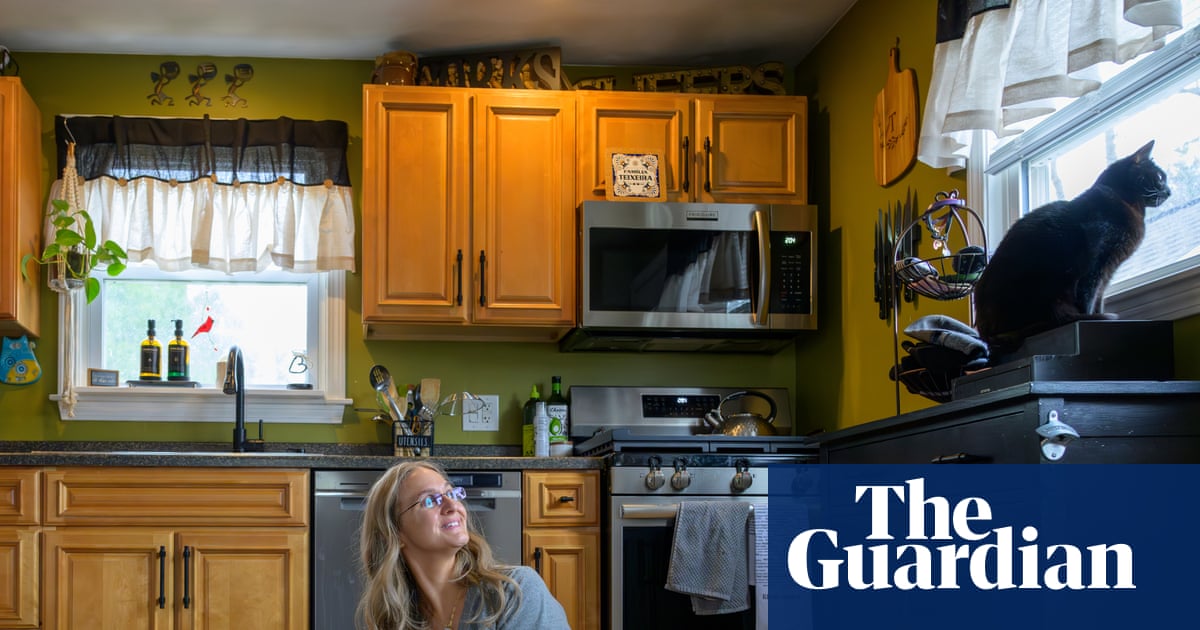
In 2010, Katie Teixeira adopted a kitten found all alone in an abandoned house. The kitten – so tiny she fit in the palm of Teixeira’s hand – needed to be bottle-fed every few hours. For weeks, Teixeira set her alarm for middle-of-the-night feedings and drove home on her lunch break to care for the kitten she named Milo. As the cat grew, so did the connection between them.
“We just bonded,” Teixeira says. “Like mother and daughter.”
Eventually, Teixeira and her husband adopted four more cats, but Milo, a tabby with white toes, maintained a special place in Teixeira’s heart. “People talk about soul animals,” she says. “Milo was my soul cat.”
When Milo died in 2021, Teixeira was bereft. She wanted a way to commemorate her. While Teixeira, who was working as a procurement analyst for CVS Health at the time, had seen pet memorial jewelry online, keepsakes that sometimes included the animal’s ashes or fur, “it just didn’t speak to me”, she says. “I’ve always been artistic and very crafty. So I was like, let me try doing something myself.”
It took a few years for inspiration to strike, but in 2023, Teixeira made a ring using a few of the whiskers Milo had shed while she was alive, crisscrossing them over a shimmering silver resin.
What happened next, she says, “happened very fast”.
When Teixeira wore the ring to her next volunteer shift at PawsWatch, the cat shelter near her home outside Providence, Rhode Island, she was inundated with requests from people who wanted their own. Soon, Teixeira was making dozens of pieces, which she began posting on her social media accounts. When one of her Instagram reels went viral, her inbox swelled with questions and requests. So Teixeira took two days off from work and built a website. Just three months after she made her first ring, Fallen Whiskers was born.
For a while, the business was Teixeira’s side hustle, a passion project that filled her nights and weekends and allowed her to support the shelter, where she donates a portion of her proceeds. But then, in 2024, she was laid off from her job of 20 years.
Friends and family encouraged her to make her side hustle a full-time gig.
“I remember saying to her, and I know it’s cliche, that when one door closes, another opens up,” says Donna Lilla, the operations manager at PawsWatch. “It just felt meant to be.”
But Teixeira wasn’t so sure.
“I was terrified,” she remembers. Her husband’s work as a heavy equipment operator could sustain the family only for so long. But her startup costs would be minimal; all she needed was a small stockpile of ring and necklace settings, the mica powder she used to create the resin backgrounds – and the whiskers, teeth and claws of pet owners who put their trust in her. She decided to test the business out, only for a few months.
Two years later, Teixeira fills about 15 orders a week for pieces that sell for $125 to $150. She has more than 100,000 Instagram followers. Her customers speak about her in adoring terms.
“She’s doing God’s work,” says Rebecca Snyder, a non-profit professional from Westchester county, New York, who remembers the day she lost her cat Emma as “literally the worst day of my life”. The pain was so overwhelming, the 40-year-old sought grief counseling.
Snyder says the matching teardrop ring and pendant necklace that Teixeira designed, with whiskers laid over a pearlescent green resin that matched the Maine Coon’s eyes, provided tremendous comfort: “I felt like I had done Emma justice by honoring her in such a beautiful way.”
Teixeira has incorporated whiskers, ashes, fur, teeth, claw sheaths, reptile skins, horse mane, hedgehog quills, bones and bits of favorite toys and blankets into cufflinks, bracelets, earrings and necklaces. (All materials must be shed naturally or collected after death, she said.) She has made a pendant of lion whiskers for a zookeeper mourning the big cat and another pendant of tiger whiskers for the sanctuary worker who cared for the rescued animal.
Fallen Whiskers is a part of a broader shift in how Americans view their pets. According to the Pew Research Center, 97% of owners consider their animals to be part of the family; more than half say their pet is as much a part of their family as a human member. Also on the rise: the amount of money pet owners are willing to spend on their animals, during their lives and afterwards, including on things like cremation, burial, memorial services and the kinds of bespoke consumer goods Teixeira produces.
Americans spent $157bn on their pets in 2025, up from $90bn in 2018, according to the American Pet Products Association.
“I’m still kind of wrapping my head around the fact that I am where I am right now,” Teixeira says of being able to earn a living from her passion project. “I guess I’ve made it.”
But “making it”, she’s learned, is very much a job that never ends.
When she started out, Teixeira tried to do her own accounting using QuickBooks but soon became overwhelmed. She decided to hire a part-time bookkeeper, the only individual on her payroll besides herself. “It’s just one thing I don’t have to worry about, and I can focus more on my customers and my orders,” she says.
Balancing her books has gotten much trickier in the last year. In April 2025, the Trump administration announced a 10% minimum tariff on almost all jewelry-related imports (with some countries and products facing much higher rates), a policy that affects Teixeira, who imports materials she can’t source in the US. A shaky market, meanwhile, has pushed investors into assets like precious metals, a trend that has essentially tripled what she pays for silver and gold.
“I have to extend that cost on to the customers,” she says. “It sucks – period.”
According to the Jewelers of America, an industry group that represents retailers and suppliers, these market shocks “pose a grave threat” to small jewelers like Teixeira, who rely on imported materials and operate on much thinner margins than big box stores. “The uncertainty of an escalating trade war can … potentially jeopardize the livelihoods of small retailers who form the backbone of the US jewelry market,” the group said in a position statement.
Teixeira says she is constantly monitoring her material costs, and, “as needed, adjusting on my side”, a time-consuming chore that takes her away from her workbench.
But according to Teixeira, managing costs isn’t the most difficult part of running Fallen Whiskers – it’s managing her emotions.
“The biggest challenge is the emotional weight of the work that I do,” she says. “Every day, I’m just diving into other people’s grief.”
That’s because Teixeira doesn’t just ask her clients for the fur and ashes they want included in their jewelry. She asks them to tell her the story of their bond with that animal. “And I’ve been there,” she says, “so it stirs up a lot of my own grief.”
While not a requirement, Teixeira says learning about the pet is a part of her creative process, as well as her way of helping other people through the pain of losing a companion.
“I was high-peak grieving, so writing was therapeutic for me,” says Natacha Hein, a clinical research contract specialist at Children’s hospital in Denver. “She helped me get over the hump.”
Hein stumbled upon Teixeira’s work online when she was looking for a way to memorialize Zazu, the “spicy” tabby that transformed the self-professed dog person into a cat person. “I wanted to feel like he was always around me,” Hein said.
The other shops she looked at “didn’t have that interaction piece. Their content felt scripted. There wasn’t a lot of warmth.” The conversations she had with Teixeira made her feel safe to send the jewelry maker precious, irreplaceable materials like fur and ashes. The day Hein received her ring, a smoky green the color of Zazu’s eyes, “was emotional as all hell”, she says. “I give Katie so much credit. It is a beautiful thing she is doing.”
So far, Teixeira has relied solely on word of mouth and daily posts on Facebook and Instagram to market Fallen Whiskers. Demand is growing, but Teixeira – who works on one piece at a time – isn’t in a rush to scale. “I don’t ever want it to feel transactional,” she says. That’s not to say the small-business owner doesn’t have aspirations.
“One day, I’d like to start my own cat sanctuary,” she says. “That’s my big, big dream.”
Read the full story at The Guardian ↗
Katie Teixeira adopted a kitten named Milo in 2010 and developed a deep attachment. When Milo died in 2011, Teixeira sought a way to memorialize her. Inspired by existing pet memorial jewelry but unsatisfied with available options, she created her own ring using Milo's shed whiskers set in resin in 2023. Requests from friends and shelter volunteers led her to formalize the business, Fallen Whiskers, within three months. After a layoff from her 20-year role at CVS Health in 2024, Teixeira transitioned the side venture to full-time work. The business now processes approximately 15 orders weekly at $125–$150 per piece, incorporating natural pet materials—whiskers, ashes, fur, teeth, claws and other shed or post-mortem items—into customized jewelry. Teixeira employs a part-time bookkeeper. The broader market context: US pet spending has grown from $90 billion in 2018 to $157 billion in 2025, and 97% of pet owners surveyed by Pew Research view their animals as family members. Teixeira faces cost pressures from 2025 tariffs on jewelry imports and elevated precious metal prices, which she is adjusting into pricing. She describes the emotional labour of engaging with customers' grief narratives as her primary operational challenge and has stated no intention to rapidly scale the business.
Read the full story at The Guardian ↗
In 2010, Katie Teixeira adopted a kitten found all alone in an abandoned house. The kitten – so tiny she fit in the palm of Teixeira’s hand – needed to be bottle-fed every few hours. For weeks, Teixeira set her alarm for middle-of-the-night feedings and drove home on her lunch break to care for the kitten she named Milo. As the cat grew, so did the connection between them.
“We just bonded,” Teixeira says. “Like mother and daughter.”
Eventually, Teixeira and her husband adopted four more cats, but Milo, a tabby with white toes, maintained a special place in Teixeira’s heart. “People talk about soul animals,” she says. “Milo was my soul cat.”
When Milo died in 2021, Teixeira was bereft. She wanted a way to commemorate her. While Teixeira, who was working as a procurement analyst for CVS Health at the time, had seen pet memorial jewelry online, keepsakes that sometimes included the animal’s ashes or fur, “it just didn’t speak to me”, she says. “I’ve always been artistic and very crafty. So I was like, let me try doing something myself.”
It took a few years for inspiration to strike, but in 2023, Teixeira made a ring using a few of the whiskers Milo had shed while she was alive, crisscrossing them over a shimmering silver resin.
What happened next, she says, “happened very fast”.
When Teixeira wore the ring to her next volunteer shift at PawsWatch, the cat shelter near her home outside Providence, Rhode Island, she was inundated with requests from people who wanted their own. Soon, Teixeira was making dozens of pieces, which she began posting on her social media accounts. When one of her Instagram reels went viral, her inbox swelled with questions and requests. So Teixeira took two days off from work and built a website. Just three months after she made her first ring, Fallen Whiskers was born.
For a while, the business was Teixeira’s side hustle, a passion project that filled her nights and weekends and allowed her to support the shelter, where she donates a portion of her proceeds. But then, in 2024, she was laid off from her job of 20 years.
Friends and family encouraged her to make her side hustle a full-time gig.
“I remember saying to her, and I know it’s cliche, that when one door closes, another opens up,” says Donna Lilla, the operations manager at PawsWatch. “It just felt meant to be.”
But Teixeira wasn’t so sure.
“I was terrified,” she remembers. Her husband’s work as a heavy equipment operator could sustain the family only for so long. But her startup costs would be minimal; all she needed was a small stockpile of ring and necklace settings, the mica powder she used to create the resin backgrounds – and the whiskers, teeth and claws of pet owners who put their trust in her. She decided to test the business out, only for a few months.
Two years later, Teixeira fills about 15 orders a week for pieces that sell for $125 to $150. She has more than 100,000 Instagram followers. Her customers speak about her in adoring terms.
“She’s doing God’s work,” says Rebecca Snyder, a non-profit professional from Westchester county, New York, who remembers the day she lost her cat Emma as “literally the worst day of my life”. The pain was so overwhelming, the 40-year-old sought grief counseling.
Snyder says the matching teardrop ring and pendant necklace that Teixeira designed, with whiskers laid over a pearlescent green resin that matched the Maine Coon’s eyes, provided tremendous comfort: “I felt like I had done Emma justice by honoring her in such a beautiful way.”
Teixeira has incorporated whiskers, ashes, fur, teeth, claw sheaths, reptile skins, horse mane, hedgehog quills, bones and bits of favorite toys and blankets into cufflinks, bracelets, earrings and necklaces. (All materials must be shed naturally or collected after death, she said.) She has made a pendant of lion whiskers for a zookeeper mourning the big cat and another pendant of tiger whiskers for the sanctuary worker who cared for the rescued animal.
Fallen Whiskers is a part of a broader shift in how Americans view their pets. According to the Pew Research Center, 97% of owners consider their animals to be part of the family; more than half say their pet is as much a part of their family as a human member. Also on the rise: the amount of money pet owners are willing to spend on their animals, during their lives and afterwards, including on things like cremation, burial, memorial services and the kinds of bespoke consumer goods Teixeira produces.
Americans spent $157bn on their pets in 2025, up from $90bn in 2018, according to the American Pet Products Association.
“I’m still kind of wrapping my head around the fact that I am where I am right now,” Teixeira says of being able to earn a living from her passion project. “I guess I’ve made it.”
But “making it”, she’s learned, is very much a job that never ends.
When she started out, Teixeira tried to do her own accounting using QuickBooks but soon became overwhelmed. She decided to hire a part-time bookkeeper, the only individual on her payroll besides herself. “It’s just one thing I don’t have to worry about, and I can focus more on my customers and my orders,” she says.
Balancing her books has gotten much trickier in the last year. In April 2025, the Trump administration announced a 10% minimum tariff on almost all jewelry-related imports (with some countries and products facing much higher rates), a policy that affects Teixeira, who imports materials she can’t source in the US. A shaky market, meanwhile, has pushed investors into assets like precious metals, a trend that has essentially tripled what she pays for silver and gold.
“I have to extend that cost on to the customers,” she says. “It sucks – period.”
According to the Jewelers of America, an industry group that represents retailers and suppliers, these market shocks “pose a grave threat” to small jewelers like Teixeira, who rely on imported materials and operate on much thinner margins than big box stores. “The uncertainty of an escalating trade war can … potentially jeopardize the livelihoods of small retailers who form the backbone of the US jewelry market,” the group said in a position statement.
Teixeira says she is constantly monitoring her material costs, and, “as needed, adjusting on my side”, a time-consuming chore that takes her away from her workbench.
But according to Teixeira, managing costs isn’t the most difficult part of running Fallen Whiskers – it’s managing her emotions.
“The biggest challenge is the emotional weight of the work that I do,” she says. “Every day, I’m just diving into other people’s grief.”
That’s because Teixeira doesn’t just ask her clients for the fur and ashes they want included in their jewelry. She asks them to tell her the story of their bond with that animal. “And I’ve been there,” she says, “so it stirs up a lot of my own grief.”
While not a requirement, Teixeira says learning about the pet is a part of her creative process, as well as her way of helping other people through the pain of losing a companion.
“I was high-peak grieving, so writing was therapeutic for me,” says Natacha Hein, a clinical research contract specialist at Children’s hospital in Denver. “She helped me get over the hump.”
Hein stumbled upon Teixeira’s work online when she was looking for a way to memorialize Zazu, the “spicy” tabby that transformed the self-professed dog person into a cat person. “I wanted to feel like he was always around me,” Hein said.
The other shops she looked at “didn’t have that interaction piece. Their content felt scripted. There wasn’t a lot of warmth.” The conversations she had with Teixeira made her feel safe to send the jewelry maker precious, irreplaceable materials like fur and ashes. The day Hein received her ring, a smoky green the color of Zazu’s eyes, “was emotional as all hell”, she says. “I give Katie so much credit. It is a beautiful thing she is doing.”
So far, Teixeira has relied solely on word of mouth and daily posts on Facebook and Instagram to market Fallen Whiskers. Demand is growing, but Teixeira – who works on one piece at a time – isn’t in a rush to scale. “I don’t ever want it to feel transactional,” she says. That’s not to say the small-business owner doesn’t have aspirations.
“One day, I’d like to start my own cat sanctuary,” she says. “That’s my big, big dream.”
Read the full story at The Guardian ↗
Katie Teixeira adopted a kitten named Milo in 2010 from an abandoned house. Teixeira bottle-fed Milo every few hours for weeks after adoption. Milo died in 2021. Teixeira created a memorial ring using Milo's shed whiskers in resin in 2023. Teixeira launched Fallen Whiskers, a formalized jewelry business, within three months of making her first ring. Teixeira was laid off from CVS Health in 2024 after 20 years of employment. Fallen Whiskers processes approximately 15 orders per week. Jewelry pieces sell for $125 to $150. Fallen Whiskers has more than 100,000 Instagram followers. Teixeira employs a part-time bookkeeper as her only staff member. The Trump administration announced a 10% minimum tariff on jewelry-related imports in April 2025. Precious metal prices have approximately tripled what Teixeira pays for silver and gold. Americans spent $157 billion on pets in 2025, compared to $90 billion in 2018. According to Pew Research Center, 97% of pet owners consider their animals part of the family. The Jewelers of America stated that tariffs and trade uncertainty 'pose a grave threat' to small jewelers operating on thin margins. Teixeira describes the emotional weight of engaging with customers' grief as her greatest business challenge. Teixeira has stated she does not plan to rapidly scale the business. Teixeira's dream is to one day start her own cat sanctuary. The bond between Teixeira and Milo was exceptional—'like mother and daughter.' Milo was Teixeira's 'soul cat.' The growth of Fallen Whiskers 'happened very fast' and 'felt meant to be.' Teixeira is 'doing God's work' through her memorial jewelry. The jewelry provides 'tremendous comfort' to grieving pet owners.
Read the full story at The Guardian ↗
- Katie Teixeira launched Fallen Whiskers, a pet memorial jewelry business, after her cat Milo died in 2021; she was laid off from CVS Health in 2024 and transitioned the side business to full-time.
- The business fills approximately 15 orders weekly at $125–$150 per piece, incorporating shed whiskers, ashes, fur, teeth and other natural pet materials into jewelry.
- US pet spending reached $157 billion in 2025, up from $90 billion in 2018, reflecting changing attitudes toward pet memorialization.
- Teixeira faces rising costs from tariffs on jewelry imports and elevated precious metal prices, which she is passing to customers.
- The emotional weight of engaging with customers' grief stories is her stated greatest business challenge; she does not plan to rapidly scale the operation.