When it comes to predicting the future, why are TV writers better than politicians? | Zoe Williams
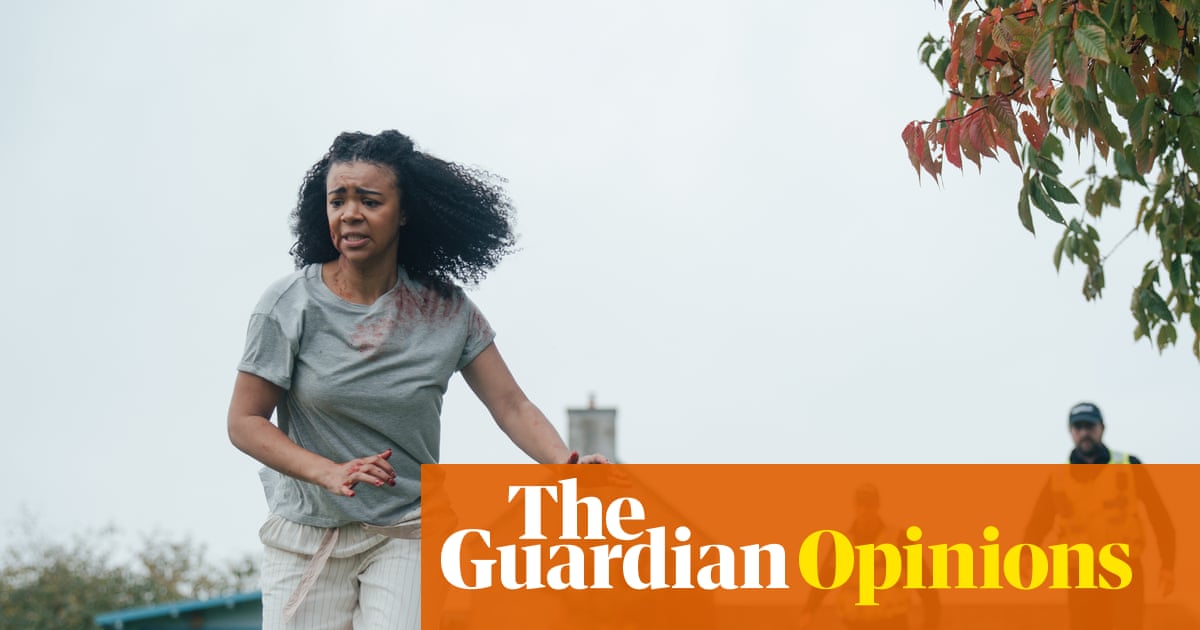
In the BBC’s new apocalypse drama, The Rapture, the UK is engulfed in a terrifying heatwave. I watched a preview of the programme in May, while preparing to interview the lead actor Ruth Madeley. I thought at the time: “This will be much more frightening when it chimes with the real life weather, bad luck for them that it’s not coming out for a couple of months.” But, by the time of meeting Madeley the following month, we were already in the middle of a heatwave that would lead to the highest ever recorded June temperature in the UK. The whole encounter made the show feel even more prophetic. She was in a central London hotel, air-conditioned inside, but all the door handles and surrounding street furniture – benches segmented by metal arm rests, to make life just that little bit harder for homeless people – had got way too hot. It was like playing The Floor is Lava, except instead of “floor”, “everything”. It surely can’t hit the screens at a more apposite time than this, I thought, failing to predict that by late July we’d be in heatwave number three, and France would be on fire.
The Daily Mail’s reviewer was upset that Christianity was portrayed “as a bastion of anti-science nutjobs and fundamentalists” in the show, wondering rhetorically whether the BBC would ever create such a drama about a “Muslim imam”. Peculiar thing to get upset about, I thought, since the religion is really more of a symptom of, or even a garnish to, the central atmosphere of engulfing heat. It’s like complaining that cats get a bad rap in the 1974 film The Towering Inferno (yes, there is a cat in it).
TV puts a particular pressure on itself to describe the world it lands in, even when a show is developed at least a couple of years before. Often, the safe way to play it with surrounding factors – weather, politics, fashion – is to keep things so general that they could be any time this century. Every so often something will land that relates so tightly to current events, you forget to admire its foresight and just assume it was written yesterday. Season two of Criminal Record (Apple TV), the police drama, which Peter Capaldi lifts so far above procedural you forget the police even have procedures, opens with a little demo outside the Ministry of Defence. It turns deadly after the far right smashes through a lackadaisical police cordon that thought it was just there to deal with a bunch of peaceniks. It felt extremely 2026, yet it was conceived before violent far-right protests were a regular news event – before the riots after the the Southport attack, before asylum seeker hotels being set alight, before Elon Musk started talking about the inevitability of civil war in the UK. It tightly described a riven politics that had not yet arrived, the series creator and writer Paul Rutman committing himself to quite a new, distinctive and sad chapter in our civic life – unnecessarily, really, because watching Capaldi look sketchy and chase people is an evergreen delight in any context, but it paid off.
The Rapture was adapted from Liz Jensen’s novel, which came out in 2009, so she must have been looking ahead to the climate crisis 20 years ago. Novels can often hit the future on the nose because they’re not trying to predict it by committee; books describing the now obvious billionaire death wish – a new kind of morbid fantasy, in which it’s not their own death they’re planning for but everyone else’s – are notable for their synchronicity. Eleanor Catton’s Birnam Wood and Naomi Alderman’s The Future came out in the same year, 2023. The ideas must have germinated at around the same time, 2020, which is surely before even the tech tycoons themselves had landed on this post-humanist outlook, and were still figuring out how to capture all the money in the world as quietly as possible.
Without diminishing any of this creative perspicacity, these are things we all know; extreme weather is coming, a lot of billionaires are preparing for mass death events; politics is getting more divided because people with money are paying to cleave it. The only people not acknowledging this are politicians. They are still, in the middle of a wildfire, complaining that net zero costs too much, and squabbling about the teaspoon of crude oil left in the North Sea. The really remarkable thing is the determination of that averted gaze, denying a future that’s already arrived.
Zoe Williams is a Guardian columnist
Read the full story at The Guardian ↗
From BBC drama The Rapture on the climate crisis to Apple’s Criminal Record on the rise of the far right, culture often sees what politics fails to. In the BBC’s new apocalypse…
This lens runs the verified story through Cinnamon's AI — wired in the next step.
In the BBC’s new apocalypse drama, The Rapture, the UK is engulfed in a terrifying heatwave. I watched a preview of the programme in May, while preparing to interview the lead actor Ruth Madeley. I thought at the time: “This will be much more frightening when it chimes with the real life weather, bad luck for them that it’s not coming out for a couple of months.” But, by the time of meeting Madeley the following month, we were already in the middle of a heatwave that would lead to the highest ever recorded June temperature in the UK. The whole encounter made the show feel even more prophetic. She was in a central London hotel, air-conditioned inside, but all the door handles and surrounding street furniture – benches segmented by metal arm rests, to make life just that little bit harder for homeless people – had got way too hot. It was like playing The Floor is Lava, except instead of “floor”, “everything”. It surely can’t hit the screens at a more apposite time than this, I thought, failing to predict that by late July we’d be in heatwave number three, and France would be on fire.
The Daily Mail’s reviewer was upset that Christianity was portrayed “as a bastion of anti-science nutjobs and fundamentalists” in the show, wondering rhetorically whether the BBC would ever create such a drama about a “Muslim imam”. Peculiar thing to get upset about, I thought, since the religion is really more of a symptom of, or even a garnish to, the central atmosphere of engulfing heat. It’s like complaining that cats get a bad rap in the 1974 film The Towering Inferno (yes, there is a cat in it).
TV puts a particular pressure on itself to describe the world it lands in, even when a show is developed at least a couple of years before. Often, the safe way to play it with surrounding factors – weather, politics, fashion – is to keep things so general that they could be any time this century. Every so often something will land that relates so tightly to current events, you forget to admire its foresight and just assume it was written yesterday. Season two of Criminal Record (Apple TV), the police drama, which Peter Capaldi lifts so far above procedural you forget the police even have procedures, opens with a little demo outside the Ministry of Defence. It turns deadly after the far right smashes through a lackadaisical police cordon that thought it was just there to deal with a bunch of peaceniks. It felt extremely 2026, yet it was conceived before violent far-right protests were a regular news event – before the riots after the the Southport attack, before asylum seeker hotels being set alight, before Elon Musk started talking about the inevitability of civil war in the UK. It tightly described a riven politics that had not yet arrived, the series creator and writer Paul Rutman committing himself to quite a new, distinctive and sad chapter in our civic life – unnecessarily, really, because watching Capaldi look sketchy and chase people is an evergreen delight in any context, but it paid off.
The Rapture was adapted from Liz Jensen’s novel, which came out in 2009, so she must have been looking ahead to the climate crisis 20 years ago. Novels can often hit the future on the nose because they’re not trying to predict it by committee; books describing the now obvious billionaire death wish – a new kind of morbid fantasy, in which it’s not their own death they’re planning for but everyone else’s – are notable for their synchronicity. Eleanor Catton’s Birnam Wood and Naomi Alderman’s The Future came out in the same year, 2023. The ideas must have germinated at around the same time, 2020, which is surely before even the tech tycoons themselves had landed on this post-humanist outlook, and were still figuring out how to capture all the money in the world as quietly as possible.
Without diminishing any of this creative perspicacity, these are things we all know; extreme weather is coming, a lot of billionaires are preparing for mass death events; politics is getting more divided because people with money are paying to cleave it. The only people not acknowledging this are politicians. They are still, in the middle of a wildfire, complaining that net zero costs too much, and squabbling about the teaspoon of crude oil left in the North Sea. The really remarkable thing is the determination of that averted gaze, denying a future that’s already arrived.
Zoe Williams is a Guardian columnist
Read the full story at The Guardian ↗
In the BBC’s new apocalypse drama, The Rapture, the UK is engulfed in a terrifying heatwave. I watched a preview of the programme in May, while preparing to interview the lead actor Ruth Madeley. I thought at the time: “This will be much more frightening when it chimes with the real life weather, bad luck for them that it’s not coming out for a couple of months.” But, by the time of meeting Madeley the following month, we were already in the middle of a heatwave that would lead to the highest ever recorded June temperature in the UK. The whole encounter made the show feel even more prophetic. She was in a central London hotel, air-conditioned inside, but all the door handles and surrounding street furniture – benches segmented by metal arm rests, to make life just that little bit harder for homeless people – had got way too hot. It was like playing The Floor is Lava, except instead of “floor”, “everything”. It surely can’t hit the screens at a more apposite time than this, I thought, failing to predict that by late July we’d be in heatwave number three, and France would be on fire.
The Daily Mail’s reviewer was upset that Christianity was portrayed “as a bastion of anti-science nutjobs and fundamentalists” in the show, wondering rhetorically whether the BBC would ever create such a drama about a “Muslim imam”. Peculiar thing to get upset about, I thought, since the religion is really more of a symptom of, or even a garnish to, the central atmosphere of engulfing heat. It’s like complaining that cats get a bad rap in the 1974 film The Towering Inferno (yes, there is a cat in it).
TV puts a particular pressure on itself to describe the world it lands in, even when a show is developed at least a couple of years before. Often, the safe way to play it with surrounding factors – weather, politics, fashion – is to keep things so general that they could be any time this century. Every so often something will land that relates so tightly to current events, you forget to admire its foresight and just assume it was written yesterday. Season two of Criminal Record (Apple TV), the police drama, which Peter Capaldi lifts so far above procedural you forget the police even have procedures, opens with a little demo outside the Ministry of Defence. It turns deadly after the far right smashes through a lackadaisical police cordon that thought it was just there to deal with a bunch of peaceniks. It felt extremely 2026, yet it was conceived before violent far-right protests were a regular news event – before the riots after the the Southport attack, before asylum seeker hotels being set alight, before Elon Musk started talking about the inevitability of civil war in the UK. It tightly described a riven politics that had not yet arrived, the series creator and writer Paul Rutman committing himself to quite a new, distinctive and sad chapter in our civic life – unnecessarily, really, because watching Capaldi look sketchy and chase people is an evergreen delight in any context, but it paid off.
The Rapture was adapted from Liz Jensen’s novel, which came out in 2009, so she must have been looking ahead to the climate crisis 20 years ago. Novels can often hit the future on the nose because they’re not trying to predict it by committee; books describing the now obvious billionaire death wish – a new kind of morbid fantasy, in which it’s not their own death they’re planning for but everyone else’s – are notable for their synchronicity. Eleanor Catton’s Birnam Wood and Naomi Alderman’s The Future came out in the same year, 2023. The ideas must have germinated at around the same time, 2020, which is surely before even the tech tycoons themselves had landed on this post-humanist outlook, and were still figuring out how to capture all the money in the world as quietly as possible.
Without diminishing any of this creative perspicacity, these are things we all know; extreme weather is coming, a lot of billionaires are preparing for mass death events; politics is getting more divided because people with money are paying to cleave it. The only people not acknowledging this are politicians. They are still, in the middle of a wildfire, complaining that net zero costs too much, and squabbling about the teaspoon of crude oil left in the North Sea. The really remarkable thing is the determination of that averted gaze, denying a future that’s already arrived.
Zoe Williams is a Guardian columnist
Read the full story at The Guardian ↗
This lens runs the verified story through Cinnamon's AI — wired in the next step.
- From BBC drama The Rapture on the climate crisis to Apple’s Criminal Record on the rise of the far right, culture often sees what politics fails to.
- In the BBC’s new apocalypse…