Why are there holiday delay warnings over the EU's new border system?
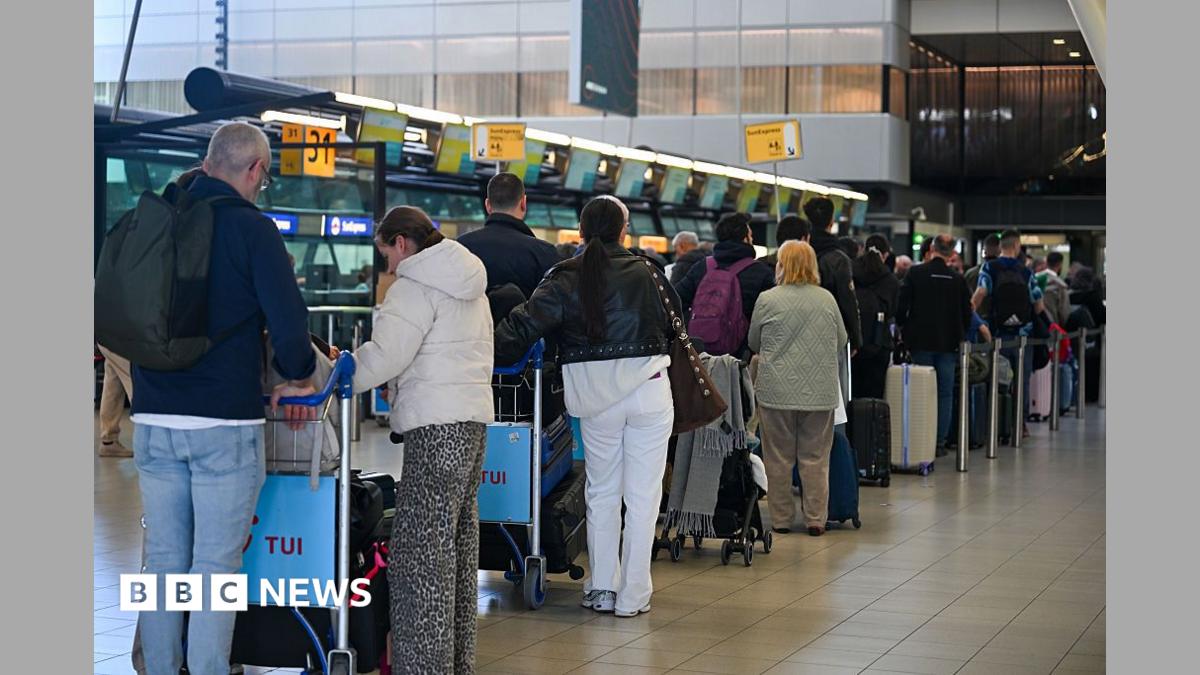
Image source, Tolga Akmen / EPA
The new system applies to non-EU citizens entering and leaving the Schengen Area
By
Transport correspondent
There have been warnings of queues at airports in Europe this summer because of the EU's new digital border control system.
It is the first summer peak period since the Entry/Exit System, or "EES", came in.
It requires UK travellers to register fingerprints and a photo alongside a passport scan.
EES will replace the manual stamping of passports.
It tracks who enters and leaves the Schengen free movement zone, which covers 29 European countries , external.
"Third country" nationals - including UK citizens - must provide fingerprints and a photo at passport control.
Brits flying out to a number of popular holiday destinations including France, Spain, Portugal and Italy will be required to do this at automated kiosks after they land.
The information is verified when they leave.
Some passengers, including children under 12, have their passport checked by border staff instead.
EES started to be rolled out in October last year and is now fully up and running.
The time it takes to register biometric information means people have been told to prepare for a wait at border controls.
During the introductory period, queues started to flare up at certain airports at busy times.
Since then, the system has been working well in some airports, while waits of several hours have been reported at others.
A representative of airline trade body IATA has warned queues in some places could be as long as six hours.
Travel experts and industry figures have blamed problems with the technology and border staffing levels. There have also been reports of people having to register their biometric information more than once.
The UK boss of Wizz Air told the BBC passengers should be prepared for a wait, and turn up three hours before their flight home.
Some passengers have missed flights home because the wait for EES checks meant they could not reach their gate in time.
Whether airlines will hold flights for passengers who get held up is a mixed picture. Some say they will wait wherever possible, while Ryanair is an example of a carrier which has said it will not.
The summer holidays will provide a major test of the new system.
Greece is not applying the biometric checks to British visitors over the peak period.
The European Commission is allowing the system to be suspended in "exceptional circumstances that lead to excessive waiting times", until September.
Improvements are planned in some places which have seen the worst queues. For example, Portugal has announced hundreds of extra border staff for July.
Airports say passengers should follow the advice of their airline when it comes to how early to arrive for flights back to the UK.
Eurostar has already installed 49 EES processing machines at London St Pancras
At a few locations, French border police conduct passport checks before people leave the UK.
They are Dover's ferry port, Eurotunnel's Folkestone terminal, and Eurostar's St Pancras rail terminus.
For months, dozens of automated machines have been in place at these locations for people to go through EES.
They are not yet in routine use. Border staff are doing part of the process instead.
At Dover, despite the fact fingerprints and photos were not yet being collected, long queues of cars built up the start of the May half term holidays. French border authorities ended up suspending the process.
Coaches will be sealed after passengers have completed EES checks, before driving over to the ferry terminal.
Watch: How the new EU border checks will work
Eurotunnel has installed more than a hundred EES kiosks at each side of the English Channel
A mobile phone app has been developed to enable passengers to do part of the process before reaching the border.
However, the app is currently being used by only two countries. Sweden is using it to help with the registration of passport data and photos. Portugal is only using it for an entry questionnaire.
The EU is also introducing a new visa waiver system linked to passports called the European Travel Information and Authorisation System (ETIAS), which will build on the EES.
Citizens of non-EU countries who do not need a visa to enter the EU - including people from the UK - will be able to apply online for authorisation before they travel.
ETIAS is not due to start until the end of 2026, but the final date has not yet been confirmed.
It will cost €20 (£17.47) per application, and will be valid for three years.
People aged under 18 and over 70 will need to apply, but will not have to pay.
Additional reporting from Kris Bramwell.
What are your experiences of the Entry/Exit System (EES)?
Read the full story at BBC ↗
The EU introduced a digital border control system called the Entry/Exit System (EES) in October 2023 to replace manual passport stamping. It requires non-EU citizens—including UK travellers—to provide fingerprints and a photo at automated kiosks when entering or leaving the 29-country Schengen zone. The system tracks cross-border movement and will be supplemented by a visa waiver system (ETIAS) from late 2026. Ahead of this summer's peak travel period, authorities have warned of potential queues at airports, with some estimates reaching six hours. Performance has been mixed: while some airports operate smoothly, others have reported significant delays, with causes including technology problems, insufficient border staff, and instances of passengers needing to re-register biometrics. The European Commission is allowing temporary suspensions during exceptional delays through September. Some improvements are underway—Portugal is adding border staff, for example—though a mobile app designed to streamline registration remains limited to two countries. At UK departure points (Dover, Folkestone, St Pancras), EES machines have been installed but are not yet in routine use.
Read the full story at BBC ↗
Image source, Tolga Akmen / EPA
The new system applies to non-EU citizens entering and leaving the Schengen Area
By
Transport correspondent
There have been warnings of queues at airports in Europe this summer because of the EU's new digital border control system.
It is the first summer peak period since the Entry/Exit System, or "EES", came in.
It requires UK travellers to register fingerprints and a photo alongside a passport scan.
EES will replace the manual stamping of passports.
It tracks who enters and leaves the Schengen free movement zone, which covers 29 European countries , external.
"Third country" nationals - including UK citizens - must provide fingerprints and a photo at passport control.
Brits flying out to a number of popular holiday destinations including France, Spain, Portugal and Italy will be required to do this at automated kiosks after they land.
The information is verified when they leave.
Some passengers, including children under 12, have their passport checked by border staff instead.
EES started to be rolled out in October last year and is now fully up and running.
The time it takes to register biometric information means people have been told to prepare for a wait at border controls.
During the introductory period, queues started to flare up at certain airports at busy times.
Since then, the system has been working well in some airports, while waits of several hours have been reported at others.
A representative of airline trade body IATA has warned queues in some places could be as long as six hours.
Travel experts and industry figures have blamed problems with the technology and border staffing levels. There have also been reports of people having to register their biometric information more than once.
The UK boss of Wizz Air told the BBC passengers should be prepared for a wait, and turn up three hours before their flight home.
Some passengers have missed flights home because the wait for EES checks meant they could not reach their gate in time.
Whether airlines will hold flights for passengers who get held up is a mixed picture. Some say they will wait wherever possible, while Ryanair is an example of a carrier which has said it will not.
The summer holidays will provide a major test of the new system.
Greece is not applying the biometric checks to British visitors over the peak period.
The European Commission is allowing the system to be suspended in "exceptional circumstances that lead to excessive waiting times", until September.
Improvements are planned in some places which have seen the worst queues. For example, Portugal has announced hundreds of extra border staff for July.
Airports say passengers should follow the advice of their airline when it comes to how early to arrive for flights back to the UK.
Eurostar has already installed 49 EES processing machines at London St Pancras
At a few locations, French border police conduct passport checks before people leave the UK.
They are Dover's ferry port, Eurotunnel's Folkestone terminal, and Eurostar's St Pancras rail terminus.
For months, dozens of automated machines have been in place at these locations for people to go through EES.
They are not yet in routine use. Border staff are doing part of the process instead.
At Dover, despite the fact fingerprints and photos were not yet being collected, long queues of cars built up the start of the May half term holidays. French border authorities ended up suspending the process.
Coaches will be sealed after passengers have completed EES checks, before driving over to the ferry terminal.
Watch: How the new EU border checks will work
Eurotunnel has installed more than a hundred EES kiosks at each side of the English Channel
A mobile phone app has been developed to enable passengers to do part of the process before reaching the border.
However, the app is currently being used by only two countries. Sweden is using it to help with the registration of passport data and photos. Portugal is only using it for an entry questionnaire.
The EU is also introducing a new visa waiver system linked to passports called the European Travel Information and Authorisation System (ETIAS), which will build on the EES.
Citizens of non-EU countries who do not need a visa to enter the EU - including people from the UK - will be able to apply online for authorisation before they travel.
ETIAS is not due to start until the end of 2026, but the final date has not yet been confirmed.
It will cost €20 (£17.47) per application, and will be valid for three years.
People aged under 18 and over 70 will need to apply, but will not have to pay.
Additional reporting from Kris Bramwell.
What are your experiences of the Entry/Exit System (EES)?
Read the full story at BBC ↗
The Entry/Exit System (EES) requires non-EU citizens to register fingerprints and a photo at border controls in the Schengen area EES began rolling out in October 2023 and is now fully operational The system replaces manual passport stamping and applies to 29 European countries UK citizens, including those travelling to France, Spain, Portugal, and Italy, must complete EES registration on entry Travel industry bodies have warned queues could reach six hours at some airports Problems cited by industry figures include technology issues and insufficient border staffing Some passengers have had to register biometric information more than once Some passengers have missed flights because EES queues prevented them reaching their gate Greece is not applying biometric checks to British visitors during the peak summer period The European Commission is allowing the system to be suspended during exceptional circumstances causing excessive waits, until September Portugal has announced additional border staff for July A supplementary system called ETIAS will launch at the end of 2026, requiring online authorisation (€20 per application, valid three years) from non-EU citizens without visa requirements
Read the full story at BBC ↗
- The EU's Entry/Exit System (EES) requires non-EU citizens, including UK travellers, to register fingerprints and photos at border entry points in the Schengen area
- The system replaced manual passport stamping starting October last year and is now fully operational ahead of summer holiday peaks
- Airports and travel industry bodies have warned of potential queues of up to six hours due to biometric processing times, technology issues, and staffing levels
- Some airports have experienced multiple-hour waits while others function smoothly; Greece and the EU are allowing temporary suspensions during excessive delays
- The system is being tested during summer 2024, with improvements planned at problem locations and a supplementary visa waiver system (ETIAS) launching in late 2026