World-renowned climber Nirmal Purja among 11 struck by avalanche on Pakistan mountain
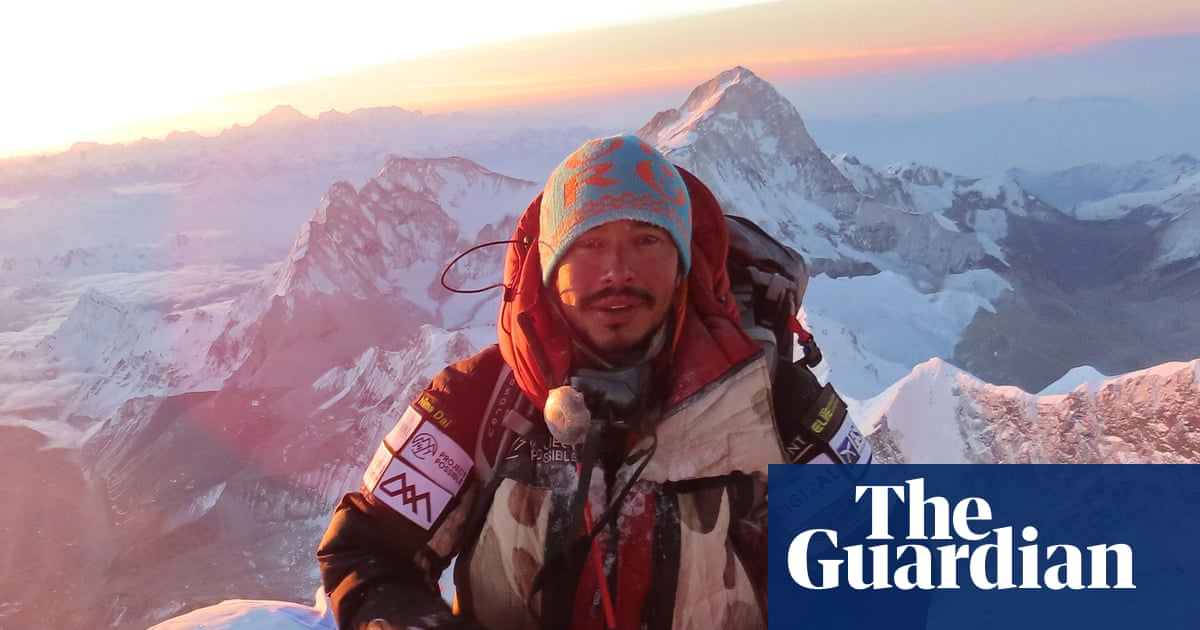 ✓
✓The world-renowned Nepali mountaineer Nirmal Purja – a former British special forces member – is among 11 climbers caught in a deadly avalanche on Pakistan’s Broad Peak.
The Alpine Club of Pakistan said “seven climbers have been spotted via aerial drone footage” adding that “their identities and condition cannot yet be verified”.
Rescuers had said earlier on Friday that four bodies had been found and efforts were under way to retrieve them despite the harsh weather. Three of the dead have been identified: Pur Bahadur Gurung, a Nepali citizen, Nadhira Alharthy, who was the first Omani to climb Everest, and US climber Mallory Geis. Their bodies have been transported to a hospital.
Purja, also known as Nims Dai, made history in 2019 after climbing all of the world’s 14 peaks over 8,000 metres in just over six months, cutting years off the previous record. He later led the first team to summit K2, the world’s second-highest mountain in winter, a highly coveted achievement.
Purja has also attracted controversy, however, including a high-profile claim, which he denied, of sexually inappropriate behaviour.
Also among those missing are the US climber Mallory Geis, a Chinese national, Wang Zhong, and Pakistani and Nepali high-altitude workers.
As night fell on the mountain on Friday, visual searches for any survivors, including with the use of drones, were halted. Search efforts have been hampered by the weather and the fact that unlike in Nepal, where there is a well-established network of private helicopter search and rescue operations, helicopters are less available in Pakistan and run by the military.
Trackers carried by the climbers showed a rapid loss of altitude, suggesting the team had been caught in an avalanche. Purja’s tracker, however, shifted location after the initial rapid descent.
The GPS data suggested the avalanche occurred close to 9am local time at 6,579 metres (21,585ft), between camp two and camp three on the mountain’s west ridge, the most popular ascent route.
According to Climbing magazine, Geis’s tracker showed a sudden descent of 543 metres, while Alharthy’s tracker showed a much-larger descent of 1,651 metres.
Commenting on the rescue efforts, a spokesperson for police in the mountainous Gilgit-Baltistan region said “preliminary reports indicate that four bodies have so far been recovered”, adding that the condition of the remaining climbers was still being verified.
A statement by the Alpine Club of Pakistan (ACP) suggested an avalanche had struck a group of climbers around midday on Thursday. “The entire team has been out of communication since the avalanche,” the statement said, as teams with helicopters and drones were sent to help with rescue efforts.
The statement added: “Every possible effort is being made to ensure that helicopter support and all available rescue resources are mobilised at the earliest opportunity, subject to weather and operational conditions.”
Irfan Arshad Khan, the ACP’s president, said: “We can confirm the death of three climbers, as we received two dead bodies and a body part of another climber.”
Purja’s business partner, Mingma Gyabu Sherpa, who is also a member of the Nepali house of representatives, said data appeared to show continuing movement from Purja’s tracking device after the initial incident.
“Initially, it appeared that he had been swept downhill by the avalanche,” he told the Nepali news site Kantipur. “But after the point where the tracking had stopped, the location appears to have shifted again.”
Mingma added that one Pakistani and one Nepali climber had set out overland towards the suspected avalanche site to check reports that one climber’s location appeared to be near the base of the mountain.
“We have received information that one person’s location appears to be near the foot of the mountain. A search team has gone there to verify it,” he said.
Mingma cautioned that they did not have any indication of Purja’s condition, simply that the location of the tracker had shifted.
In person, Purja was striking for his confidence and self-belief. His rapid chain of ascents of the world’s tallest mountains demonstrated strength and a talent for logistical organisation, using the exploit to showcase what he felt were the overlooked abilities of Nepali climbers.
His profile was boosted after he starred in a 2021 Netflix documentary on the feat. The previous record for climbing all 14 was seven years; his record was surpassed in 2023.
Purja was leading an expedition for his company, Elite Exped, on Broad Peak, the world’s 12th-highest mountain at 8,047 metres, when the avalanche occurred.
The ACP received “deeply concerning” reports on Thursday that an avalanche had struck the team.
The expedition includes five Nepali climbers, as well as US, Pakistani, Omani and Chinese nationals. Another foreign climber was also part of the group, said the ACP’s vice-president, Karrar Haidri.
“The club prays for the safety and successful rescue of all the climbers and stands in solidarity with their families and the international mountaineering community during this difficult time,” the ACP said in a statement.
Purja, who is also a British citizen after joining the British army in 2003, opted to use supplementary oxygen for his ascents, justifying his choice by the huge size of the challenge he had set himself.
Purja had written on X this week that he was close to becoming the first person to climb all 14 mountains over 8,000 metres twice without oxygen. “Broad Peak, I ask for nothing but safe passage up and back down,” he wrote. “I take zero mountains for granted. Not one. The moment my foot leaves basecamp, it’s 100%. Always has been. Always will be.
“My purpose has never been about me. It’s about what I represent. It’s about showing YOU that your own mountains – whatever they are – are climbable.”
Read the full story at BBC ↗ · The Guardian ↗
Rescuers say four bodies found in search for team caught in Broad Peak avalanche, after trackers showed rapid descent. The world-renowned Nepali mountaineer Nirmal Purja – a…
This lens runs the verified story through Cinnamon's AI — wired in the next step.
The world-renowned Nepali mountaineer Nirmal Purja – a former British special forces member – is among 11 climbers caught in a deadly avalanche on Pakistan’s Broad Peak.
The Alpine Club of Pakistan said “seven climbers have been spotted via aerial drone footage” adding that “their identities and condition cannot yet be verified”.
Rescuers had said earlier on Friday that four bodies had been found and efforts were under way to retrieve them despite the harsh weather. Three of the dead have been identified: Pur Bahadur Gurung, a Nepali citizen, Nadhira Alharthy, who was the first Omani to climb Everest, and US climber Mallory Geis. Their bodies have been transported to a hospital.
Purja, also known as Nims Dai, made history in 2019 after climbing all of the world’s 14 peaks over 8,000 metres in just over six months, cutting years off the previous record. He later led the first team to summit K2, the world’s second-highest mountain in winter, a highly coveted achievement.
Purja has also attracted controversy, however, including a high-profile claim, which he denied, of sexually inappropriate behaviour.
Also among those missing are the US climber Mallory Geis, a Chinese national, Wang Zhong, and Pakistani and Nepali high-altitude workers.
As night fell on the mountain on Friday, visual searches for any survivors, including with the use of drones, were halted. Search efforts have been hampered by the weather and the fact that unlike in Nepal, where there is a well-established network of private helicopter search and rescue operations, helicopters are less available in Pakistan and run by the military.
Trackers carried by the climbers showed a rapid loss of altitude, suggesting the team had been caught in an avalanche. Purja’s tracker, however, shifted location after the initial rapid descent.
The GPS data suggested the avalanche occurred close to 9am local time at 6,579 metres (21,585ft), between camp two and camp three on the mountain’s west ridge, the most popular ascent route.
According to Climbing magazine, Geis’s tracker showed a sudden descent of 543 metres, while Alharthy’s tracker showed a much-larger descent of 1,651 metres.
Commenting on the rescue efforts, a spokesperson for police in the mountainous Gilgit-Baltistan region said “preliminary reports indicate that four bodies have so far been recovered”, adding that the condition of the remaining climbers was still being verified.
A statement by the Alpine Club of Pakistan (ACP) suggested an avalanche had struck a group of climbers around midday on Thursday. “The entire team has been out of communication since the avalanche,” the statement said, as teams with helicopters and drones were sent to help with rescue efforts.
The statement added: “Every possible effort is being made to ensure that helicopter support and all available rescue resources are mobilised at the earliest opportunity, subject to weather and operational conditions.”
Irfan Arshad Khan, the ACP’s president, said: “We can confirm the death of three climbers, as we received two dead bodies and a body part of another climber.”
Purja’s business partner, Mingma Gyabu Sherpa, who is also a member of the Nepali house of representatives, said data appeared to show continuing movement from Purja’s tracking device after the initial incident.
“Initially, it appeared that he had been swept downhill by the avalanche,” he told the Nepali news site Kantipur. “But after the point where the tracking had stopped, the location appears to have shifted again.”
Mingma added that one Pakistani and one Nepali climber had set out overland towards the suspected avalanche site to check reports that one climber’s location appeared to be near the base of the mountain.
“We have received information that one person’s location appears to be near the foot of the mountain. A search team has gone there to verify it,” he said.
Mingma cautioned that they did not have any indication of Purja’s condition, simply that the location of the tracker had shifted.
In person, Purja was striking for his confidence and self-belief. His rapid chain of ascents of the world’s tallest mountains demonstrated strength and a talent for logistical organisation, using the exploit to showcase what he felt were the overlooked abilities of Nepali climbers.
His profile was boosted after he starred in a 2021 Netflix documentary on the feat. The previous record for climbing all 14 was seven years; his record was surpassed in 2023.
Purja was leading an expedition for his company, Elite Exped, on Broad Peak, the world’s 12th-highest mountain at 8,047 metres, when the avalanche occurred.
The ACP received “deeply concerning” reports on Thursday that an avalanche had struck the team.
The expedition includes five Nepali climbers, as well as US, Pakistani, Omani and Chinese nationals. Another foreign climber was also part of the group, said the ACP’s vice-president, Karrar Haidri.
“The club prays for the safety and successful rescue of all the climbers and stands in solidarity with their families and the international mountaineering community during this difficult time,” the ACP said in a statement.
Purja, who is also a British citizen after joining the British army in 2003, opted to use supplementary oxygen for his ascents, justifying his choice by the huge size of the challenge he had set himself.
Purja had written on X this week that he was close to becoming the first person to climb all 14 mountains over 8,000 metres twice without oxygen. “Broad Peak, I ask for nothing but safe passage up and back down,” he wrote. “I take zero mountains for granted. Not one. The moment my foot leaves basecamp, it’s 100%. Always has been. Always will be.
“My purpose has never been about me. It’s about what I represent. It’s about showing YOU that your own mountains – whatever they are – are climbable.”
Read the full story at BBC ↗ · The Guardian ↗
The world-renowned Nepali mountaineer Nirmal Purja – a former British special forces member – is among 11 climbers caught in a deadly avalanche on Pakistan’s Broad Peak.
The Alpine Club of Pakistan said “seven climbers have been spotted via aerial drone footage” adding that “their identities and condition cannot yet be verified”.
Rescuers had said earlier on Friday that four bodies had been found and efforts were under way to retrieve them despite the harsh weather. Three of the dead have been identified: Pur Bahadur Gurung, a Nepali citizen, Nadhira Alharthy, who was the first Omani to climb Everest, and US climber Mallory Geis. Their bodies have been transported to a hospital.
Purja, also known as Nims Dai, made history in 2019 after climbing all of the world’s 14 peaks over 8,000 metres in just over six months, cutting years off the previous record. He later led the first team to summit K2, the world’s second-highest mountain in winter, a highly coveted achievement.
Purja has also attracted controversy, however, including a high-profile claim, which he denied, of sexually inappropriate behaviour.
Also among those missing are the US climber Mallory Geis, a Chinese national, Wang Zhong, and Pakistani and Nepali high-altitude workers.
As night fell on the mountain on Friday, visual searches for any survivors, including with the use of drones, were halted. Search efforts have been hampered by the weather and the fact that unlike in Nepal, where there is a well-established network of private helicopter search and rescue operations, helicopters are less available in Pakistan and run by the military.
Trackers carried by the climbers showed a rapid loss of altitude, suggesting the team had been caught in an avalanche. Purja’s tracker, however, shifted location after the initial rapid descent.
The GPS data suggested the avalanche occurred close to 9am local time at 6,579 metres (21,585ft), between camp two and camp three on the mountain’s west ridge, the most popular ascent route.
According to Climbing magazine, Geis’s tracker showed a sudden descent of 543 metres, while Alharthy’s tracker showed a much-larger descent of 1,651 metres.
Commenting on the rescue efforts, a spokesperson for police in the mountainous Gilgit-Baltistan region said “preliminary reports indicate that four bodies have so far been recovered”, adding that the condition of the remaining climbers was still being verified.
A statement by the Alpine Club of Pakistan (ACP) suggested an avalanche had struck a group of climbers around midday on Thursday. “The entire team has been out of communication since the avalanche,” the statement said, as teams with helicopters and drones were sent to help with rescue efforts.
The statement added: “Every possible effort is being made to ensure that helicopter support and all available rescue resources are mobilised at the earliest opportunity, subject to weather and operational conditions.”
Irfan Arshad Khan, the ACP’s president, said: “We can confirm the death of three climbers, as we received two dead bodies and a body part of another climber.”
Purja’s business partner, Mingma Gyabu Sherpa, who is also a member of the Nepali house of representatives, said data appeared to show continuing movement from Purja’s tracking device after the initial incident.
“Initially, it appeared that he had been swept downhill by the avalanche,” he told the Nepali news site Kantipur. “But after the point where the tracking had stopped, the location appears to have shifted again.”
Mingma added that one Pakistani and one Nepali climber had set out overland towards the suspected avalanche site to check reports that one climber’s location appeared to be near the base of the mountain.
“We have received information that one person’s location appears to be near the foot of the mountain. A search team has gone there to verify it,” he said.
Mingma cautioned that they did not have any indication of Purja’s condition, simply that the location of the tracker had shifted.
In person, Purja was striking for his confidence and self-belief. His rapid chain of ascents of the world’s tallest mountains demonstrated strength and a talent for logistical organisation, using the exploit to showcase what he felt were the overlooked abilities of Nepali climbers.
His profile was boosted after he starred in a 2021 Netflix documentary on the feat. The previous record for climbing all 14 was seven years; his record was surpassed in 2023.
Purja was leading an expedition for his company, Elite Exped, on Broad Peak, the world’s 12th-highest mountain at 8,047 metres, when the avalanche occurred.
The ACP received “deeply concerning” reports on Thursday that an avalanche had struck the team.
The expedition includes five Nepali climbers, as well as US, Pakistani, Omani and Chinese nationals. Another foreign climber was also part of the group, said the ACP’s vice-president, Karrar Haidri.
“The club prays for the safety and successful rescue of all the climbers and stands in solidarity with their families and the international mountaineering community during this difficult time,” the ACP said in a statement.
Purja, who is also a British citizen after joining the British army in 2003, opted to use supplementary oxygen for his ascents, justifying his choice by the huge size of the challenge he had set himself.
Purja had written on X this week that he was close to becoming the first person to climb all 14 mountains over 8,000 metres twice without oxygen. “Broad Peak, I ask for nothing but safe passage up and back down,” he wrote. “I take zero mountains for granted. Not one. The moment my foot leaves basecamp, it’s 100%. Always has been. Always will be.
“My purpose has never been about me. It’s about what I represent. It’s about showing YOU that your own mountains – whatever they are – are climbable.”
Read the full story at BBC ↗ · The Guardian ↗
This lens runs the verified story through Cinnamon's AI — wired in the next step.
- Rescuers say four bodies found in search for team caught in Broad Peak avalanche, after trackers showed rapid descent.
- The world-renowned Nepali mountaineer Nirmal Purja – a…