Zinc dresses and ice creams - how to survive a heatwave wedding
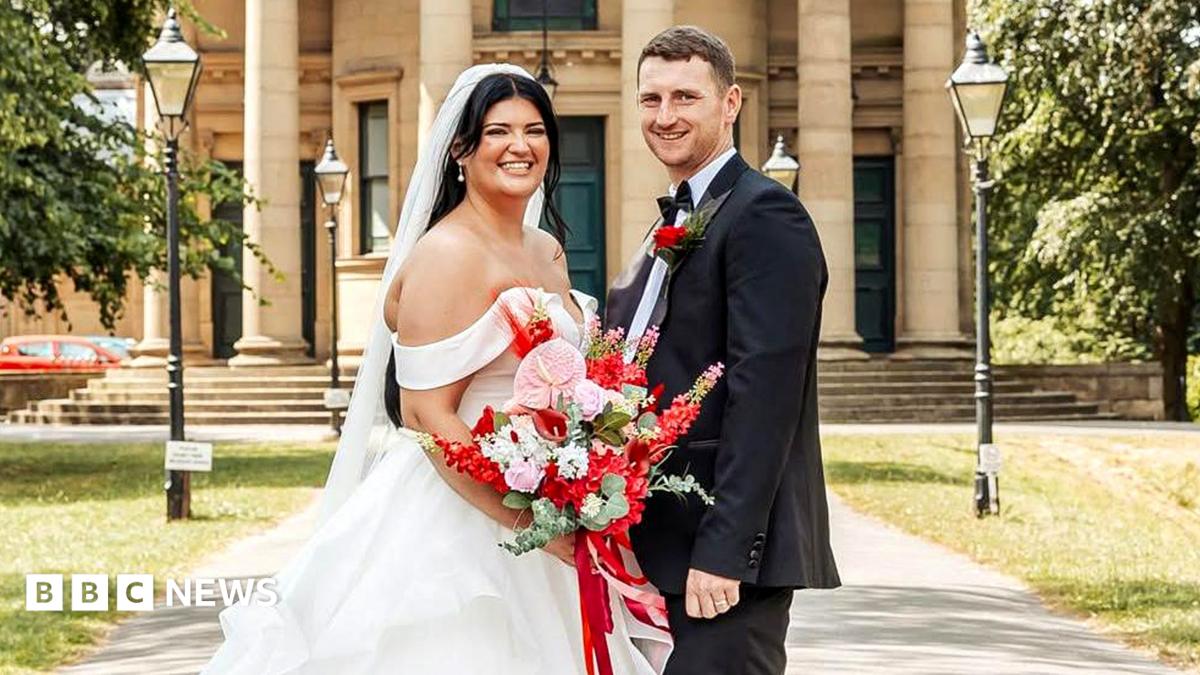
Sourcing some additional fans might feel like a relatively minor cost overall, but for those hosting, catering and supplying weddings, the financial impact of coping with this summer's heatwaves has spiralled.
"It has affected the industry massively. You are talking into the thousands [of pounds] for businesses," says Michelle Miles, board adviser to the UK Wedding Association and founder of the Sustainable Wedding Alliance.
One of the biggest costs wedding venues are facing is the equipment and energy costs of trying to keep a space and food cool, she says.
"[Some] venues are having to bring in air conditioning units; they are at a premium when everyone else is wanting those units to keep their houses cool and businesses."
Guests are also drinking more water - which brings another issue for venues.
"There has been a massive hit on alcohol sales. Venues would quite often rely on these to boost their profits, and people are...not drinking alcoholic drinks as much as they would on a temperate day," says Miles.
It is not just the wedding party wilting in the heat but also the flowers. Peonies and roses - some of the most popular choices for a British wedding – saw their flowering window narrow from two months to two weeks.
"It has been an extremely tough growing season with water shortages, drought, no rainfall, slow germination in the heat, flowers going over too quickly," explains Rebecca, from Lilac and Lace Floral Design.
For a recent wedding, she had to go to three times as many growers to get enough stems.
"For now, it's more a time cost than a direct financial one. But using more growers often [has] larger delivery costs - I would estimate it costs £200 more in delivery."
Sarah Haywood has been a wedding planner for more than two decades and says she's seen a shift in the calendar.
"Over the last decade we have been advising people to avoid the heat of July and August [particularly] for destination weddings. And we're busier on what we call the 'shoulder season' which starts earlier and finishes later in the year."
Typically, the shoulder season would be June and September, but she said this is now reaching into October.
The 2026 UK Wedding Report from Bridebook showed that there are significant increases in October weddings in the year following a hotter than average summer.
Couples book their weddings on average 12 to 18 months ahead and some already locked are now looking at shifting the date.
Marie Cavanagh is due to get married in Kent at the start of July.
"The recent heatwaves have made me think a little bit differently…we will definitely be factoring [the heat] into what we are selecting to wear," she says.
Sophie Miller, a stylist at Dotty Bridal in West Yorkshire, said suggestions they have previously made to brides getting married in hotter, overseas locations, can also be applied to the UK.
"We would recommend against a sleeve, lighter fabrics…and with ballgown [dresses] we would suggest putting a hoop in the dress to hold it off your skin."
She said some designers are now innovating fabrics with zinc oxide to make the material feel cooler to the touch.
Read the full story at BBC ↗
Rising summer temperatures are reshaping UK wedding logistics and economics. Venues face significant costs for cooling equipment and energy, with air conditioning units commanding premium prices during peak demand. Florists report compressed growing seasons—popular varieties like peonies and roses now flower for two weeks instead of two months—forcing multiple supplier visits and higher delivery costs. The industry is observing a calendar shift: couples planning 12–18 months ahead increasingly book for June, September, and October rather than July and August. Wedding planners report busier shoulder seasons extending earlier and later into the year. Guest behaviour is also changing: increased water consumption and reduced alcohol purchases are reshaping venue revenue patterns. Simultaneously, wedding fashion is adapting, with designers offering lighter fabrics, sleeveless cuts, and zinc oxide-treated materials designed to feel cooler to the touch.
Read the full story at BBC ↗
Sourcing some additional fans might feel like a relatively minor cost overall, but for those hosting, catering and supplying weddings, the financial impact of coping with this summer's heatwaves has spiralled.
"It has affected the industry massively. You are talking into the thousands [of pounds] for businesses," says Michelle Miles, board adviser to the UK Wedding Association and founder of the Sustainable Wedding Alliance.
One of the biggest costs wedding venues are facing is the equipment and energy costs of trying to keep a space and food cool, she says.
"[Some] venues are having to bring in air conditioning units; they are at a premium when everyone else is wanting those units to keep their houses cool and businesses."
Guests are also drinking more water - which brings another issue for venues.
"There has been a massive hit on alcohol sales. Venues would quite often rely on these to boost their profits, and people are...not drinking alcoholic drinks as much as they would on a temperate day," says Miles.
It is not just the wedding party wilting in the heat but also the flowers. Peonies and roses - some of the most popular choices for a British wedding – saw their flowering window narrow from two months to two weeks.
"It has been an extremely tough growing season with water shortages, drought, no rainfall, slow germination in the heat, flowers going over too quickly," explains Rebecca, from Lilac and Lace Floral Design.
For a recent wedding, she had to go to three times as many growers to get enough stems.
"For now, it's more a time cost than a direct financial one. But using more growers often [has] larger delivery costs - I would estimate it costs £200 more in delivery."
Sarah Haywood has been a wedding planner for more than two decades and says she's seen a shift in the calendar.
"Over the last decade we have been advising people to avoid the heat of July and August [particularly] for destination weddings. And we're busier on what we call the 'shoulder season' which starts earlier and finishes later in the year."
Typically, the shoulder season would be June and September, but she said this is now reaching into October.
The 2026 UK Wedding Report from Bridebook showed that there are significant increases in October weddings in the year following a hotter than average summer.
Couples book their weddings on average 12 to 18 months ahead and some already locked are now looking at shifting the date.
Marie Cavanagh is due to get married in Kent at the start of July.
"The recent heatwaves have made me think a little bit differently…we will definitely be factoring [the heat] into what we are selecting to wear," she says.
Sophie Miller, a stylist at Dotty Bridal in West Yorkshire, said suggestions they have previously made to brides getting married in hotter, overseas locations, can also be applied to the UK.
"We would recommend against a sleeve, lighter fabrics…and with ballgown [dresses] we would suggest putting a hoop in the dress to hold it off your skin."
She said some designers are now innovating fabrics with zinc oxide to make the material feel cooler to the touch.
Read the full story at BBC ↗
Heatwaves have cost wedding industry businesses thousands of pounds in additional equipment and energy expenses Air conditioning units are at a premium when many businesses and households simultaneously need cooling Peonies and roses have seen their flowering window narrow from two months to two weeks due to heat and drought conditions Florists report needing to source from three times as many growers to secure sufficient stems for weddings Additional delivery costs from multiple suppliers amount to approximately £200 per wedding Wedding planners report advising couples to avoid July and August heat, particularly for destination weddings October weddings show significant increases in the year following hotter than average summers Guests are drinking more water and less alcohol at heatwave weddings Reduced alcohol sales significantly impact venue profit margins that traditionally depend on these sales Heatwaves are 'massively' affecting the wedding industry The recent growing season has been 'extremely tough' for florists
Read the full story at BBC ↗
- Heatwaves are adding thousands of pounds to UK wedding costs through equipment, cooling units, and catering challenges
- Flower suppliers face shorter growing windows; popular varieties like peonies now bloom for two weeks instead of two months
- Couples are shifting wedding dates toward shoulder seasons (June, September, October) rather than July-August, with 2026 data showing increased October bookings
- Wedding attire is evolving with lighter fabrics, sleeveless designs, and zinc oxide-treated materials to manage heat
- Venues report reduced alcohol sales as guests prioritize hydration, affecting traditional profit margins