Trump’s policy mayhem is making even the Maga faithful consider walking away
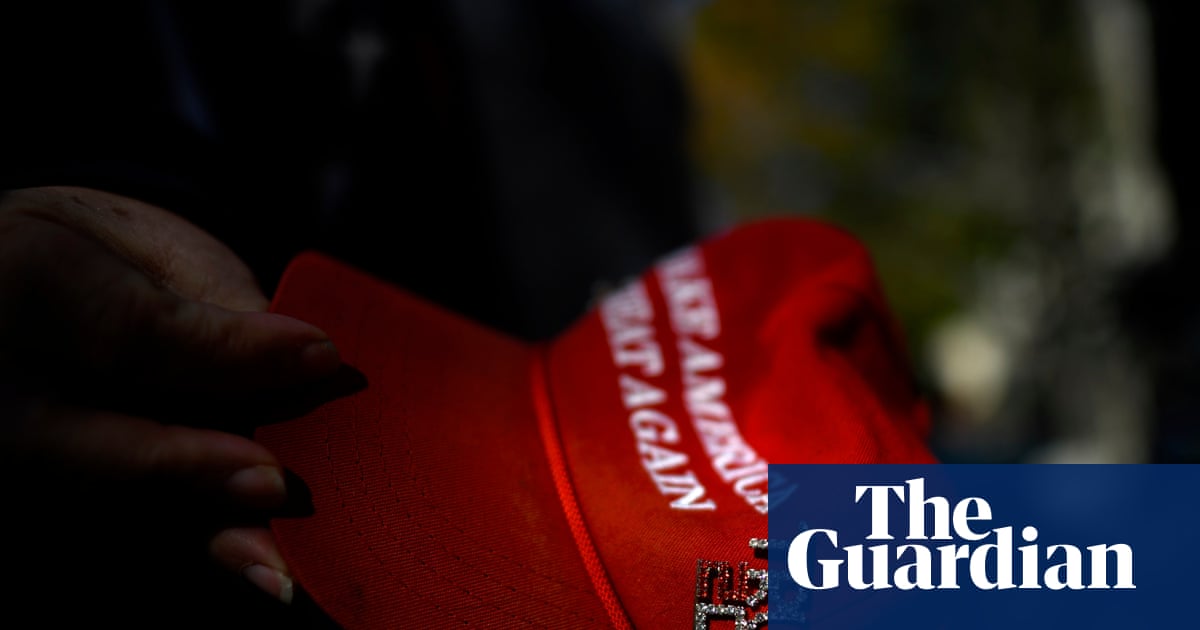
The political consequences of Donald Trump’s policy mayhem are now coming into view: “Maga” America is getting pissed.
It has been a sight to see how every one of the president’s policy initiatives has sabotaged some core constituency or other. From farmers and rural Americans to manufacturing workers and every American struggling to make ends meet, Trump has torched pretty much his entire political base. For all his efforts to rig the midterm elections in his favor, it’s as if he is daring the Maga faithful to drop him.
And now, according to the most recent survey by Harris for the Guardian, even voters who identify as foot soldiers of the president’s political army are becoming impatient with the state of affairs, increasingly willing to blame the government for their economic troubles.
About 56% of respondents who identified as members of the Maga coalition said they were either having trouble meeting their debt payments or worried they would be struggling soon. The same share admitted similar troubles meeting housing payments. 57% said the same about affording healthcare costs. 58% claimed the same about their utility bills, 61% about affording groceries, 63% about paying for gas.
Many of these stressors stem from Trump’s policy preferences. Trump’s decision to end government subsidies is largely at fault for the rising cost of health insurance. The rise in energy costs and rebound of inflation since March are direct consequences of Iran’s throttling of the Strait of Hormuz. Resurgent inflation interrupted the Federal Reserve’s campaign to ease monetary policy and interrupted the gradual decline in mortgage rates. Manufacturers have culled nearly 100,000 jobs since Trump took office, in part due to Trump’s tariffs. Farmers have been whacked by higher costs of energy, fertilizer and machinery.
Rural Americans voted for Trump by a margin of 40 percentage points in November of 2024. According to the Harris poll for the Guardian, 49% of them now say their personal financial security is getting worse. That is even more than the 42% of Americans in rural areas who claimed their personal finances were deteriorating in the Harris poll taken in April last year, a few weeks after “liberation day”, when Trump imposed tariffs on everybody and sent financial markets around the world into a tailspin.
Similarly, in the latest poll, 45% of Americans with less than a four-year college degree reported a worsening financial situation, up from 42% in April of 2025.
These constituencies are at the core of the Maga movement. And they are losing patience with the justifications for Trump’s destructive policies: 54% of Maga faithful think the government is the most responsible for the rising prices of goods and services. Contrary to the repeated claims from the White House, 41% of them believe economists’ observation that American consumers bear most of the costs of Trump’s tariffs. Only 31% buy Trump’s argument that foreigners pick up the tab.
Maga voters have not abandoned the president. By recent counts, 62% of rank-and-file Republicans identify as Maga, up from only 38% in September of 2022. 57% of them trust that the government considers the affordability crisis a top priority. And 69% believe the government is capable of fixing it. Still, misgivings are creeping in: just over a third of Maga faithful think the government has made it worse.
Beyond the growing angst among Trump’s most loyal followers, what should most worry the president is the brewing discontent outside the borders of his base, which is still a minority of the overall electorate. If Maga Republicans are finding themselves at odds with their leader, other voters – including many Republicans – have an even more jaundiced view of his endeavors.
The share of Republicans – Maga or not – who believe the economy is getting worse hit 38% in the latest Harris poll, up from 33% of Republicans surveyed in April last year. The share of Republicans who think the economy is getting better declined from a year ago, from 31% to 27%. The opinion of independent voters is probably the best barometer of where the electorate, on average, will land in the fall. Forty-four per cent think their financial security is deteriorating, almost three times the share who believe it is getting better.
In July, just four months before the midterm elections, these signs of voter discontent all the way through to Trump’s core partisans might presage a devastating Blue Wave to dramatically reconfigure the political profile of Congress. And yet, for all the damage caused by Trump’s policies on the American people, Americans are not quite convinced that Democrats would do any better.
Among Americans who feel stressed by an affordability crisis, only 26% think Democrats can fix it, just a tad more than the 25% who think Republicans can do it. 36% think neither is up to the task. Americans’ may have lost patience with Trump’s destructive politics. But Democrats have not made an attractive counteroffer. They remain, it seems, hobbled by the memory of their economic mismanagement when inflation rebounded during the Biden administration.
And that leaves American politics in an ambiguous place – shaped by voters who are losing patience with Trump’s whimsical policy grab bag and yet unwilling to give Democrats the benefit of the doubt. This suggests Democrats have an enormous opportunity to put forth an economic strategy that might undo some of the pain caused by the current administration. Hopefully, they can figure out what that is.
Read the full story at The Guardian ↗
Recent polling indicates financial stress among voters who identify with Trump's political movement. Majorities report difficulty meeting payments for debt, housing, healthcare, utilities, groceries and fuel. Rural voters and those without four-year degrees—groups that supported Trump heavily—report deteriorating finances at elevated rates compared to earlier in 2025. These constituencies cite policy effects including manufacturing job losses linked to tariffs, rising energy costs, and reduced government health subsidies. While 62% of Republicans identify as 'Maga' and majorities still trust the government's stated commitment to affordability, only about a third believe the government has worsened conditions. Outside Trump's base, majorities of Republicans, independents and overall Americans express economic pessimism. However, voters show similar skepticism toward Democratic economic solutions. The political outcome remains uncertain given widespread economic dissatisfaction paired with low confidence in either party's remedies.
Read the full story at The Guardian ↗
The political consequences of Donald Trump’s policy mayhem are now coming into view: “Maga” America is getting pissed.
It has been a sight to see how every one of the president’s policy initiatives has sabotaged some core constituency or other. From farmers and rural Americans to manufacturing workers and every American struggling to make ends meet, Trump has torched pretty much his entire political base. For all his efforts to rig the midterm elections in his favor, it’s as if he is daring the Maga faithful to drop him.
And now, according to the most recent survey by Harris for the Guardian, even voters who identify as foot soldiers of the president’s political army are becoming impatient with the state of affairs, increasingly willing to blame the government for their economic troubles.
About 56% of respondents who identified as members of the Maga coalition said they were either having trouble meeting their debt payments or worried they would be struggling soon. The same share admitted similar troubles meeting housing payments. 57% said the same about affording healthcare costs. 58% claimed the same about their utility bills, 61% about affording groceries, 63% about paying for gas.
Many of these stressors stem from Trump’s policy preferences. Trump’s decision to end government subsidies is largely at fault for the rising cost of health insurance. The rise in energy costs and rebound of inflation since March are direct consequences of Iran’s throttling of the Strait of Hormuz. Resurgent inflation interrupted the Federal Reserve’s campaign to ease monetary policy and interrupted the gradual decline in mortgage rates. Manufacturers have culled nearly 100,000 jobs since Trump took office, in part due to Trump’s tariffs. Farmers have been whacked by higher costs of energy, fertilizer and machinery.
Rural Americans voted for Trump by a margin of 40 percentage points in November of 2024. According to the Harris poll for the Guardian, 49% of them now say their personal financial security is getting worse. That is even more than the 42% of Americans in rural areas who claimed their personal finances were deteriorating in the Harris poll taken in April last year, a few weeks after “liberation day”, when Trump imposed tariffs on everybody and sent financial markets around the world into a tailspin.
Similarly, in the latest poll, 45% of Americans with less than a four-year college degree reported a worsening financial situation, up from 42% in April of 2025.
These constituencies are at the core of the Maga movement. And they are losing patience with the justifications for Trump’s destructive policies: 54% of Maga faithful think the government is the most responsible for the rising prices of goods and services. Contrary to the repeated claims from the White House, 41% of them believe economists’ observation that American consumers bear most of the costs of Trump’s tariffs. Only 31% buy Trump’s argument that foreigners pick up the tab.
Maga voters have not abandoned the president. By recent counts, 62% of rank-and-file Republicans identify as Maga, up from only 38% in September of 2022. 57% of them trust that the government considers the affordability crisis a top priority. And 69% believe the government is capable of fixing it. Still, misgivings are creeping in: just over a third of Maga faithful think the government has made it worse.
Beyond the growing angst among Trump’s most loyal followers, what should most worry the president is the brewing discontent outside the borders of his base, which is still a minority of the overall electorate. If Maga Republicans are finding themselves at odds with their leader, other voters – including many Republicans – have an even more jaundiced view of his endeavors.
The share of Republicans – Maga or not – who believe the economy is getting worse hit 38% in the latest Harris poll, up from 33% of Republicans surveyed in April last year. The share of Republicans who think the economy is getting better declined from a year ago, from 31% to 27%. The opinion of independent voters is probably the best barometer of where the electorate, on average, will land in the fall. Forty-four per cent think their financial security is deteriorating, almost three times the share who believe it is getting better.
In July, just four months before the midterm elections, these signs of voter discontent all the way through to Trump’s core partisans might presage a devastating Blue Wave to dramatically reconfigure the political profile of Congress. And yet, for all the damage caused by Trump’s policies on the American people, Americans are not quite convinced that Democrats would do any better.
Among Americans who feel stressed by an affordability crisis, only 26% think Democrats can fix it, just a tad more than the 25% who think Republicans can do it. 36% think neither is up to the task. Americans’ may have lost patience with Trump’s destructive politics. But Democrats have not made an attractive counteroffer. They remain, it seems, hobbled by the memory of their economic mismanagement when inflation rebounded during the Biden administration.
And that leaves American politics in an ambiguous place – shaped by voters who are losing patience with Trump’s whimsical policy grab bag and yet unwilling to give Democrats the benefit of the doubt. This suggests Democrats have an enormous opportunity to put forth an economic strategy that might undo some of the pain caused by the current administration. Hopefully, they can figure out what that is.
Read the full story at The Guardian ↗
A Harris poll for the Guardian surveyed voters identifying as part of Trump's political movement Majorities reported difficulty meeting or worry about debt (56%), housing (56%), healthcare (57%), utility (58%), grocery (63%), and fuel (61%) payments In rural areas, 49% reported worsening financial security in the latest poll, compared to 42% in April 2025 45% of Americans without four-year degrees reported worsening finances, up from 42% in April 2025 54% of Maga-identifying voters attributed rising prices primarily to government responsibility 41% of Maga voters believe American consumers bear most tariff costs; 31% accept the White House claim that foreigners bear them 62% of Republicans identify as Maga; 57% trust government prioritizes affordability; 69% believe government can fix it; 33% think government has made things worse 38% of all Republicans believe the economy is worsening, up from 33% in April 2025 44% of independent voters report deteriorating financial security Among voters stressed by affordability, 26% trust Democrats to fix it versus 25% for Republicans; 36% trust neither Trump's policies have directly caused these economic pressures through tariffs, ended subsidies and inflation effects These poll results presage a 'devastating Blue Wave' in midterm elections Democrats have an 'enormous opportunity' to present an economic strategy
Read the full story at The Guardian ↗
- A Harris poll shows majorities of Trump-identifying 'Maga' voters report financial stress across debt, housing, healthcare, utilities, groceries and fuel costs
- Rural Americans and less-educated voters—core Trump constituencies—report worsening personal finances at higher rates than in April 2025
- Trump's policies (tariff-driven job losses, ended subsidies, inflation effects) correlate with these economic pressures, though voters remain uncertain both parties can solve the affordability crisis