‘Why take those jobs away?’: the unionized workers decrying Trump’s war on wind
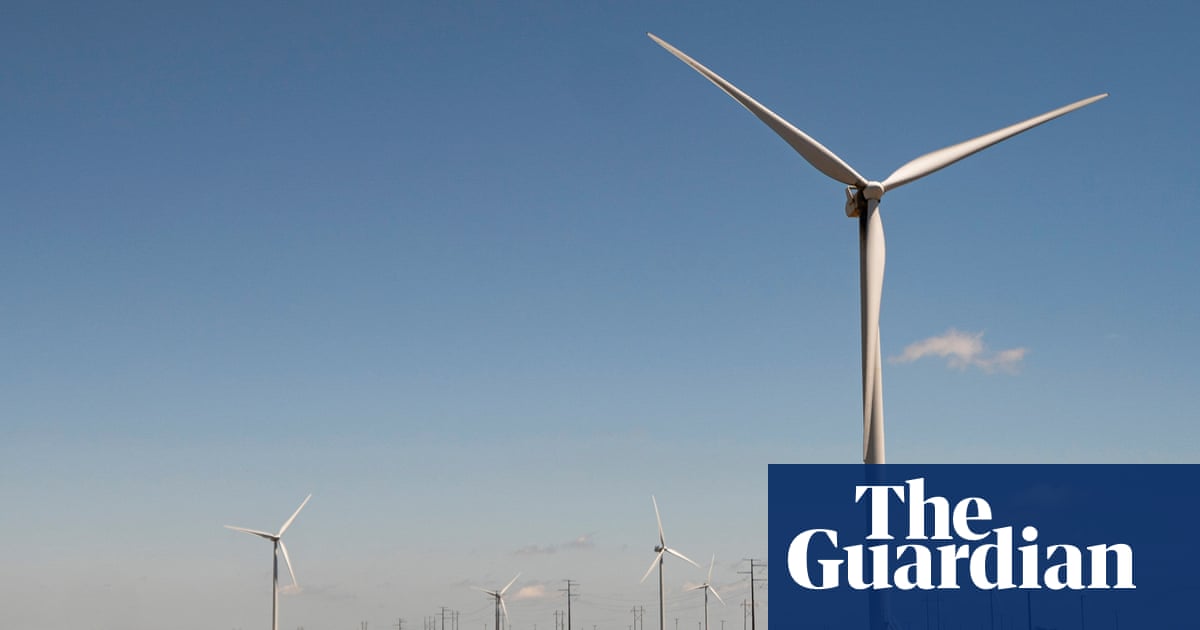
Donald Trump has blamed everything – from “national security” issues, the deaths of birds and whales, and cancer – in his decades-long campaign against windfarms. But as the Trump administration continues to undermine the industry, what worries workers most are their jobs.
Since taking office for the second term, Trump has issued an executive order aiming to halt all wind-energy leases and permits, attempted to issue stop-work orders on wind projects under construction, and paid more than $2.6bn in settlements to buy out wind energy leases. And hundreds of workers have been affected.
Thomas Kilday, a furnace electrician with IBEW local 99 in Providence, Rhode Island, was in the midst of a four-week shift onboard a vessel off the Atlantic coast working on the Revolution Wind Project in August last year when the Trump administration issued a stop-work order on the project.
“No one really knew what was going on. We didn’t know what it meant for us. We just knew that everything was up in the air,” said Kilday. “You plan your whole life around being gone for 28 days, and to come out here and have it thrown up in the air, worrying what does this mean for me, for my pay for the next four weeks, what’s going to happen? There’s a lot of uncertainty.”
Construction on the project is done on shifts of 28 days on and 28 days off, with workers residing on a vessel on the ocean and taking helicopters to work on the turbines.
A federal court granted an injunction to block the stop-work order in September last year. In December, the Trump administration issued another 90-day stop-work order, citing national security, before a second judge issued an injunction in January.
When the second stop-work order was issued, Kilday was celebrating Christmas with his family and preparing for another four-week shift.
“That was really difficult,” he said. “I just spent a bunch of money on Christmas gifts for my family, and it was not what I wanted to be thinking about. Six months out of the year we’re away from home, and for what little time we do have at home, not to be able to spend just focus all of that time and energy on our families, it’s tough. It’s not a great feeling to be worried about your job when you’re supposed to be home.”
“We’re proud of the work that we do out here, and we want to be able to continue to do it. We think it’s important work,” added Kilday. “When I’m at home, and I drive down my street, I look up at those power lines. I helped create the power that’s running through those power lines, and I’m proud of that.”
Revolution Wind announced in March that it began delivering power to New England, citing the work of more than 1,000 local union workers, and is expected to power over 350,000 homes and businesses. The project’s construction is over 90% complete.
In Jine, the Trump administration abandoned an effort to try to halt all wind projects and leases across the US, giving up a challenge in court to a judge tossing Trump’s executive order to freeze all permitting and leasing for wind projects.
Instead, the Trump administration has opted to buy out wind project leases.
Trump’s Department of Interior has completed four deals so far to cancel wind project leases, paying energy corporations a sum of more than $2.6bn, including paying $765m to Invenergy to abandon four wind projects in California, New York, and Maine and nearly $900m to Bluepoint Wind and Garden State Wind to cancel offshore wind leases in New York and California.
“I think it’s a foolish policy that the Trump administration is engaging in trying to buy out these leases,” Pat Crowley, president of the Rhode Island AFL-CIO, told the Guardian. “These projects are not only helping to reduce our carbon emissions, they’re providing good-paying union jobs for thousands.”
Crowley said that workers would have had long-term job stability from working on these projects. He noted the Trump administration has lost in court in its attempts to issue stop-work orders on five wind projects in the Rhode Island area.
“We’re five for five taking on the Trump administration,” he said. “What the Trump administration is doing is just throwing money away for the sake of their ideology.”
Will Gonzalez, a construction laborer with the Laborers’ local 385 in Fairhaven, Massachusetts, worked on the Vinyard Wind 1 project off the coast of Martha’s Vineyard, a project the Trump administration attempted to halt in January. The project is now completed and fully operational.
He criticized the Trump administration’s efforts to halt wind turbine projects, claiming the opposition from Trump stems from his experiences trying to stop a wind turbine project near his golf course in Scotland, losing an appeal in December 2015.
“It’s a personal vendetta,” said Gonzalez. “Good union jobs – we shouldn’t be trying to take those off the table. That just doesn’t make any kind of sense. Families obviously need good jobs … why take those jobs away?”
Gonzalez said he and his co-workers are leaving training and certifications unused because of the halting of wind power projects.
“All of us that worked on that Vinyard Wind 1, obviously, we would have loved to segue right into another project,” he said. “We’re fully trained, ready to go, willing and able, so it directly affected us. But you move on. You [have] got to move on. You can’t sit and dwell on that, because that’s not going to pay the bills.”
The White House directed comment to the Department of Interior.
A spokesperson for the department denied the cancellation and stop-work orders of projects have had any impact on jobs, even on projects under construction when halted. The spokesperson did not respond to a question asking for clarification and did not comment on Trump’s prior animus toward wind turbine projects involving his golf courses.
“No jobs were eliminated because none of these leases were operational or supporting employment,” the spokesperson said.
“Rather than waiting years for the projects to materialize, the Trump administration is prioritizing investments in existing infrastructure and functioning supply chains that can create jobs now and deliver economic benefits faster.
“This approach puts more people to work more quickly, using proven, affordable, and reliable energy rather than relying on projects tied to leases that were not producing jobs in the first place.”
Read the full story at The Guardian ↗
The Trump administration has pursued multiple strategies to restrict wind energy development. Since taking office, it issued an executive order halting wind leases and permits, attempted stop-work orders on projects under construction, and authorized $2.6 billion in payments to cancel existing wind project leases. Federal courts have blocked several of these stop-work orders. Unionized workers report significant job disruption—including those mid-shift on offshore vessels and those with newly completed training certifications. Two major projects, Revolution Wind and Vineyard Wind 1, have proceeded despite administration actions or are now operational. The administration argues these buyouts accelerate job creation through existing infrastructure. The administration did not provide evidence to support claims that no jobs were affected.
Read the full story at The Guardian ↗
Donald Trump has blamed everything – from “national security” issues, the deaths of birds and whales, and cancer – in his decades-long campaign against windfarms. But as the Trump administration continues to undermine the industry, what worries workers most are their jobs.
Since taking office for the second term, Trump has issued an executive order aiming to halt all wind-energy leases and permits, attempted to issue stop-work orders on wind projects under construction, and paid more than $2.6bn in settlements to buy out wind energy leases. And hundreds of workers have been affected.
Thomas Kilday, a furnace electrician with IBEW local 99 in Providence, Rhode Island, was in the midst of a four-week shift onboard a vessel off the Atlantic coast working on the Revolution Wind Project in August last year when the Trump administration issued a stop-work order on the project.
“No one really knew what was going on. We didn’t know what it meant for us. We just knew that everything was up in the air,” said Kilday. “You plan your whole life around being gone for 28 days, and to come out here and have it thrown up in the air, worrying what does this mean for me, for my pay for the next four weeks, what’s going to happen? There’s a lot of uncertainty.”
Construction on the project is done on shifts of 28 days on and 28 days off, with workers residing on a vessel on the ocean and taking helicopters to work on the turbines.
A federal court granted an injunction to block the stop-work order in September last year. In December, the Trump administration issued another 90-day stop-work order, citing national security, before a second judge issued an injunction in January.
When the second stop-work order was issued, Kilday was celebrating Christmas with his family and preparing for another four-week shift.
“That was really difficult,” he said. “I just spent a bunch of money on Christmas gifts for my family, and it was not what I wanted to be thinking about. Six months out of the year we’re away from home, and for what little time we do have at home, not to be able to spend just focus all of that time and energy on our families, it’s tough. It’s not a great feeling to be worried about your job when you’re supposed to be home.”
“We’re proud of the work that we do out here, and we want to be able to continue to do it. We think it’s important work,” added Kilday. “When I’m at home, and I drive down my street, I look up at those power lines. I helped create the power that’s running through those power lines, and I’m proud of that.”
Revolution Wind announced in March that it began delivering power to New England, citing the work of more than 1,000 local union workers, and is expected to power over 350,000 homes and businesses. The project’s construction is over 90% complete.
In Jine, the Trump administration abandoned an effort to try to halt all wind projects and leases across the US, giving up a challenge in court to a judge tossing Trump’s executive order to freeze all permitting and leasing for wind projects.
Instead, the Trump administration has opted to buy out wind project leases.
Trump’s Department of Interior has completed four deals so far to cancel wind project leases, paying energy corporations a sum of more than $2.6bn, including paying $765m to Invenergy to abandon four wind projects in California, New York, and Maine and nearly $900m to Bluepoint Wind and Garden State Wind to cancel offshore wind leases in New York and California.
“I think it’s a foolish policy that the Trump administration is engaging in trying to buy out these leases,” Pat Crowley, president of the Rhode Island AFL-CIO, told the Guardian. “These projects are not only helping to reduce our carbon emissions, they’re providing good-paying union jobs for thousands.”
Crowley said that workers would have had long-term job stability from working on these projects. He noted the Trump administration has lost in court in its attempts to issue stop-work orders on five wind projects in the Rhode Island area.
“We’re five for five taking on the Trump administration,” he said. “What the Trump administration is doing is just throwing money away for the sake of their ideology.”
Will Gonzalez, a construction laborer with the Laborers’ local 385 in Fairhaven, Massachusetts, worked on the Vinyard Wind 1 project off the coast of Martha’s Vineyard, a project the Trump administration attempted to halt in January. The project is now completed and fully operational.
He criticized the Trump administration’s efforts to halt wind turbine projects, claiming the opposition from Trump stems from his experiences trying to stop a wind turbine project near his golf course in Scotland, losing an appeal in December 2015.
“It’s a personal vendetta,” said Gonzalez. “Good union jobs – we shouldn’t be trying to take those off the table. That just doesn’t make any kind of sense. Families obviously need good jobs … why take those jobs away?”
Gonzalez said he and his co-workers are leaving training and certifications unused because of the halting of wind power projects.
“All of us that worked on that Vinyard Wind 1, obviously, we would have loved to segue right into another project,” he said. “We’re fully trained, ready to go, willing and able, so it directly affected us. But you move on. You [have] got to move on. You can’t sit and dwell on that, because that’s not going to pay the bills.”
The White House directed comment to the Department of Interior.
A spokesperson for the department denied the cancellation and stop-work orders of projects have had any impact on jobs, even on projects under construction when halted. The spokesperson did not respond to a question asking for clarification and did not comment on Trump’s prior animus toward wind turbine projects involving his golf courses.
“No jobs were eliminated because none of these leases were operational or supporting employment,” the spokesperson said.
“Rather than waiting years for the projects to materialize, the Trump administration is prioritizing investments in existing infrastructure and functioning supply chains that can create jobs now and deliver economic benefits faster.
“This approach puts more people to work more quickly, using proven, affordable, and reliable energy rather than relying on projects tied to leases that were not producing jobs in the first place.”
Read the full story at The Guardian ↗
Trump administration issued an executive order to halt all wind-energy leases and permits, attempted stop-work orders on wind projects under construction, and paid $2.6bn to buy out wind energy leases Thomas Kilday, a furnace electrician with IBEW local 99, was working on Revolution Wind Project when a stop-work order was issued, causing uncertainty about his pay and schedule Federal courts granted injunctions blocking stop-work orders in September and January Revolution Wind announced in March it began delivering power to New England, citing work by over 1,000 local union workers, and is expected to power over 350,000 homes and businesses with construction over 90% complete Trump Department of Interior completed four lease cancellation deals totaling $2.6bn, including $765m to Invenergy and nearly $900m to Bluepoint Wind and Garden State Wind Pat Crowley, president of Rhode Island AFL-CIO, stated the policy is foolish and said workers lost long-term job stability Will Gonzalez, a construction laborer, characterized Trump's opposition to wind projects as a personal vendetta stemming from his golf course dispute in Scotland Gonzalez stated good union jobs should not be taken off the table and that trained workers are unable to continue their careers Trump administration spokesperson claimed no jobs were eliminated because leases were not operational or supporting employment Trump administration stated it is prioritizing investments in existing infrastructure and functioning supply chains to create jobs faster
Read the full story at The Guardian ↗
- Trump administration has issued executive orders and stop-work orders against wind projects, and spent $2.6bn buying out wind energy leases since taking office in his second term
- Unionized workers on projects like Revolution Wind and Vineyard Wind report job uncertainty and lost opportunities due to project halts and cancellations
- Revolution Wind project is over 90% complete and has begun delivering power to New England using over 1,000 union workers; Vineyard Wind 1 is fully operational
- Federal courts have blocked multiple Trump administration stop-work orders on wind projects, including five in the Rhode Island area
- Trump administration argues wind lease buyouts prioritize faster job creation through existing infrastructure rather than waiting for projects to materialize