US wants Iran to pledge to stop shooting at ships in Strait of Hormuz
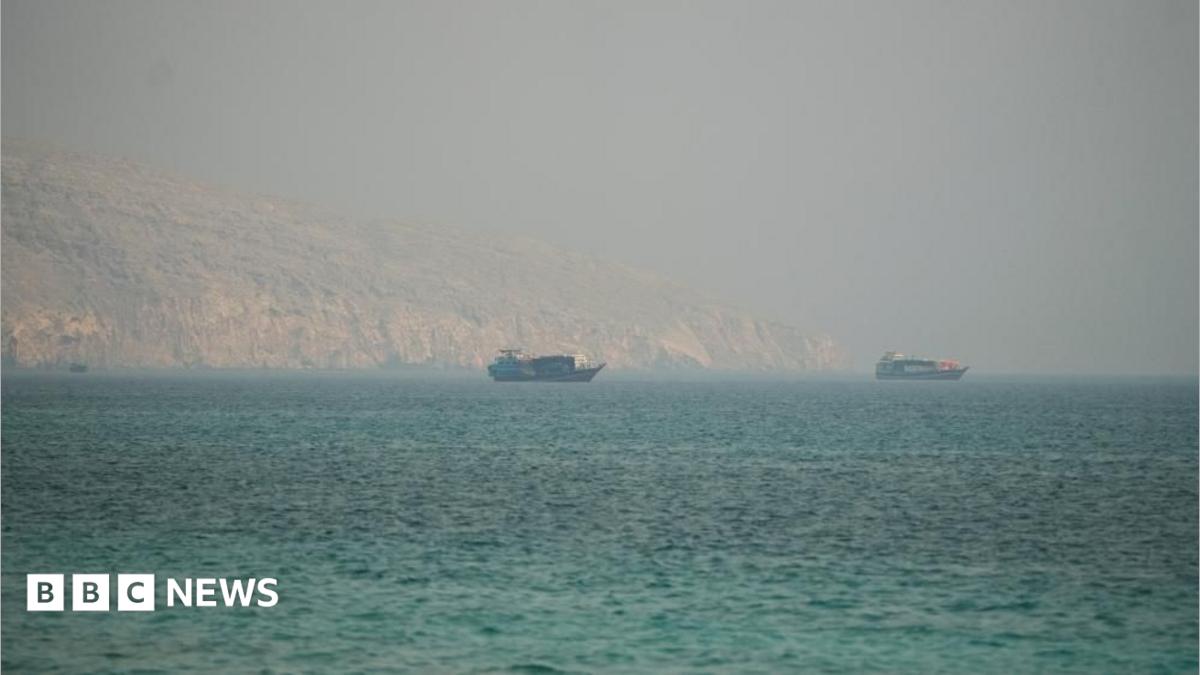
In June, the US and Iran signed a ceasefire agreement where Iran would, in part, give safe passage to commercial ships.
Tehran said that an "errant" sect of hardliners was trying to undermine negotiations by firing on the commercial ships, senior US officials told CBS News, the BBC's US partner.
One official told the TV network: "They [the Iranians] came back to the table and said, 'We screwed up. We made a mistake. Let's keep talking.'"
Vice-President JD Vance, Secretary of State Marco Rubio and two people who have been heavily involved in Middle East talks - special envoy Steve Witkoff and Trump's son-in-law Jared Kushner - are expected to arrive in Oman later on Saturday.
Araghchi is also in the Gulf Arab state for talks with Omani officials.
During previous negotiations, the US and Iran have held indirect talks with Pakistani or Qatari mediators.
In a briefing for reporters on Friday, the US officials said a message to Tehran's leadership had been conveyed through regional mediators demanding Iran release a statement declaring the strait open and that it will stop shooting at commercial ships, according to multiple media reports.
"They're either going to give us that statement or we're not having a good outcome for them," said one official, quoted by Reuters news agency.
The White House also wants Iran to publicly acknowledge that firing on the shipping was a mistake, CBS reports.
Meanwhile, a delegation from Qatar travelled to Iran on Friday for talks aimed at defusing tensions and easing navigation through the Strait of Hormuz.
Trump wrote in a post on Truth Social earlier on Friday: "The Islamic Republic of Iran has asked us to continue 'talks.'
"We have agreed to do so, but the United States has stated to them, in no uncertain terms, that the Cease Fire is OVER!"
In the early hours of Saturday, Trump also responded to reports that Iran had plans to assassinate him.
Writing on Truth Social, he said that the US army would "completely decimate and destroy all areas" of the country in retaliation to such an attack.
The Wall Street Journal and other US media reported this week that Israel had shared intelligence with Washington that Iran had recently devised a plan to assassinate the US president.
However, Trump denied that Tehran had made a fresh plan or that Israel was the source of any intelligence. He told the New York Post in an interview that he had been "No. 1 [on Iran's kill list] for a long time".
There were also open calls for Trump's death at the funeral of Iran's late Supreme leader Ayatollah Ali Khamenei.
Khamenei, who was buried this week, was killed in an Israeli strike on his residence in Tehran on 28 February, the first day of Iran's war with the US and Israel.
On Saturday, Iran's supreme leader Mojtaba Khamenei released a written message that said vengeance for his father's killing was "inevitable".
In the first statement since his father's funeral, he said the "matter depends neither on my personal existence nor on that of other officials. Whether we are present or not, it will come to pass."
No fresh attacks were reported on Friday after fighting broke out in the Gulf region earlier this week, marking the worst exchange of fire between the US and Iran since the two nations signed an interim deal in June.
Three ships were struck while using a US-recommended route through Omani waters. Iran has repeatedly said the only "safe" passage is a separate route through its waters.
Overall progress came last month when the US and Iran agreed on a 14-point memorandum of understanding, which was aimed at extending a ceasefire and ending conflict "on all fronts".
As part of the agreement Iran and Oman must hold talks "to define the future administration and maritime services" in the strait with other Gulf states.
During the conflict, Iran sought to assert its sovereignty over the strait, including by establishing the "Persian Gulf Strait Authority", which it said would manage "safe passage permits".
Iran's Fars news agency has reported that under the new deal with the US the strait would ultimately be managed by Iran in co-ordination with Oman, including possible "service fees" for ships to transit the waterway.
Read the full story at BBC ↗
Vice-President JD Vance is among US officials expected to take part in negotiations resuming on Saturday in Oman
This lens runs the verified story through Cinnamon's AI — wired in the next step.
In June, the US and Iran signed a ceasefire agreement where Iran would, in part, give safe passage to commercial ships.
Tehran said that an "errant" sect of hardliners was trying to undermine negotiations by firing on the commercial ships, senior US officials told CBS News, the BBC's US partner.
One official told the TV network: "They [the Iranians] came back to the table and said, 'We screwed up. We made a mistake. Let's keep talking.'"
Vice-President JD Vance, Secretary of State Marco Rubio and two people who have been heavily involved in Middle East talks - special envoy Steve Witkoff and Trump's son-in-law Jared Kushner - are expected to arrive in Oman later on Saturday.
Araghchi is also in the Gulf Arab state for talks with Omani officials.
During previous negotiations, the US and Iran have held indirect talks with Pakistani or Qatari mediators.
In a briefing for reporters on Friday, the US officials said a message to Tehran's leadership had been conveyed through regional mediators demanding Iran release a statement declaring the strait open and that it will stop shooting at commercial ships, according to multiple media reports.
"They're either going to give us that statement or we're not having a good outcome for them," said one official, quoted by Reuters news agency.
The White House also wants Iran to publicly acknowledge that firing on the shipping was a mistake, CBS reports.
Meanwhile, a delegation from Qatar travelled to Iran on Friday for talks aimed at defusing tensions and easing navigation through the Strait of Hormuz.
Trump wrote in a post on Truth Social earlier on Friday: "The Islamic Republic of Iran has asked us to continue 'talks.'
"We have agreed to do so, but the United States has stated to them, in no uncertain terms, that the Cease Fire is OVER!"
In the early hours of Saturday, Trump also responded to reports that Iran had plans to assassinate him.
Writing on Truth Social, he said that the US army would "completely decimate and destroy all areas" of the country in retaliation to such an attack.
The Wall Street Journal and other US media reported this week that Israel had shared intelligence with Washington that Iran had recently devised a plan to assassinate the US president.
However, Trump denied that Tehran had made a fresh plan or that Israel was the source of any intelligence. He told the New York Post in an interview that he had been "No. 1 [on Iran's kill list] for a long time".
There were also open calls for Trump's death at the funeral of Iran's late Supreme leader Ayatollah Ali Khamenei.
Khamenei, who was buried this week, was killed in an Israeli strike on his residence in Tehran on 28 February, the first day of Iran's war with the US and Israel.
On Saturday, Iran's supreme leader Mojtaba Khamenei released a written message that said vengeance for his father's killing was "inevitable".
In the first statement since his father's funeral, he said the "matter depends neither on my personal existence nor on that of other officials. Whether we are present or not, it will come to pass."
No fresh attacks were reported on Friday after fighting broke out in the Gulf region earlier this week, marking the worst exchange of fire between the US and Iran since the two nations signed an interim deal in June.
Three ships were struck while using a US-recommended route through Omani waters. Iran has repeatedly said the only "safe" passage is a separate route through its waters.
Overall progress came last month when the US and Iran agreed on a 14-point memorandum of understanding, which was aimed at extending a ceasefire and ending conflict "on all fronts".
As part of the agreement Iran and Oman must hold talks "to define the future administration and maritime services" in the strait with other Gulf states.
During the conflict, Iran sought to assert its sovereignty over the strait, including by establishing the "Persian Gulf Strait Authority", which it said would manage "safe passage permits".
Iran's Fars news agency has reported that under the new deal with the US the strait would ultimately be managed by Iran in co-ordination with Oman, including possible "service fees" for ships to transit the waterway.
Read the full story at BBC ↗
In June, the US and Iran signed a ceasefire agreement where Iran would, in part, give safe passage to commercial ships.
Tehran said that an "errant" sect of hardliners was trying to undermine negotiations by firing on the commercial ships, senior US officials told CBS News, the BBC's US partner.
One official told the TV network: "They [the Iranians] came back to the table and said, 'We screwed up. We made a mistake. Let's keep talking.'"
Vice-President JD Vance, Secretary of State Marco Rubio and two people who have been heavily involved in Middle East talks - special envoy Steve Witkoff and Trump's son-in-law Jared Kushner - are expected to arrive in Oman later on Saturday.
Araghchi is also in the Gulf Arab state for talks with Omani officials.
During previous negotiations, the US and Iran have held indirect talks with Pakistani or Qatari mediators.
In a briefing for reporters on Friday, the US officials said a message to Tehran's leadership had been conveyed through regional mediators demanding Iran release a statement declaring the strait open and that it will stop shooting at commercial ships, according to multiple media reports.
"They're either going to give us that statement or we're not having a good outcome for them," said one official, quoted by Reuters news agency.
The White House also wants Iran to publicly acknowledge that firing on the shipping was a mistake, CBS reports.
Meanwhile, a delegation from Qatar travelled to Iran on Friday for talks aimed at defusing tensions and easing navigation through the Strait of Hormuz.
Trump wrote in a post on Truth Social earlier on Friday: "The Islamic Republic of Iran has asked us to continue 'talks.'
"We have agreed to do so, but the United States has stated to them, in no uncertain terms, that the Cease Fire is OVER!"
In the early hours of Saturday, Trump also responded to reports that Iran had plans to assassinate him.
Writing on Truth Social, he said that the US army would "completely decimate and destroy all areas" of the country in retaliation to such an attack.
The Wall Street Journal and other US media reported this week that Israel had shared intelligence with Washington that Iran had recently devised a plan to assassinate the US president.
However, Trump denied that Tehran had made a fresh plan or that Israel was the source of any intelligence. He told the New York Post in an interview that he had been "No. 1 [on Iran's kill list] for a long time".
There were also open calls for Trump's death at the funeral of Iran's late Supreme leader Ayatollah Ali Khamenei.
Khamenei, who was buried this week, was killed in an Israeli strike on his residence in Tehran on 28 February, the first day of Iran's war with the US and Israel.
On Saturday, Iran's supreme leader Mojtaba Khamenei released a written message that said vengeance for his father's killing was "inevitable".
In the first statement since his father's funeral, he said the "matter depends neither on my personal existence nor on that of other officials. Whether we are present or not, it will come to pass."
No fresh attacks were reported on Friday after fighting broke out in the Gulf region earlier this week, marking the worst exchange of fire between the US and Iran since the two nations signed an interim deal in June.
Three ships were struck while using a US-recommended route through Omani waters. Iran has repeatedly said the only "safe" passage is a separate route through its waters.
Overall progress came last month when the US and Iran agreed on a 14-point memorandum of understanding, which was aimed at extending a ceasefire and ending conflict "on all fronts".
As part of the agreement Iran and Oman must hold talks "to define the future administration and maritime services" in the strait with other Gulf states.
During the conflict, Iran sought to assert its sovereignty over the strait, including by establishing the "Persian Gulf Strait Authority", which it said would manage "safe passage permits".
Iran's Fars news agency has reported that under the new deal with the US the strait would ultimately be managed by Iran in co-ordination with Oman, including possible "service fees" for ships to transit the waterway.
Read the full story at BBC ↗
This lens runs the verified story through Cinnamon's AI — wired in the next step.
- Vice-President JD Vance is among US officials expected to take part in negotiations resuming on Saturday in Oman
How we verified this · single source · not yet corroborated
The thread
- Strait of Hormuz: Iran attacks three ships in 24 hours, U.S. says
- US demands Iran affirm Strait of Hormuz fully open after exchange of strikes, officials say
- Big fall in oil, gas and cargo ships taking US-backed Hormuz route after new strikes
- Europe considering proposals to allow navigational fees in strait of Hormuz