Venezuelan man saved from collapsed mall eight days after earthquakes
A 43-year-old security guard who survived last week’s devastating earthquakes in Venezuela thanks to a pocket of air in his workstation cabin has been pulled from the collapsed basement of a shopping centre amid huge cheers from international rescue teams.
Hernán Alberto Gil Flores had been trapped for eight days under the rubble of the Galerías Playa Grande in the hard-hit coastal port city of La Guaira since the back-to-back quakes struck.
The 7.2- and 7.5-magnitude earthquakes killed almost 2,200 people, injured more than 11,000 others and left tens of thousands missing.
Gil Flores, who worked as a nightshift security guard at the shopping centre, was inside his small security cabin when the first violent tremor struck. While the surrounding concrete structure collapsed around him, his cabin shielded him from crushing debris and created a vital pocket of air.
A specialised team from the Costa Rican Red Cross (CRRC) first detected signs of life and established contact with him on Sunday.
“When we found him, he asked us not to tell his wife that he was alive, just in case he wouldn’t make it,” Minyar Collado, a member of the CRRC team told the Associated Press.
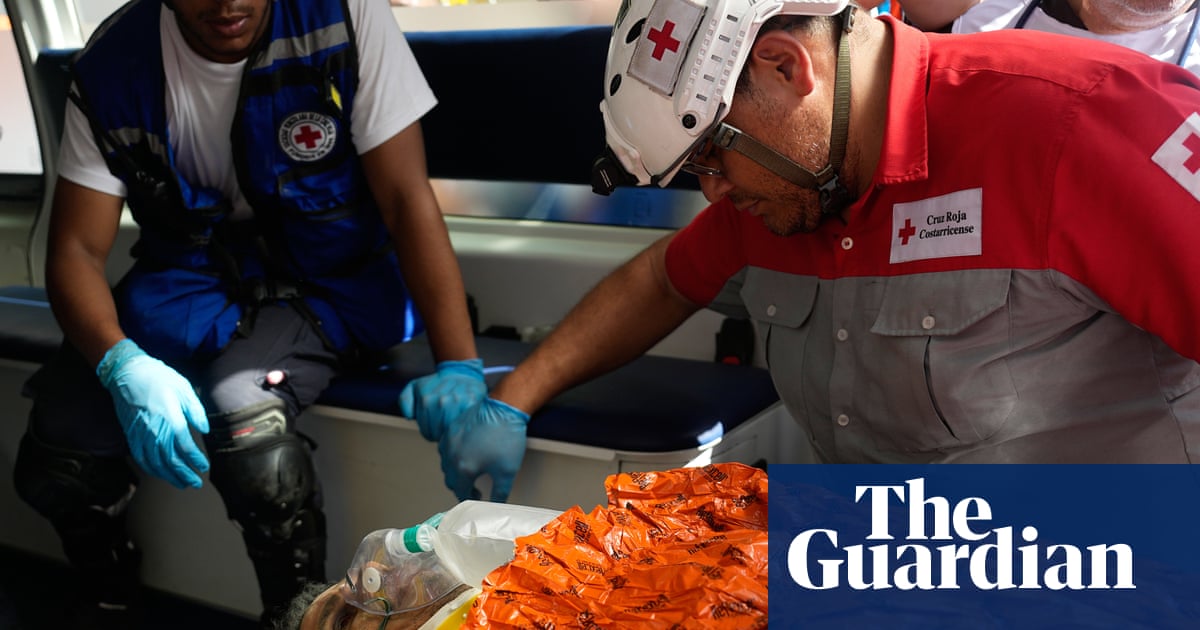
But, four days later on Thursday, teams carrying flags from across the world cheered as rescuers carried Gil Flores on a stretcher covered in an orange tarp through throngs of people into a Red Cross ambulance. A group of men in red CRRC uniforms embraced and laughed in relief.
Gil Flores’s wife, Gusbimar González, said her despair had given way to hope when she heard he was still alive. “I saw a ray of light in the darkness,” González said.
The operation was coordinated by an urban search and rescue team of Chilean firefighters, who worked around the clock with specialist teams from the US, Portugal and Mexico, among others.
Rescuers had to navigate highly unstable structural conditions, torrential rain and persistent aftershocks to tunnel down to Gil Flores. They used a telescopic camera to maintain constant contact with him, passing water and liquid nutrients through a narrow shaft to keep him hydrated during the final three days of the extraction.
María Paz Campos, a veteran firefighter from Chile, talked the security guard through the entire operation, and kept him calm during the final hours of the rescue on Thursday.
In a video published by the Chilean firefighters in the hours before the rescue, Gil Flores had been seen drawing, apparently to pass the time. Campos then gently told him to look at the camera and to wear protective goggles.
“I need you to keep the goggles on to stop the small particles that are falling from getting into your eyes,” she told him.
While there have been a few astounding rescues – including those of Gil Flores and a three-year boy who was pulled from the rubble on Tuesday – hopes of finding many more survivors are dwindling fast.
Nevertheless, the families of those trapped in collapsed buildings cling to hope that their loved ones can be found. Dora Bello said her 42-year-old nephew, Eduardo José Rosal Bello, had been inside a La Guaira tower block called Residencia Costa Brava when it was reduced to rubble by the twin quakes.
“We need action. We need them to come and do something because there is life inside. There is life inside that building,” said Bello, 49, as she stood by the building’s wreckage and a pile of personal effects and clothes belonging to its lost residents.
Russ Gauden, the national coordinator and team leader in Venezuela for the UK’s International Search and Rescue team, said it was still possible more survivors could be found despite the terrible devastation wrought on Venezuela’s northern coast.
“The population in this part of the world are very, very robust: humble, proud people. They’re survivors. And that’s [where] we see the difference. All of the books that have been written over many, many years about the windows of vulnerability – it seems to change in this part of the world,” said Gauden, whose group of firefighters, medics and engineers have spent recent days trawling through broken buildings for survivors.
“[The survival window is] normally 96 hours here, 126, 130 hours. It’s a distinct possibility,” he said.
The focus is now shifting to survival for those who escaped the quakes. Many are homeless and food and water are becoming scarce.
On Tuesday, the World Food Programme appealed for $50m (£37.4m), saying that about 500,000 people in Venezuela would need to be fed for three months.
Preliminary analysis of satellite data suggests more than 58,000 buildings may have been damaged or destroyed in the two quakes, dwarfing official estimates.
The Associated Press and Agence France-Presse contributed reporting
Read the full story at The Guardian ↗
Back-to-back earthquakes measuring 7.2 and 7.5 magnitude struck Venezuela's northern coast last week, killing approximately 2,200 people and injuring more than 11,000. A 43-year-old security guard, Hernán Alberto Gil Flores, was working in a small cabin at the Galerías Playa Grande shopping centre in La Guaira when the first tremor hit. The cabin's structure created an air pocket that protected him from surrounding debris. After eight days, an international rescue operation successfully extracted him from the collapsed basement. Teams from Chile, the US, Portugal, Mexico, Costa Rica and the UK worked in unstable conditions, navigating aftershocks and rain to reach him, passing water and nutrients through a narrow shaft during the final days. A three-year-old child was also recovered from the rubble on Tuesday. Preliminary satellite analysis indicates more than 58,000 buildings sustained damage or destruction. The humanitarian focus is now shifting to displaced populations; the World Food Programme estimates 500,000 people will require food assistance for three months and has appealed for $50 million.
Read the full story at The Guardian ↗
A 43-year-old security guard who survived last week’s devastating earthquakes in Venezuela thanks to a pocket of air in his workstation cabin has been pulled from the collapsed basement of a shopping centre amid huge cheers from international rescue teams.
Hernán Alberto Gil Flores had been trapped for eight days under the rubble of the Galerías Playa Grande in the hard-hit coastal port city of La Guaira since the back-to-back quakes struck.
The 7.2- and 7.5-magnitude earthquakes killed almost 2,200 people, injured more than 11,000 others and left tens of thousands missing.
Gil Flores, who worked as a nightshift security guard at the shopping centre, was inside his small security cabin when the first violent tremor struck. While the surrounding concrete structure collapsed around him, his cabin shielded him from crushing debris and created a vital pocket of air.
A specialised team from the Costa Rican Red Cross (CRRC) first detected signs of life and established contact with him on Sunday.
“When we found him, he asked us not to tell his wife that he was alive, just in case he wouldn’t make it,” Minyar Collado, a member of the CRRC team told the Associated Press.
But, four days later on Thursday, teams carrying flags from across the world cheered as rescuers carried Gil Flores on a stretcher covered in an orange tarp through throngs of people into a Red Cross ambulance. A group of men in red CRRC uniforms embraced and laughed in relief.
Gil Flores’s wife, Gusbimar González, said her despair had given way to hope when she heard he was still alive. “I saw a ray of light in the darkness,” González said.
The operation was coordinated by an urban search and rescue team of Chilean firefighters, who worked around the clock with specialist teams from the US, Portugal and Mexico, among others.
Rescuers had to navigate highly unstable structural conditions, torrential rain and persistent aftershocks to tunnel down to Gil Flores. They used a telescopic camera to maintain constant contact with him, passing water and liquid nutrients through a narrow shaft to keep him hydrated during the final three days of the extraction.
María Paz Campos, a veteran firefighter from Chile, talked the security guard through the entire operation, and kept him calm during the final hours of the rescue on Thursday.
In a video published by the Chilean firefighters in the hours before the rescue, Gil Flores had been seen drawing, apparently to pass the time. Campos then gently told him to look at the camera and to wear protective goggles.
“I need you to keep the goggles on to stop the small particles that are falling from getting into your eyes,” she told him.
While there have been a few astounding rescues – including those of Gil Flores and a three-year boy who was pulled from the rubble on Tuesday – hopes of finding many more survivors are dwindling fast.
Nevertheless, the families of those trapped in collapsed buildings cling to hope that their loved ones can be found. Dora Bello said her 42-year-old nephew, Eduardo José Rosal Bello, had been inside a La Guaira tower block called Residencia Costa Brava when it was reduced to rubble by the twin quakes.
“We need action. We need them to come and do something because there is life inside. There is life inside that building,” said Bello, 49, as she stood by the building’s wreckage and a pile of personal effects and clothes belonging to its lost residents.
Russ Gauden, the national coordinator and team leader in Venezuela for the UK’s International Search and Rescue team, said it was still possible more survivors could be found despite the terrible devastation wrought on Venezuela’s northern coast.
“The population in this part of the world are very, very robust: humble, proud people. They’re survivors. And that’s [where] we see the difference. All of the books that have been written over many, many years about the windows of vulnerability – it seems to change in this part of the world,” said Gauden, whose group of firefighters, medics and engineers have spent recent days trawling through broken buildings for survivors.
“[The survival window is] normally 96 hours here, 126, 130 hours. It’s a distinct possibility,” he said.
The focus is now shifting to survival for those who escaped the quakes. Many are homeless and food and water are becoming scarce.
On Tuesday, the World Food Programme appealed for $50m (£37.4m), saying that about 500,000 people in Venezuela would need to be fed for three months.
Preliminary analysis of satellite data suggests more than 58,000 buildings may have been damaged or destroyed in the two quakes, dwarfing official estimates.
The Associated Press and Agence France-Presse contributed reporting
Read the full story at The Guardian ↗
Two earthquakes with magnitudes of 7.2 and 7.5 struck Venezuela's northern coast The earthquakes killed approximately 2,200 people, injured more than 11,000, and left tens of thousands missing Hernán Alberto Gil Flores, a 43-year-old security guard, was trapped in his cabin at Galerías Playa Grande shopping centre for eight days The cabin created an air pocket that shielded him from debris and provided survival space A Costa Rican Red Cross team detected signs of life and made contact on Sunday, four days before extraction International rescue teams from Chile, the US, Portugal, Mexico, Costa Rica and the UK coordinated the operation Rescuers used a telescopic camera to maintain contact and passed water and nutrients through a shaft during the final three days Gil Flores was extracted on Thursday amid celebrations from international rescue teams A three-year-old child was also pulled from rubble on Tuesday Hopes of finding many more survivors are dwindling fast Preliminary satellite analysis suggests more than 58,000 buildings may have been damaged or destroyed The World Food Programme estimates 500,000 people will need food assistance for three months and has appealed for $50 million Survival windows in this region of the world may extend beyond the typical 96 hours documented in other parts of the world
Read the full story at The Guardian ↗
- A 43-year-old Venezuelan security guard was rescued after eight days trapped in a collapsed shopping centre basement following back-to-back earthquakes (7.2 and 7.5 magnitude)
- The two earthquakes killed nearly 2,200 people, injured over 11,000, and left tens of thousands missing across Venezuela's northern coast
- International rescue teams from Chile, the US, Portugal, Mexico, Costa Rica and the UK coordinated the extraction, using specialized equipment and maintaining contact via telescopic camera
- Over 58,000 buildings are estimated damaged or destroyed; the World Food Programme is appealing for $50 million to feed approximately 500,000 displaced people for three months